


Computational analysis of learning in young and ageing brains
- PMID: 40395500
- PMCID: PMC12089124
- DOI: 10.3389/fncom.2025.1565660
Computational analysis of learning in young and ageing brains
Abstract
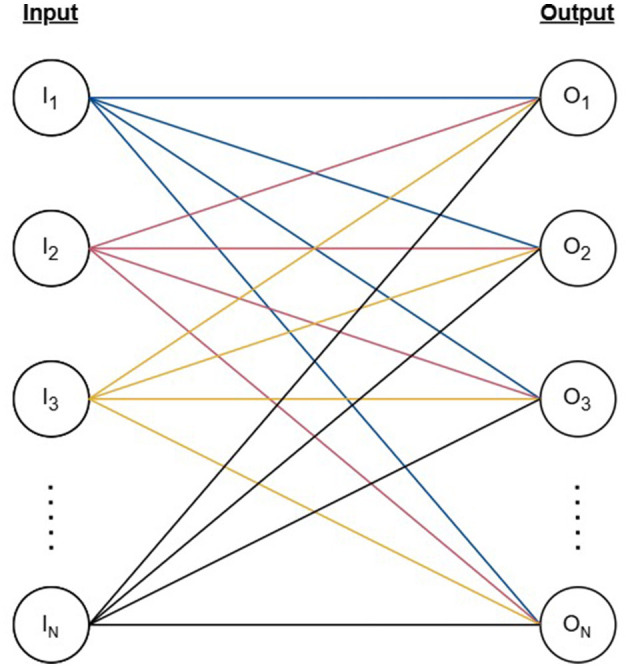
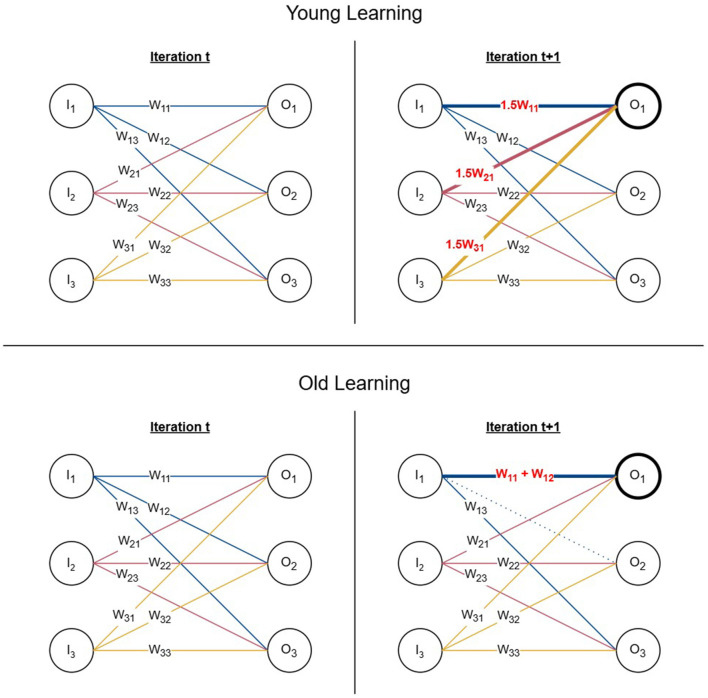
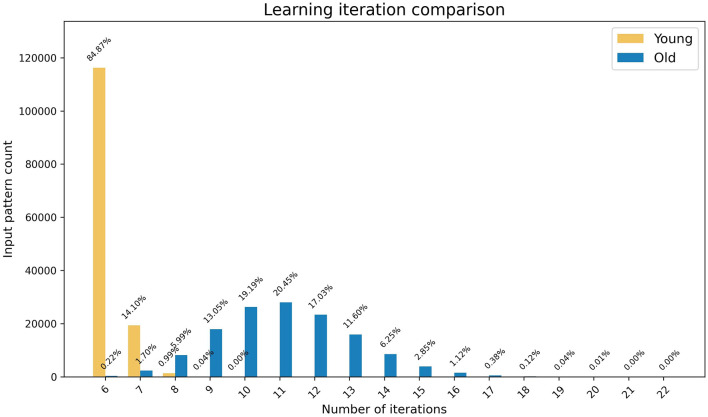
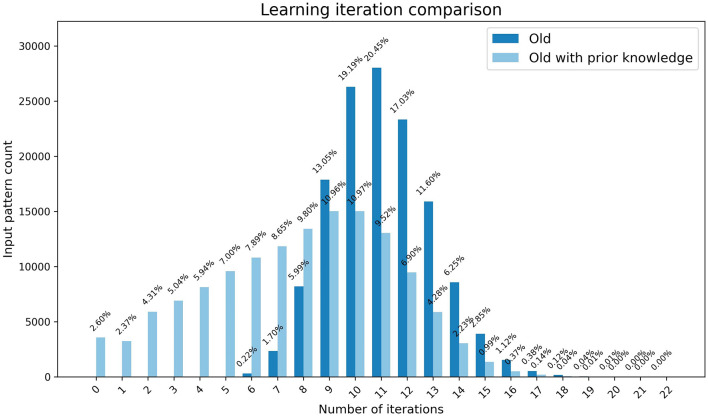
Learning and memory are fundamental processes of the brain which are essential for acquiring and storing information. However, with ageing the brain undergoes significant changes leading to age-related cognitive decline. Although there are numerous studies on computational models and approaches which aim to mimic the learning process of the brain, they often concentrate on generic neural function exhibiting the potential need for models that address age-related changes in learning. In this paper, we present a computational analysis focusing on the differences in learning between young and old brains. Using a bipartite graph as an artificial neural network to model the synaptic connections, we simulate the learning processes of young and older brains by applying distinct biologically inspired synaptic weight update rules. Our results demonstrate the quicker learning ability of young brains compared to older ones, consistent with biological observations. Our model effectively mimics the fundamental mechanisms of the brain related to the speed of learning and reveals key insights on memory consolidation.
Keywords: ageing-brains; computational-neuroscience; learning; memory; neural networks.
Copyright © 2025 Hewavitharana, Steinhofel, Giese, Ierardi and Anand.
Conflict of interest statement
The authors declare that the research was conducted in the absence of any commercial or financial relationships that could be construed as a potential conflict of interest. The author(s) declared that they were an editorial board member of Frontiers, at the time of submission. This had no impact on the peer review process and the final decision.
Figures
References
LinkOut - more resources
Full Text Sources
