


Tropheryma whipplei escapes LAPosome and modulates macrophage response in a xenophagy-dependent manner
- PMID: 40395986
- PMCID: PMC11921966
- DOI: 10.1080/27694127.2025.2475527
Tropheryma whipplei escapes LAPosome and modulates macrophage response in a xenophagy-dependent manner
Abstract
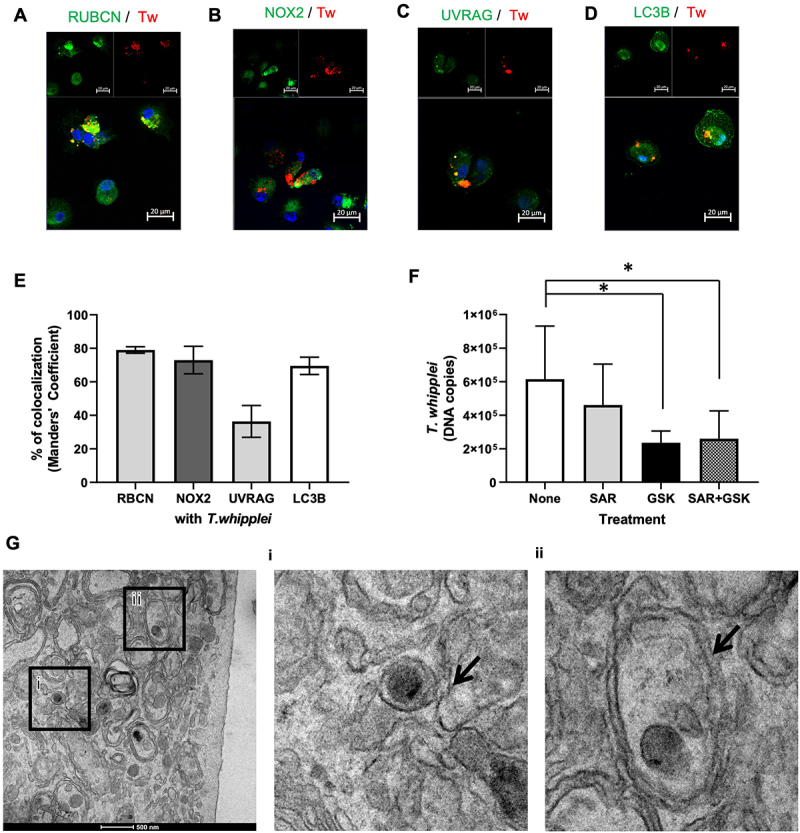
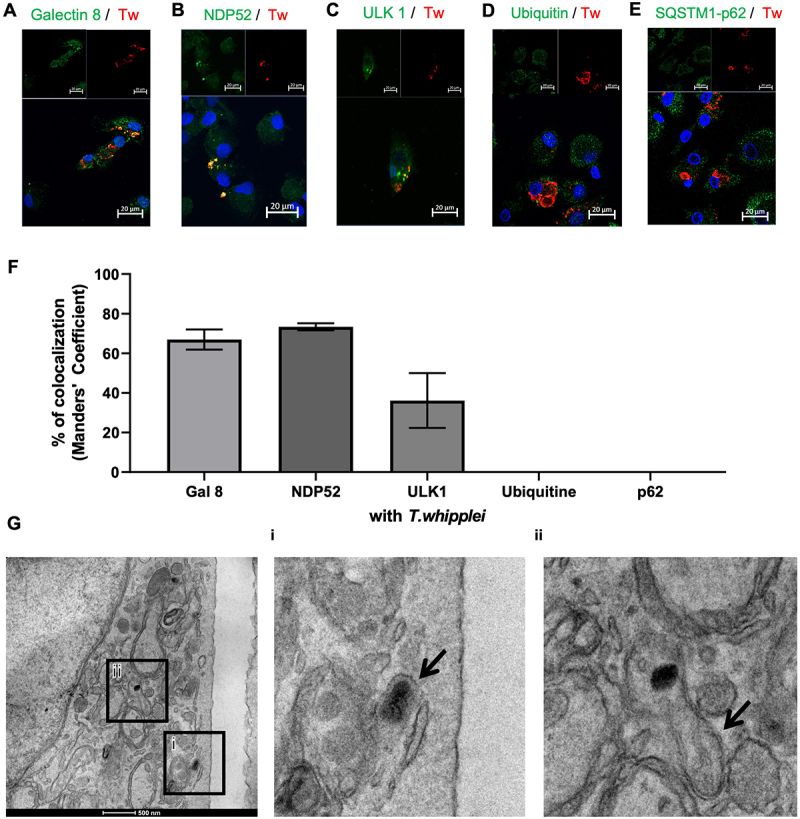
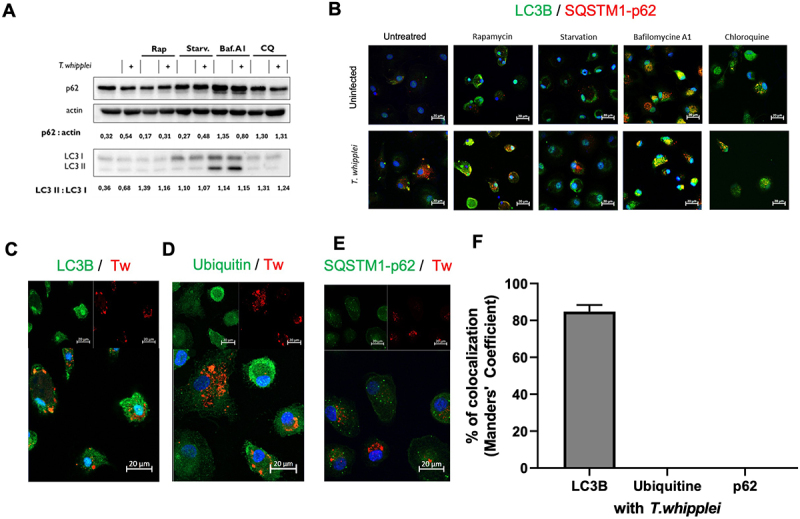
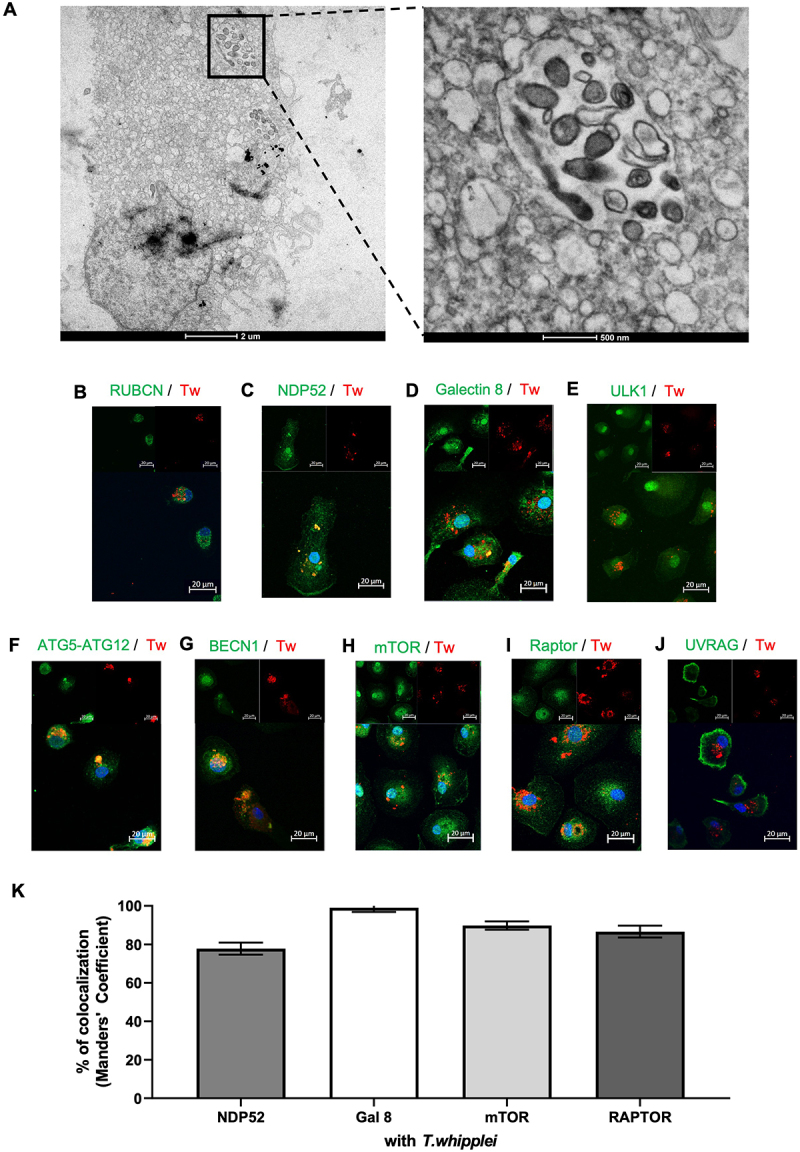
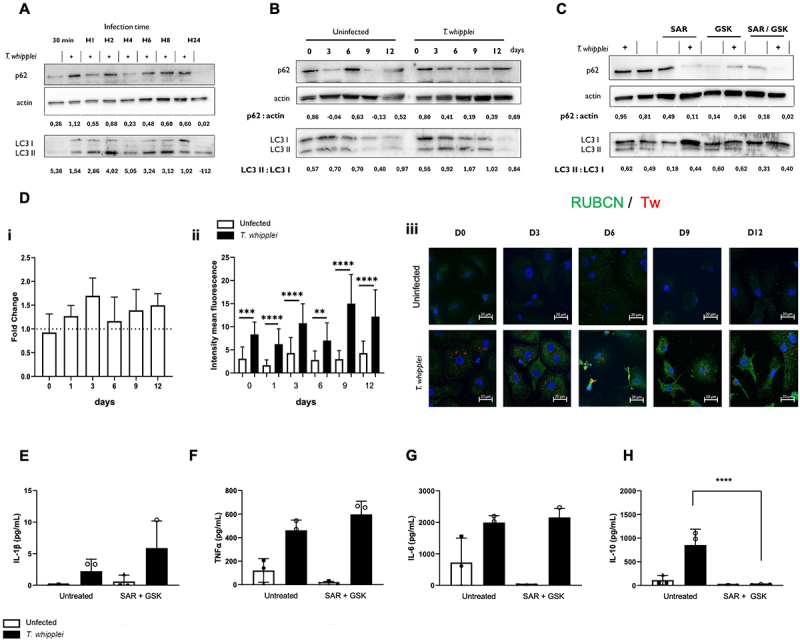
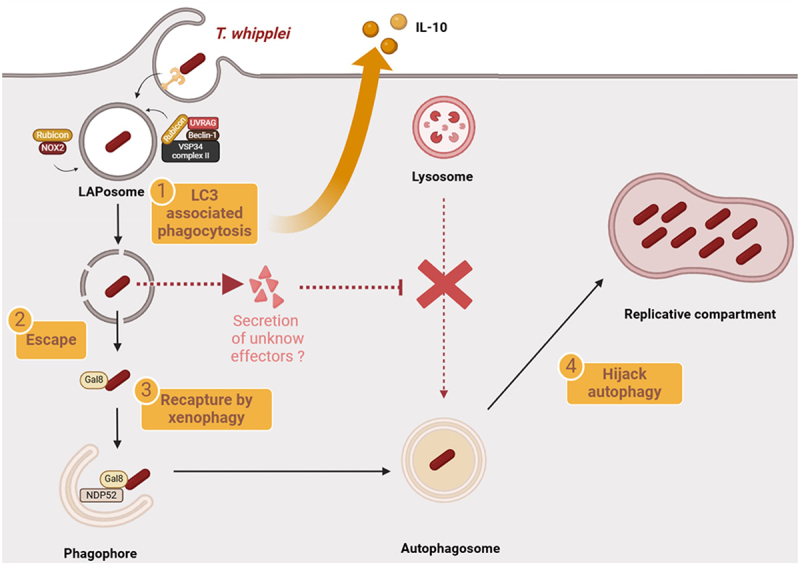
Tropheryma whipplei, the agent of Whipple's disease, is an intracellular pathogen that replicates in macrophages. The phagocytic and cellular processes leading to the formation of T. whipplei replicative vacuole remain poorly understood. Macrophage microbicidal activity is largely related to macro/autophagy which is also essential for cell homeostasis. Here, we show that T. whipplei uptake by macrophages involved LC3-associated phagocytosis (LAP). Bacteria then escaped into the cytosol from where they were recaptured by xenophagy. We also demonstrate that T. whipplei blocked the autophagic flux to build its replicative compartment. Inhibition of LAP resulted in the decrease of interleukin (IL)-10 secretion and the restoration of the autophagy flux, suggesting that modulation of autophagy during infection alters immune response and promote persistence. Our results provide new insight in the intracellular fate of the bacteria during macrophage infection and suggest the possible involvement of previously unknown virulence factors in T. whipplei infection.
Keywords: Autophagy; Immune escape; LC3-associated phagocytosis (LAP); Macrophage; Tropheryma whipplei; Whipple’s disease.
© 2025 The Author(s). Published by Informa UK Limited, trading as Taylor & Francis Group.
Conflict of interest statement
Eloïne Bestion is employee of Genoscience Pharma.
Figures
References
LinkOut - more resources
Full Text Sources
Research Materials