


Recent advances in improving yield and immunity through transcription factor engineering
- PMID: 40396540
- PMCID: PMC12315486
- DOI: 10.1111/jipb.13932
Recent advances in improving yield and immunity through transcription factor engineering
Abstract
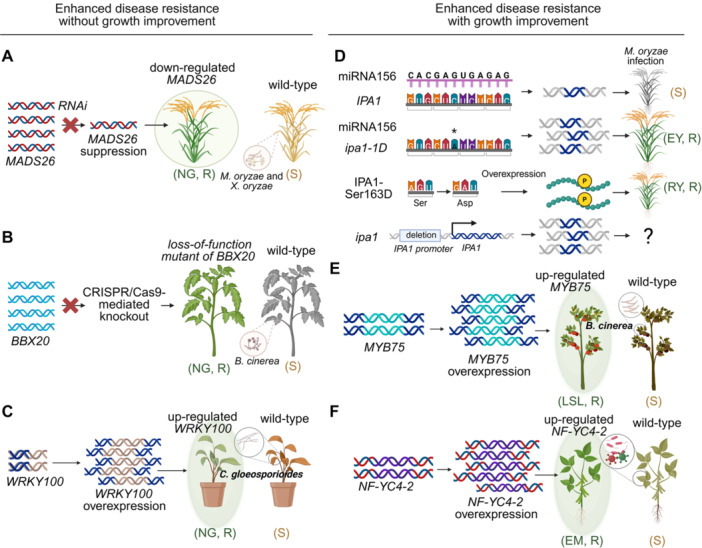
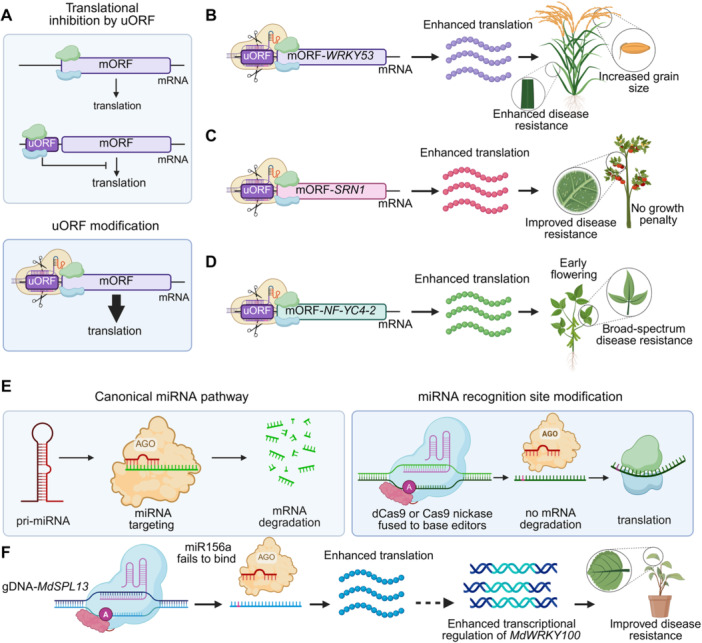
Transcription factors (TFs) function as master regulators in multiple signaling pathways and govern diverse developmental and adaptive processes in plants. Some TFs identified in crop plants play critical roles in regulating yield through changes in plant architecture, including roots, stems, leaves, flowers, fruits, and grains. Although altering crop architecture can increase yields, the extent of yield enhancement is frequently hampered by diseases. Developing new crop varieties with improved yields and enhanced disease resistance remains challenging because immune system activation often impairs plant growth. Recently, approaches using TF engineering have made substantial progress in elevating both growth performance and disease resistance. However, most of these techniques rely on traditional transgenic methods. This review highlights discoveries in the last decade demonstrating improvements in growth performance, yield and immunity through TF engineering. We focus mainly on changes in plant architecture related to improved yield and disease resistance. We conclude with perspectives on the potential application of these discoveries for generating desirable crop traits by merging the most noteworthy biotechnology approaches, such as clustered regularly interspaced small palindromic repeats (CRISPR)/CRISPR-associated protein 9-mediated genome editing, with canonical molecular biology.
Keywords: CRISPR/Cas9; crop architecture; crop transcription factors; disease resistance; miRNA recognition site; uORF; yield improvement.
© 2025 The Author(s). Journal of Integrative Plant Biology published by John Wiley & Sons Australia, Ltd on behalf of Institute of Botany, Chinese Academy of Sciences.
Conflict of interest statement
The authors declare no conflict of interest.
Figures
References
-
- Alshareef, N.O. , Wang, J.Y. , Ali, S. , Al‐Babili, S. , Tester, M. , and Schmockel, S.M. (2019). Overexpression of the NAC transcription factor JUNGBRUNNEN1 (JUB1) increases salinity tolerance in tomato. Plant Physiol. Biochem. 140: 113–121. - PubMed
-
- Atamian, H.S. , Eulgem, T. , and Kaloshian, I. (2012). SlWRKY70 is required for Mi‐1‐mediated resistance to aphids and nematodes in tomato. Planta 235: 299–309. - PubMed
Publication types
MeSH terms
Substances
Grants and funding
- RS-2021-NR065275/National Research Foundation of Korea (NRF) funded by the Ministry of Education
- RS-2023-00301974/National Research Foundation of Korea (NRF) funded by the Ministry of Education
- RS-2022-NR070837/National Research Foundation of Korea (NRF) grant funded by the Korea government (MSIT)
- RS-2025-00559795/National Research Foundation of Korea (NRF) grant funded by the Korea government (MSIT)
- RS-2024-00322125/Rural Development Administration
LinkOut - more resources
Full Text Sources
Miscellaneous
