Horizontal gene transfer of molecular weapons can reshape bacterial competition
- PMID: 40397871
- PMCID: PMC12094771
- DOI: 10.1371/journal.pbio.3003095
Horizontal gene transfer of molecular weapons can reshape bacterial competition
Abstract
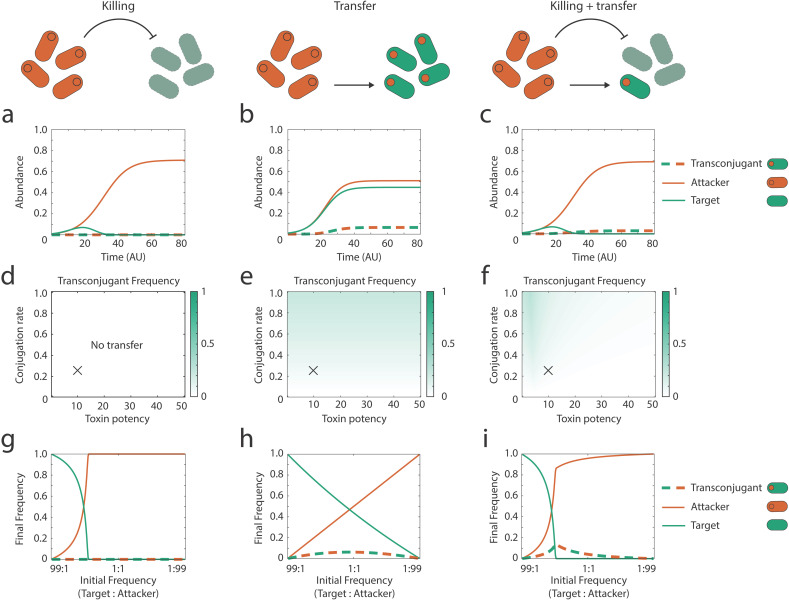
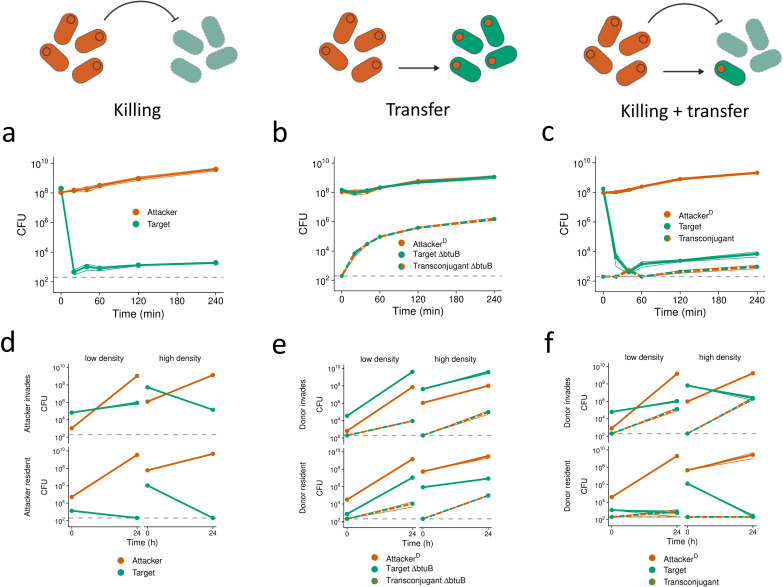
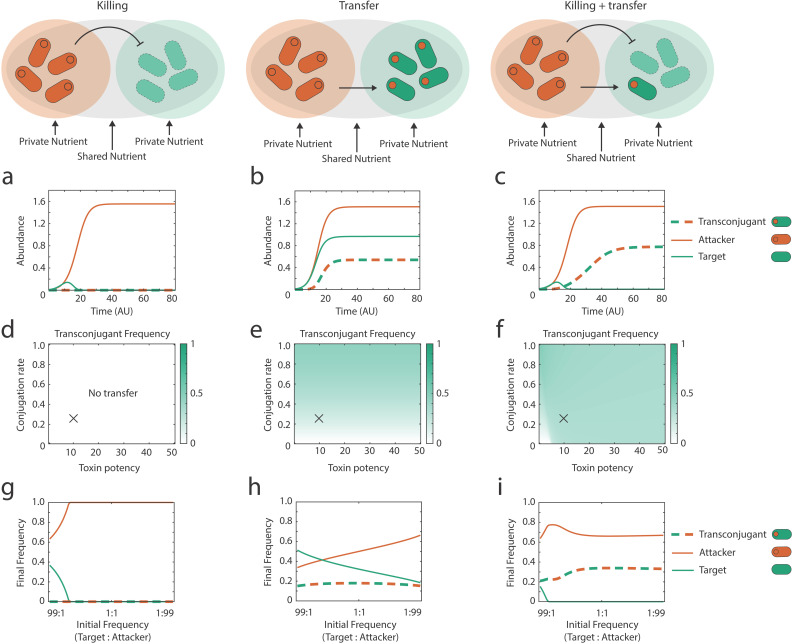
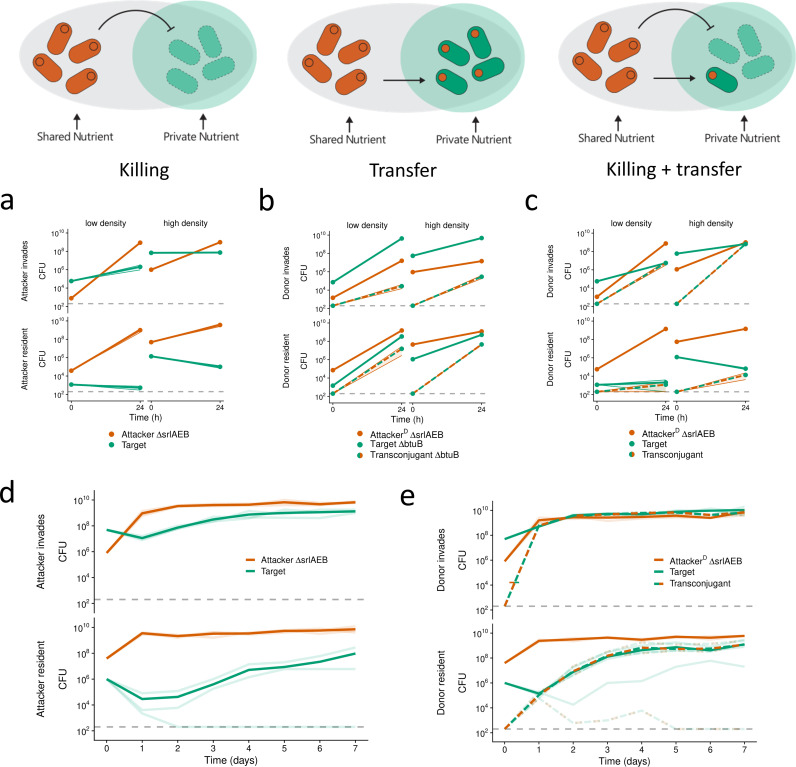
Bacteria commonly use molecular weaponry to kill or inhibit competitors. Genes encoding many weapons and their associated immunity mechanisms can be transmitted horizontally. These transfer events are striking because they appear to undermine bacterial weapons when given to competing strains. Here, we develop an ecological model of bacterial warfare to understand the impacts of horizontal gene transfer. Our model predicts that weapon gene transfer from an attacker to a target strain is possible, but will typically occur at a low rate such that transfer has a negligible impact on competition outcomes. We tested the model empirically using a transmissible plasmid encoding colicin E2, a potent antibacterial toxin produced by Escherichia coli. As predicted by the model, we find that toxin plasmid transfer is feasible during warfare, but the resulting transconjugants remain rare. However, exploring the model further reveals realistic conditions where transfer is predicted to have major impacts. Specifically, the model predicts that whenever competing strains have access to unique nutrients, transconjugants can proliferate and reach high abundances. In support of these predictions, short- and long-term experiments show that transconjugants can thrive when nutrient competition is relaxed. Our work shows how horizontal gene transfer can reshape bacterial warfare in a way that benefits a weapon gene and strains that receive it. Interestingly, we also find that there is little cost to a strain that transfers a weapon gene, which is expected to further enable the horizontal gene transfer of molecular weapons.
Copyright: © 2025 Granato et al. This is an open access article distributed under the terms of the Creative Commons Attribution License, which permits unrestricted use, distribution, and reproduction in any medium, provided the original author and source are credited.
Conflict of interest statement
The authors have declared that no competing interests exist.
Figures

References
-
- Granato ET, Meiller-Legrand TA, Foster KR. The evolution and ecology of bacterial warfare. Curr Biol. 2019;29(11):R521–37. - PubMed
MeSH terms
Substances
Grants and funding
LinkOut - more resources
Full Text Sources
Research Materials