


Biomechanical features of a novel step-down-and-pivot task in football players with hip/groin pain
- PMID: 40400522
- PMCID: PMC12092111
- DOI: 10.1098/rsos.240908
Biomechanical features of a novel step-down-and-pivot task in football players with hip/groin pain
Abstract
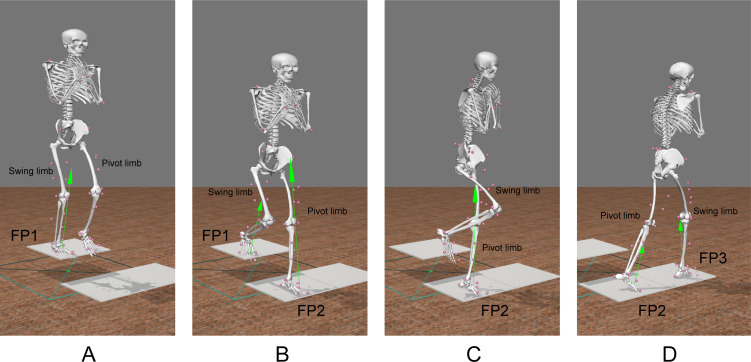
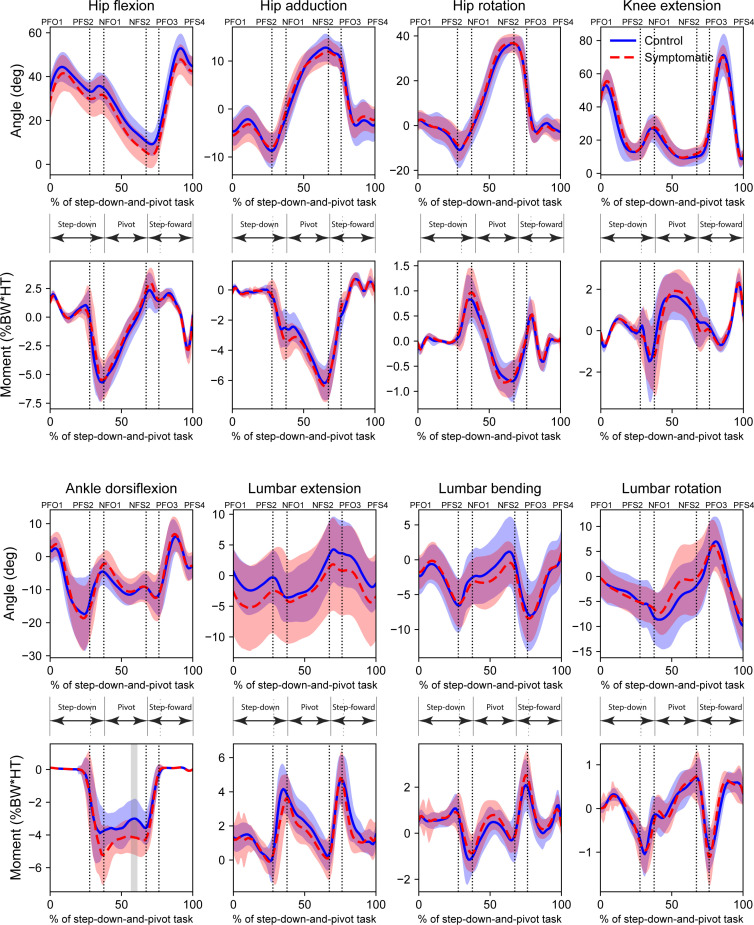
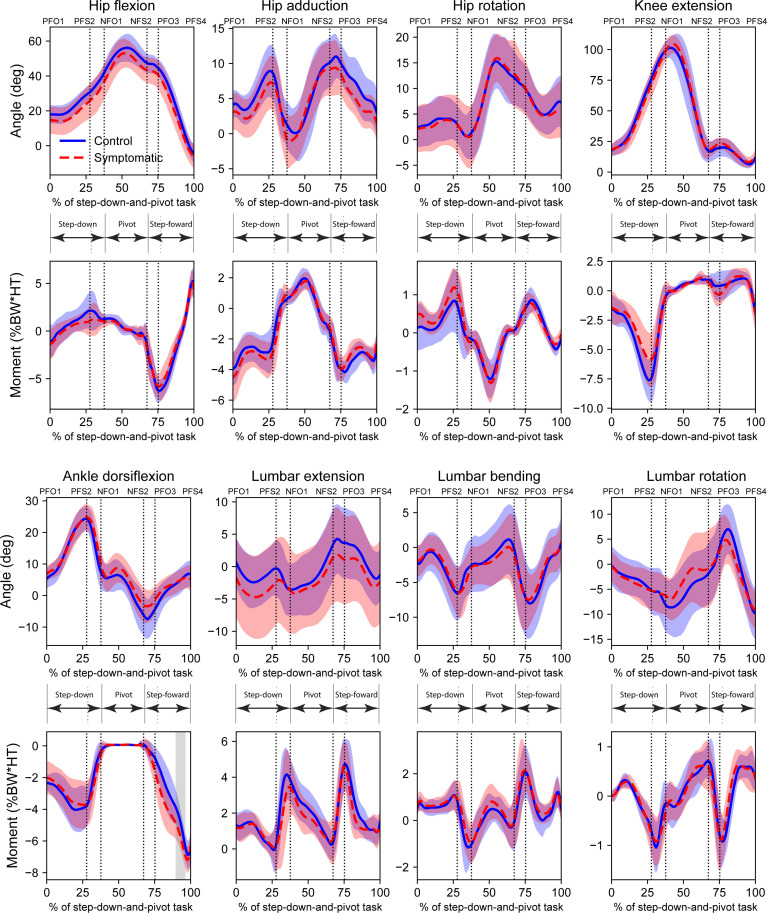
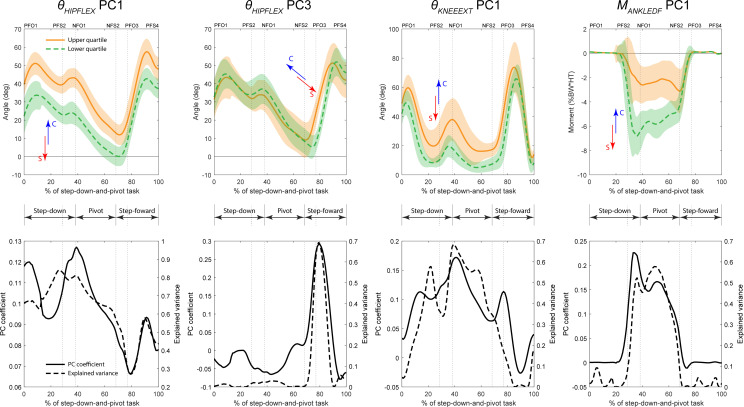
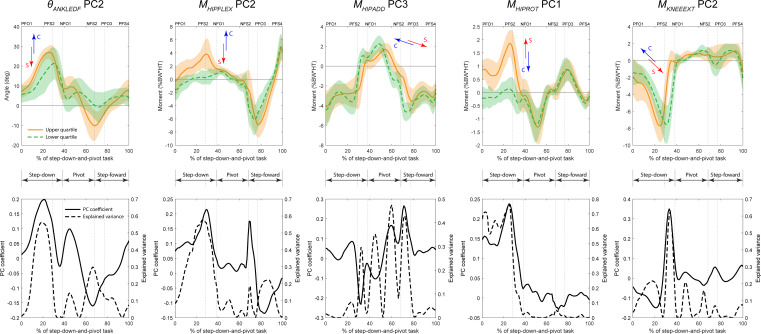
Identifying biomechanical impairments in young, physically active populations with hip/groin pain is crucial for early intervention. This study characterized the biomechanical features of a novel task, the step-down-and-pivot, in competitive football players, comprising 36 individuals with hip/groin pain (28 ± 6 years) and 11 controls (26 ± 4 years). Experimental motion data and ground forces were input into biomechanical models to calculate joint angles and moments, then transformed into principal components and input into a feature selection pipeline. Ten main biomechanical features were identified for each limb, i.e. the pivot limb and the swing limb, that could discriminate between symptomatic and control groups with p < 0.05. In symptomatic individuals, the main features were as follows: pivot limb: smaller hip flexion and knee extension angles, delayed initiation of hip flexion and increased ankle dorsiflexion moment; swing limb: reduced hip flexion moment, increased hip internal rotation moment, delayed hip adduction and knee extension moments, and reduced ankle dorsiflexion angle. The largest group differences occurred during the transitions from step-down to pivot, and pivot to step-forward, supporting a potential role for multi-phase and/or multi-planar tasks when assessing biomechanical impairments due to hip/groin pain. Although biomechanical alterations in our symptomatic participants were small, they could be identified and characterized using feature selection.
Keywords: biomechanics; feature selection; femoroacetabular impingement; gait analysis; hip osteoarthritis; principal component analysis.
© 2025 The Author(s).
Conflict of interest statement
We declare we have no competing interests.
Figures
References
-
- Heerey JJ, Kemp JL, Mosler AB, Jones DM, Pizzari T, Souza RB, Crossley KM. 2018. What is the prevalence of imaging-defined intra-articular hip pathologies in people with and without pain? A systematic review and meta-analysis. Br. J. Sports Med. 52, 581–593. ( 10.1136/bjsports-2017-098264) - DOI - PubMed
-
- Reiman MP, et al. 2020. Consensus recommendations on the classification, definition and diagnostic criteria of hip-related pain in young and middle-aged active adults from the International Hip-related Pain Research Network, Zurich 2018. Br. J. Sports Med. 54, 631–641. ( 10.1136/bjsports-2019-101453) - DOI - PubMed
Associated data
LinkOut - more resources
Full Text Sources
