


In vitro activity of cefiderocol against ESBL-producing and carbapenem-resistant Pseudomonas aeruginosa
- PMID: 40400765
- PMCID: PMC12092334
- DOI: 10.1093/jacamr/dlaf082
In vitro activity of cefiderocol against ESBL-producing and carbapenem-resistant Pseudomonas aeruginosa
Abstract
Objectives: To determine the activity of cefiderocol against 101 Peruvian Pseudomonas aeruginosa isolates.
Methods: Carbapenem- and/or third- and fourth-generation cephalosporin-resistant P. aeruginosa clinical isolates were isolated in nine Peruvian health centres. Antibiotic susceptibility was established by automated methods and/or disc diffusion (10 antimicrobial agents), colistin agar test (colistin) and microdilution (cefiderocol). The presence of bla PER, bla CTX-M, bla GES, bla KPC, bla IMI, bla IMP, bla NDM, bla OXA-23, bla OXA-24, bla OXA-48, bla OXA-58, bla VIM and oprD was established by PCR; bla CTX-M and oprD were sequenced. The levels of antimicrobial resistance ranged from 20.8% (colistin) to 97.0% (meropenem).
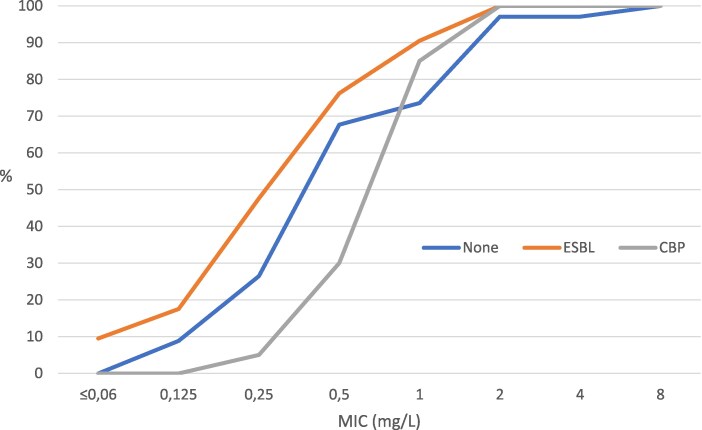
Results: The MIC of cefiderocol ranged from ≤ 0.06 to 8 mg/L (one isolate). Cefiderocol resistance rates were 1.0% (according to the FDA and EUCAST) and 0% according to CLSI, whereas 14.9% and 1.0% of isolates were classified as cefiderocol-intermediate according to FDA and CLSI, respectively. CTX-M-131 and GES, and IMP and VIM were the most frequent ESBLs and carbapenemases, respectively. The presence of oprD mutations was tested in 47 carbapenem-resistant isolates, 23 with oprD-inactivating mutations as the sole underlying mechanism. Although no specific association was found between the presence of ESBLs and carbapenemases with cefiderocol resistance, carbapenemase-producing isolates tended to present slightly higher cefiderocol MIC values. The cefiderocol-resistant isolate did not present ESBLs or carbapenemases, showing only an oprD-inactivating mutation.
Conclusions: Cefiderocol showed excellent activity against P. aeruginosa, irrespective of the presence of ESBLs and/or carbapenemases. The high number of isolates bordering cefiderocol-resistant levels suggests the need for cautious use and continuous surveillance of this antibiotic.
© The Author(s) 2025. Published by Oxford University Press on behalf of British Society for Antimicrobial Chemotherapy.
Figures
References
LinkOut - more resources
Full Text Sources
Miscellaneous