


Enteral Infant Formulas: A Narrative Review of Historical Evolution, Nutritional Composition, and Clinical Use in Pediatrics
- PMID: 40400894
- PMCID: PMC12094131
- DOI: 10.7759/cureus.82692
Enteral Infant Formulas: A Narrative Review of Historical Evolution, Nutritional Composition, and Clinical Use in Pediatrics
Abstract
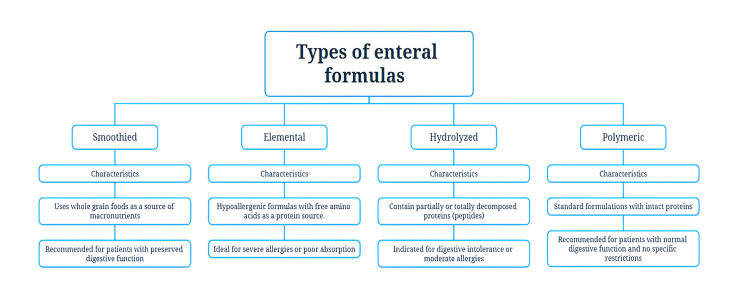
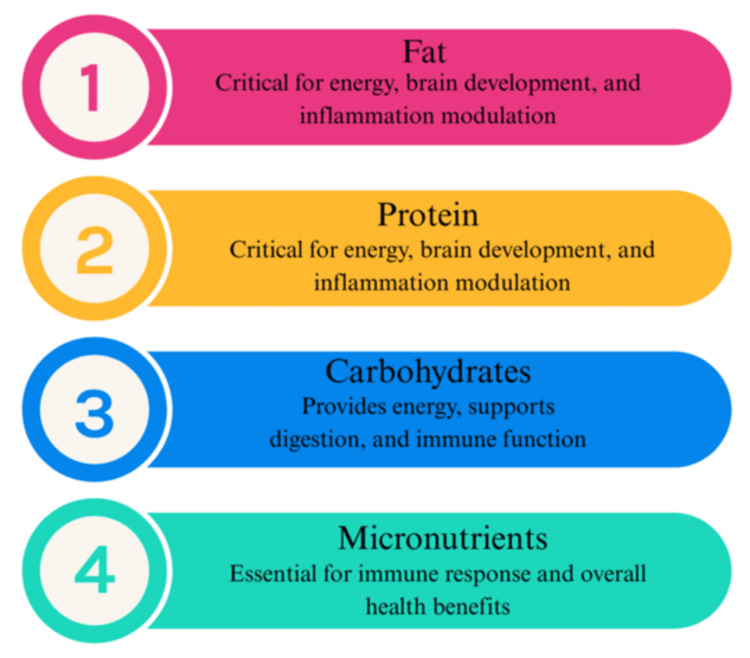
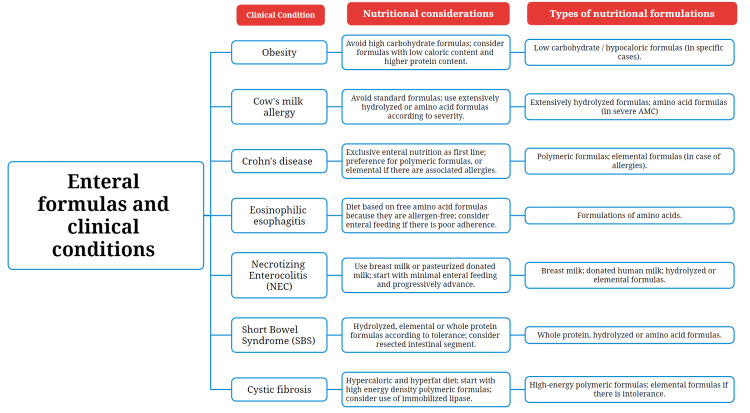
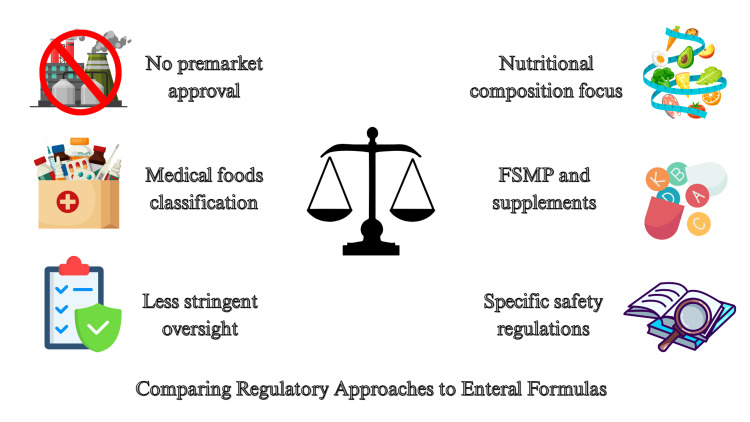
This narrative review aims to describe the evolution, classification, nutritional composition, and clinical applications of enteral infant formulas, with an emphasis on pediatric patients who are unable to be breastfed or follow conventional feeding methods. The primary objective is to analyze the different types of formulas available - polymeric, hydrolyzed, elemental, and blenderized - and their indications based on clinical scenarios and specific patient needs. The methodology used was a non-systematic narrative review. Relevant scientific literature was selected through a targeted search of databases such as PubMed, Scopus, ScienceDirect, and Google Scholar, including publications from the last 20 years in both English and Spanish. Key search terms included "enteral nutrition," "infant formula," "nutritional therapy," and "pediatric enteral feeding." The article traces the historical development of infant nutrition, from breastfeeding and wet nursing to modern enteral formulas. It explains the macronutrient composition of each formula type, their preparation methods, palatability, osmolality, and caloric density. Clinical considerations and recommended formulas for specific diseases - such as obesity, cow's milk allergy, Crohn's disease, eosinophilic esophagitis, necrotizing enterocolitis, short bowel syndrome, and cystic fibrosis - are discussed in detail. Additionally, the review outlines the regulatory context in the United States and Europe, noting that these products are classified as medical foods and not pharmaceuticals, and are thus subject to distinct safety, composition, and labeling requirements. The review concludes that although breastfeeding remains the gold standard in infant nutrition, enteral formulas are indispensable in many clinical situations. Future research is expected to focus on the development of more targeted, functional, and personalized formulas to address the needs of vulnerable pediatric populations.
Keywords: breastfeeding; enteral feeding; infant feeding; infant nutrition; tube feeding.
Copyright © 2025, Martínez-Vázquez et al.
Conflict of interest statement
Conflicts of interest: In compliance with the ICMJE uniform disclosure form, all authors declare the following: Payment/services info: All authors have declared that no financial support was received from any organization for the submitted work. Financial relationships: All authors have declared that they have no financial relationships at present or within the previous three years with any organizations that might have an interest in the submitted work. Other relationships: All authors have declared that there are no other relationships or activities that could appear to have influenced the submitted work.
Figures
References
-
- History of Pediatric Nutrition and Fluid Therapy | Pediatric Research. [ Mar; 2025 ]. https://www.nature.com/articles/pr2003494 https://www.nature.com/articles/pr2003494 - PubMed
-
- Global strategy for infant and young child feeding. [ Mar; 2025 ]. 2025. https://www.who.int/publications/i/item/9241562218 https://www.who.int/publications/i/item/9241562218
Publication types
LinkOut - more resources
Full Text Sources