


Human umbilical cord Wharton's jelly mesenchymal cell medium progress the wound healing via cytokines and growth factors expressions
- PMID: 40400899
- PMCID: PMC12089826
- DOI: 10.62347/AMSW4025
Human umbilical cord Wharton's jelly mesenchymal cell medium progress the wound healing via cytokines and growth factors expressions
Abstract
Objective: Conditioned medium of umbilical cord mesenchymal cells is a rich environment in various growth factors and cytokines, the use of which causes self-improvement and self-renewal in damaged tissues.
Methods: Therefore, we investigated the effect of Wharton's umbilical cord mesenchymal cells on cytokines, growth factors expression, and skin wound healing in diabetic rats. Rats were divided into two groups of ten. In the treated diabetic group, 1 ml of conditioned medium was used intradermally, and in the diabetic control group, the same amount of physiological serum was used. The tissue samples were evaluated for histological studies. The expression level of inflammatory/anti-inflammatory cytokines and growth factors was investigated using RT-PCR and western blotting analysis.
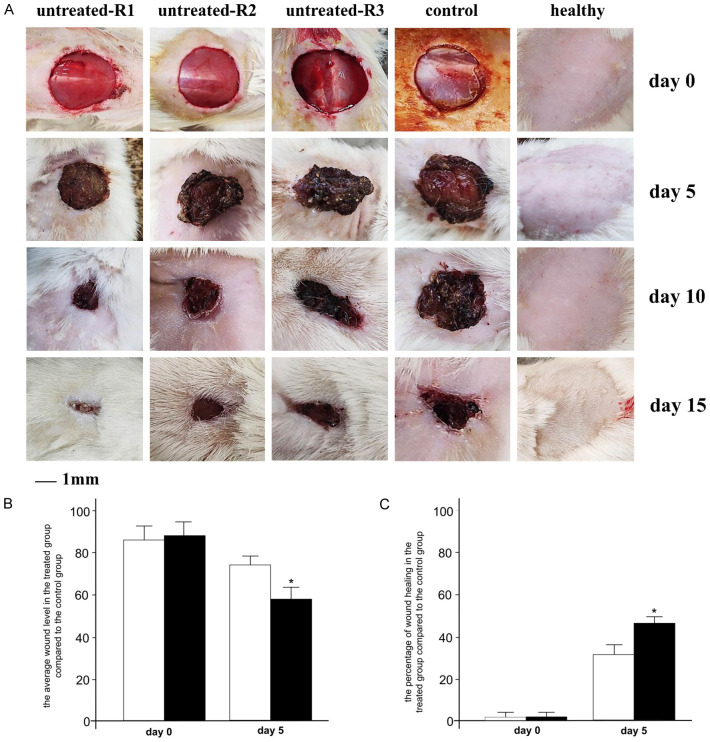
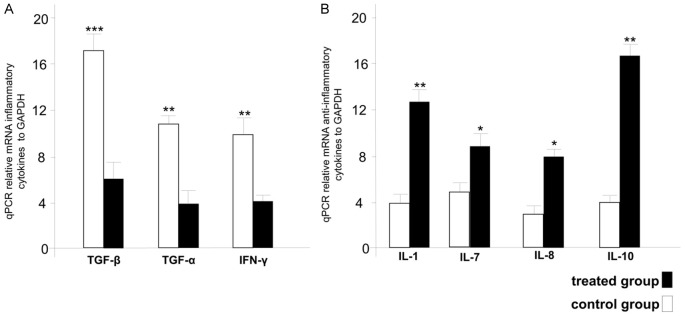
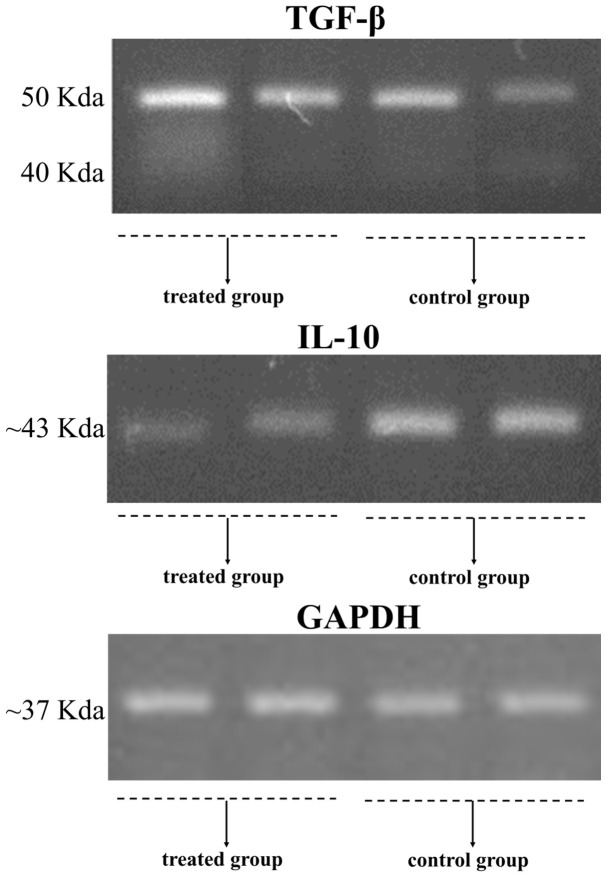
Results: Our results showed that wound healing increased in the diabetic rat group with a pleasant environment compared to the control group. It was also found in molecular studies that the expression of anti-inflammatory cytokines and growth factors was significantly increased in the treated samples compared to the control group. In addition, a significant decrease in TGF-β expression as an important inflammatory cytokine observed compared to the control group.
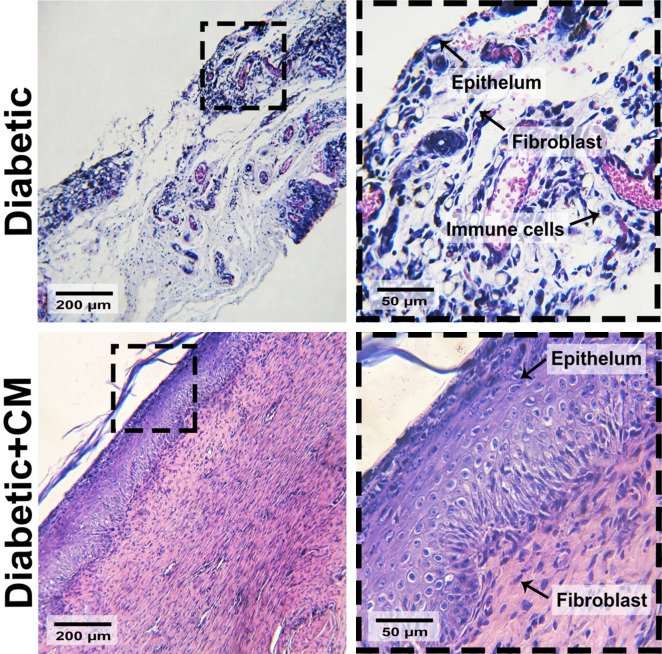
Conclusions: The use of the conditioned environment of Wharton's jelly mesenchymal cells of the human umbilical cord improves the process of wound healing in terms of tissue and also increases the expression of the critical anti-inflammatory cytokines and growth factors. It can be considered a novel approach in wound healing treatment.
Keywords: Conditioned medium; cytokine; diabetes; growth factor; mesenchymal cells; skin wound healing.
AJSC Copyright © 2025.
Conflict of interest statement
None.
Figures
References
-
- Mitchell KE, Weiss ML, Mitchell BM, Martin P, Davis D, Morales L, Helwig B, Beerenstrauch M, Abou-Easa K, Hildreth T, Troyer D, Medicetty S. Matrix cells from Wharton’s jelly form neurons and glia. Stem Cells. 2003;21:50–60. - PubMed
-
- Kobayashi K, Kubota T, Aso T. Study on myofibroblast differentiation in the stromal cells of Wharton’s jelly: expression and localization of α-smooth muscle actin. Early Hum Dev. 1998;51:223–233. - PubMed
-
- Kadner A, Hoerstrup SP, Tracy J, Breymann C, Maurus CF, Melnitchouk S, Kadner G, Zund G, Turina M. Human umbilical cord cells: a new cell source for cardiovascular tissue engineering. Ann Thorac Surg. 2002;74:1422–1428. - PubMed
-
- Bailey MM, Wang L, Bode CJ, Mitchell KE, Detamore MS. A comparison of human umbilical cord matrix stem cells and temporomandibular joint condylar chondrocytes for tissue engineering temporomandibular joint condylar cartilage. Tissue Eng. 2007;13:2003–2010. - PubMed
-
- Medicetty S, Bledsoe AR, Fahrenholtz CB, Troyer D, Weiss ML. Transplantation of pig stem cells into rat brain: proliferation during the first 8 weeks. Exp Neurol. 2004;190:32–41. - PubMed
LinkOut - more resources
Full Text Sources