Association between Skeletal Muscle Mass and Ocular Perfusion Pressure in Glaucoma
- PMID: 40403764
- PMCID: PMC12178679
- DOI: 10.3341/kjo.2025.0018
Association between Skeletal Muscle Mass and Ocular Perfusion Pressure in Glaucoma
Abstract
Purpose: This study aimed to investigate the relationship between body composition and glaucoma by analyzing the associations between anthropometric and ocular parameters.
Methods: A total of 494 eyes from 247 patients were reviewed from a general health examination database at a tertiary hospital. Anthropometric parameters were assessed using a multifrequency bioelectrical impedance device. Mean ocular perfusion pressure (MOPP) was calculated based on systolic and diastolic blood pressures and intraocular pressure (IOP). Retinal thickness and other ocular parameters were analyzed for their association with body composition.
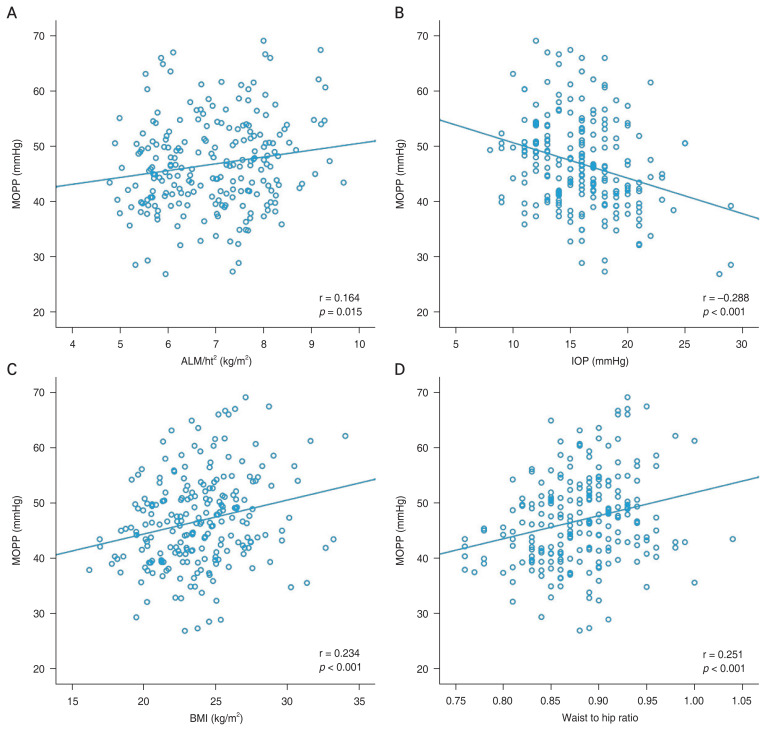
Results: A total of 221 eyes from 221 patients, including 104 with glaucoma, were enrolled in the final analysis. The prevalence of sarcopenia was significantly higher in patients with glaucomatous damage than in those without (p = 0.025). Higher IOP showed significant associations with lower MOPP (p < 0.001), higher body mass index (BMI; p = 0.001), and higher waist to hip ratio (p = 0.001). Retinal thickness was not significantly associated with body composition parameters, including BMI and appendicular lean mass adjusted with squared height. Higher MOPP was significantly correlated with lower IOP (p < 0.001), higher BMI (p < 0.001), higher waist to hip ratio (p < 0.001), and higher appendicular lean mass divided by squared height (p = 0.009).
Conclusions: Skeletal muscle mass and BMI were significantly associated with MOPP. Since low MOPP is a known risk factor for glaucoma, its association with skeletal muscle mass may indicate a relationship between systemic muscle health, ocular blood perfusion, and glaucomatous damage. Further large-scale studies are needed to validate these associations between skeletal muscle mass and glaucoma and explore their clinical implications.
Keywords: Body mass index; Glaucoma; Optical coherence tomography; Perfusion; Skeletal muscle.
Conflict of interest statement
None.
Figures
References
-
- Jonas JB, Aung T, Bourne RR, et al. Glaucoma. Lancet. 2017;390:2183–93. - PubMed
-
- European Glaucoma Society Terminology and Guidelines for Glaucoma, 5th Edition. Br J Ophthalmol. 2021;105(Suppl 1):1–169. - PubMed
-
- Tham YC, Lim SH, Gupta P, et al. Inter-relationship between ocular perfusion pressure, blood pressure, intraocular pressure profiles and primary open-angle glaucoma: the Singapore Epidemiology of Eye Diseases study. Br J Ophthalmol. 2018;102:1402–6. - PubMed
-
- Ramdas WD, Wolfs RC, Hofman A, et al. Ocular perfusion pressure and the incidence of glaucoma: real effect or artifact?: the Rotterdam study. Invest Ophthalmol Vis Sci. 2011;52:6875–81. - PubMed
MeSH terms
LinkOut - more resources
Full Text Sources
Medical