


Host genome drives the microbiota enrichment of beneficial microbes in shrimp: exploring the hologenome perspective
- PMID: 40405248
- PMCID: PMC12100935
- DOI: 10.1186/s42523-025-00414-y
Host genome drives the microbiota enrichment of beneficial microbes in shrimp: exploring the hologenome perspective
Abstract
Background: Pacific Whiteleg shrimp (Litopenaeus vannamei) is an important model for breeding programs to improve global aquaculture productivity. However, the interaction between host genetics and microbiota in enhancing productivity remains poorly understood. We investigated the effect of two shrimp genetic lines, Fast-Growth (Gen1) and Disease-Resistant (Gen2), on the microbiota of L. vannamei.
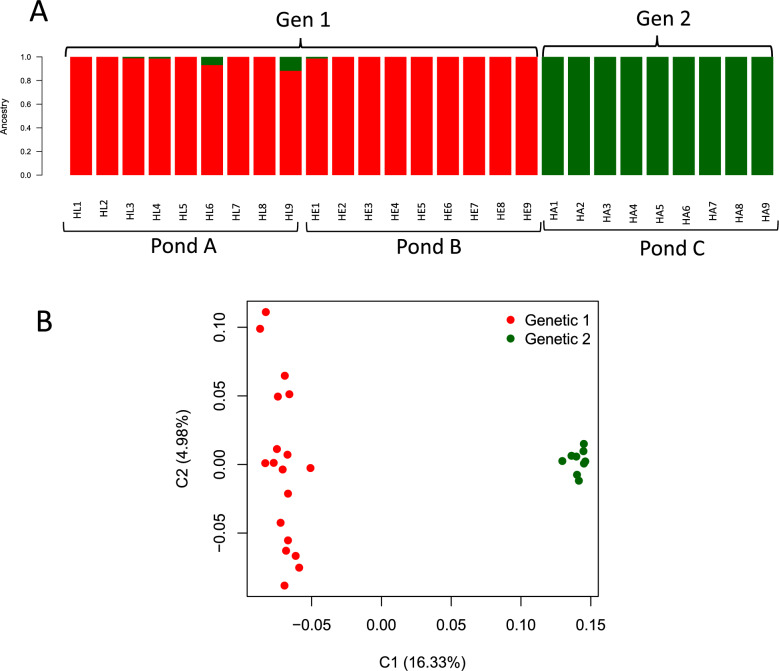
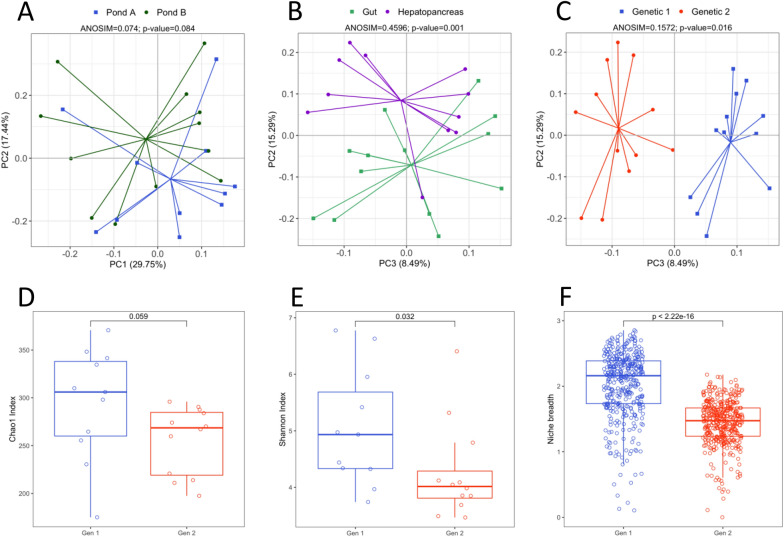
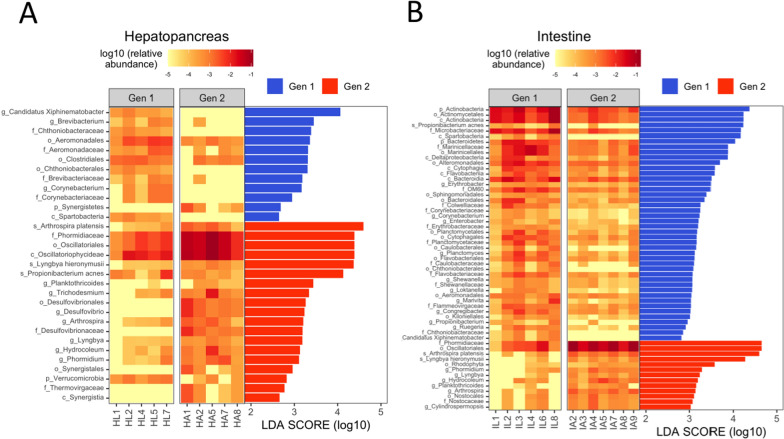
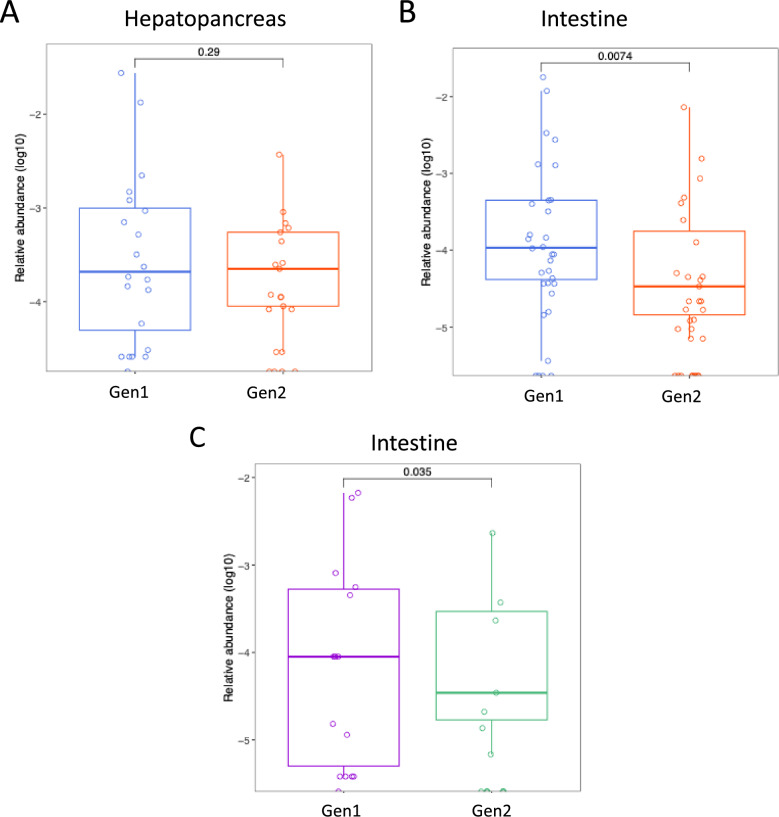
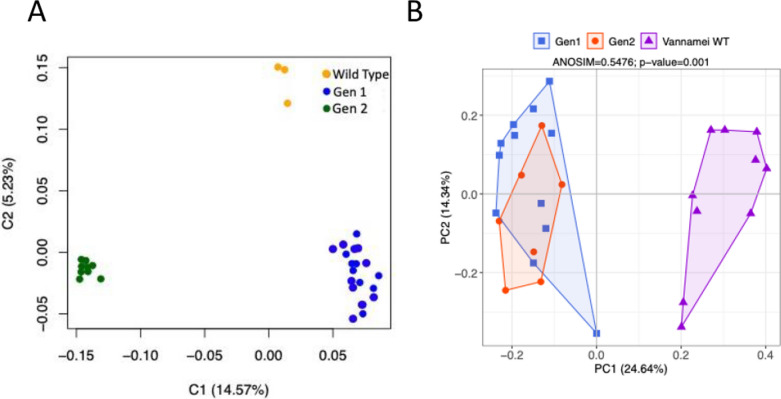
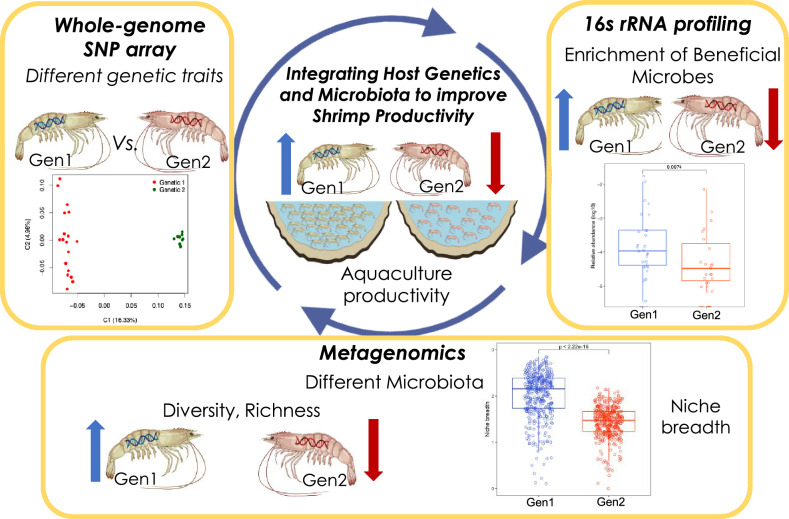
Results: Using genome-wide SNP microarray analysis, we confirmed that Gen1 and Gen2 represented distinct genetic populations. After confirming that the rearing pond did not significantly influence the microbiota composition, we determined that genetic differences explained 15.8% of the microbiota variability, with a stronger selective pressure in the hepatopancreas than in the intestine. Gen1, which exhibited better farm productivity, fostered a microbiota with greater richness, diversity, and resilience than Gen2, along with a higher abundance of beneficial microbes. Further, we demonstrated that a higher abundance of beneficial microbes was associated with healthier shrimp vs. diseased specimens, suggesting that Gen1 could improve shrimp's health and productivity by promoting beneficial microbes. Finally, we determined that the microbiota of both genetic lines was significantly different from their wild-type counterparts, suggesting farm environments and selective breeding programs strongly alter the natural microbiome.
Conclusions: This study highlights the importance of exploring the hologenome perspective, where integrating host genetics and microbiome composition can enhance breeding programs and farming practices.
Keywords: Breeding; Genetic line; Metagenomics; Microbiome; Microbiota-host interactions.
© 2025. The Author(s).
Conflict of interest statement
Declarations. Ethics approval and consent to participate: An ethics statement was not required for the current study as locations for the specimen collection are not protected, and field studies did not include endangered or protected species. Animals were sacrificed under university protocols to avoid animal suffering. Competing interests: All authors declare no financial or non-financial competing interests.
Figures
References
-
- Cornejo-Granados F, Lopez-Zavala AA, Gallardo-Becerra L, Mendoza-Vargas A, Sánchez F, Vichido R, et al. Microbiome of Pacific Whiteleg shrimp reveals differential bacterial community composition between Wild, Aquacultured and AHPND/EMS outbreak conditions. Sci Rep. 2017;7(1):11783. - DOI - PMC - PubMed
Grants and funding
- Fronteras de la Ciencia CF2019-G-263986/Consejo Nacional de Innovación, Ciencia y Tecnología
- Fronteras de la Ciencia CF2019-G-263986/Consejo Nacional de Innovación, Ciencia y Tecnología
- Fronteras de la Ciencia CF2019-G-263986/Consejo Nacional de Innovación, Ciencia y Tecnología
- Fronteras de la Ciencia CF2019-G-263986/Consejo Nacional de Innovación, Ciencia y Tecnología
- IN219723/Dirección General de Asuntos del Personal Académico (DGAPA)
LinkOut - more resources
Full Text Sources