


Household food security and its influence on psychological well-being: a cross-sectional study among adults in slums in Bangladesh
- PMID: 40413043
- PMCID: PMC12104892
- DOI: 10.1136/bmjopen-2024-091640
Household food security and its influence on psychological well-being: a cross-sectional study among adults in slums in Bangladesh
Abstract
Background: Rapid urbanisation and the dense population of Bangladesh foster the growth of slum settlements, where poverty and food insecurity are magnified by economic instability and inflationary pressures, adversely affecting psychological health.
Objectives: This study aimed to assess household food security and its influence on psychological well-being among adults living in urban slums of Bangladesh.
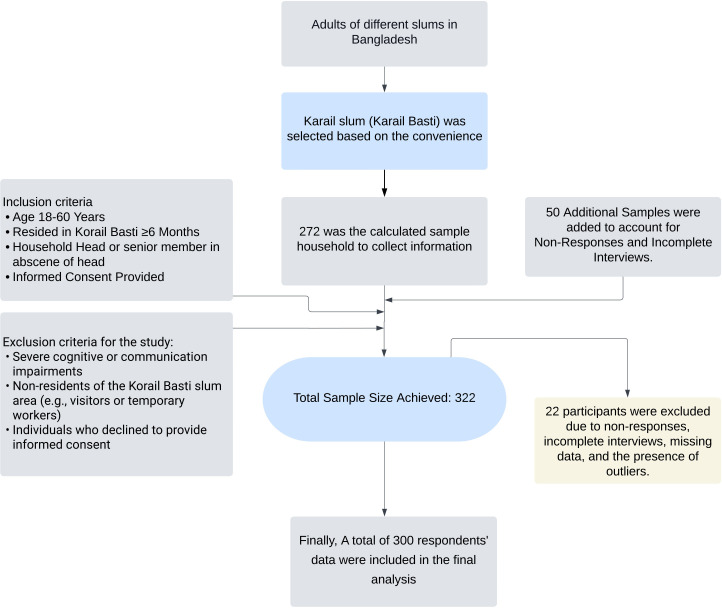
Methods: A cross-sectional study using convenient sampling was conducted among 300 adults in slums in Dhaka, Bangladesh, using a semistructured questionnaire to collect data on sociodemographics, food security and mental health status. Multivariable logistic regression analyses were conducted to observe the influence of food insecurity on mental health status, controlling for other covariates.
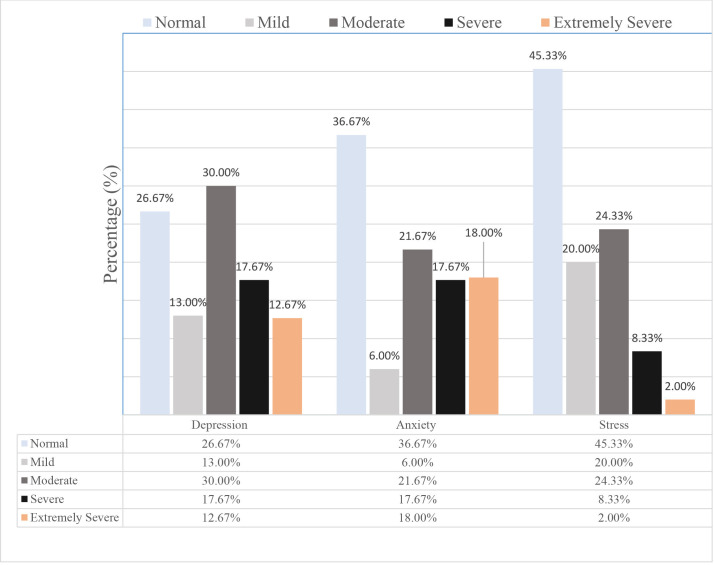
Results: The majority of the participants experienced food insecurity, with 38.0% expressing severe food insecurity. High levels of psychological distress were observed, including stress (54.7%), anxiety (63.3%) and depression (73.3%). Older adults (aOR 4.5, 95% CI 1.3 to 15.5) and females (aOR 4.1, 95% CI 2.0 to 8.4) had higher odds of experiencing anxiety. Single individuals were more prone to experience depression, while homemakers exhibited elevated levels of both depression and anxiety. Furthermore, moderate to severe food insecurity was significantly associated with higher odds of depression (aOR 2.8, 95% CI 1.2 to 6.7) and anxiety (aOR 8.2, 95% CI 3.3 to 20.3) compared with no or mild food insecurity.
Conclusions: This study highlights the pervasive influence of household food insecurity on urban slum dwellers' psychological well-being. Addressing vulnerabilities tied to age, marital status and occupation is crucial for alleviating mental health burdens.
Keywords: Food Insecurity; MENTAL HEALTH; PUBLIC HEALTH.
© Author(s) (or their employer(s)) 2025. Re-use permitted under CC BY-NC. No commercial re-use. See rights and permissions. Published by BMJ Group.
Conflict of interest statement
Competing interests: None declared.
Figures
References
-
- Rural U, Source T. Chapter I urban demographic issues and challenges for a new urban Agenda. 2021.
-
- Panday PK. The face of urbanization and urban poverty in Bangladesh: explaining the slum development initiatives in the light of global experiences, face urban urban poverty Bangladesh explain slum. Dev Initiat Light Glob Exp. 2020:1–151. doi: 10.1007/978-981-15-3332-7_1. - DOI
-
- Uddin N. Assessing urban sustainability of slum settlements in Bangladesh: Evidence from Chittagong city. J Urban Manag. 2018;7:32–42. doi: 10.1016/j.jum.2018.03.002. - DOI
-
- Global economy set for weakest half-decade performance in 30 years. https://www.worldbank.org/en/news/press-release/2024/01/09/global-econom... Available.
MeSH terms
LinkOut - more resources
Full Text Sources
Medical
