


Auditory processing and its cognitive correlates in older adults with mild cognitive impairment
- PMID: 40413385
- PMCID: PMC12103056
- DOI: 10.1186/s12877-025-05997-4
Auditory processing and its cognitive correlates in older adults with mild cognitive impairment
Abstract
Introduction: Age-related central auditory processing disorder (CAPD) is linked to cognitive decline in older adults, potentially preceding Mild Cognitive Impairment (MCI) by several years. While studies indicate that all auditory processing domains are impacted, it remains unclear which domain most significantly correlates with cognitive functions in MCI, warranting further investigation into these relationships. The current study investigated auditory processing deficits and their relationship with cognitive performance in older adults with MCI.
Method: The study recruited 70 participants aged 60 to 72 years, divided into two groups: MCI(n = 35) and healthy controls (n = 35) based on Montreal Cognitive Assessment scores. Comprehensive central auditory processing and cognitive assessments were done.
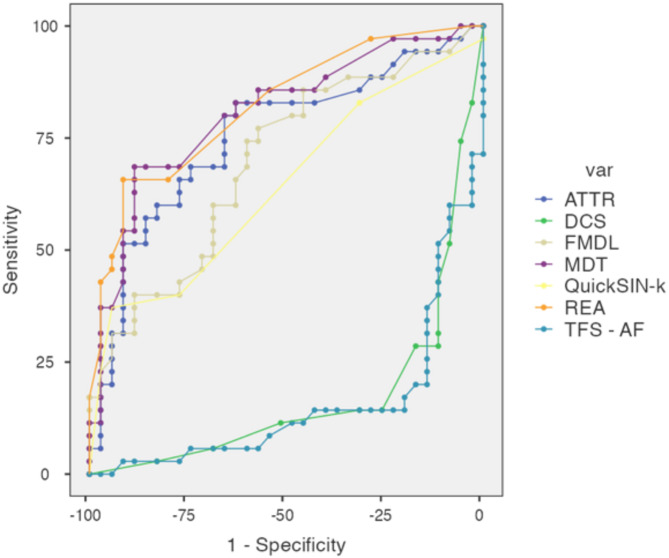
Results: The MCI group showed significant deficits across all auditory processing and cognitive domains. The enhanced right ear advantage in the dichotic test could be due to corpus callosum atrophy affecting left ear processing. Different factor structures in MCI suggest that they relied more on attentional resources for complex auditory tasks. Temporal processing tests showed high sensitivity in identifying MCI, with strong AUC and R² values, underscoring their clinical relevance.
Conclusion: Temporal processing deficits could serve as an early screening tool for cognitive decline in older adults. Larger studies targeting individuals with age-related hearing loss (ARHL) and MCI are essential, given the prevalence of ARHL in this population. Research should also examine the impact of tailored auditory training on cognitive function in MCI to inform interventions.
Trial registration: The study was registered in the Clinical Trials Registry of India (CTRI/2023/06/054277) on 21/06/2023 ( http://ctri.nic.in/ ).
Keywords: Auditory processing; Clinical utility; Cognition; Factor analysis; Left ear extinction; Mild cognitive impairment; Temporal processing.
© 2025. The Author(s).
Conflict of interest statement
Declarations. Ethics approval and consent to participate: The study was conducted in accordance with the ethical guidelines set by the Institutional Ethics Committee (IEC) (IEC1: 352/2022) of Kasturba Medical College (KMC) and Kasturba Hospital (KH), Manipal, India. These guidelines align with the National Ethical Guidelines for Biomedical Research on Human Participants issued by the Indian Council of Medical Research (ICMR, 2017), which adhere to the principles of the Declaration of Helsinki. Written informed consent was obtained from all participants prior to their inclusion in the study. Consent for publication: Not Applicable. Competing interests: The authors declare no competing interests.
Figures
References
-
- Gates GA. Central Presbycusis. Otolaryngology–Head and Neck Surgery [Internet]. 2012 [cited 2024 Aug 9];147:1–2. Available from: https://onlinelibrary.wiley.com/doi/full/10.1177/0194599812446282 - DOI
MeSH terms
LinkOut - more resources
Full Text Sources
Medical
