


CMRI-detected brain injuries and clinical key risk factors associated with adverse neurodevelopmental outcomes in very preterm infants
- PMID: 40415084
- PMCID: PMC12104413
- DOI: 10.1038/s41598-025-02539-1
CMRI-detected brain injuries and clinical key risk factors associated with adverse neurodevelopmental outcomes in very preterm infants
Abstract
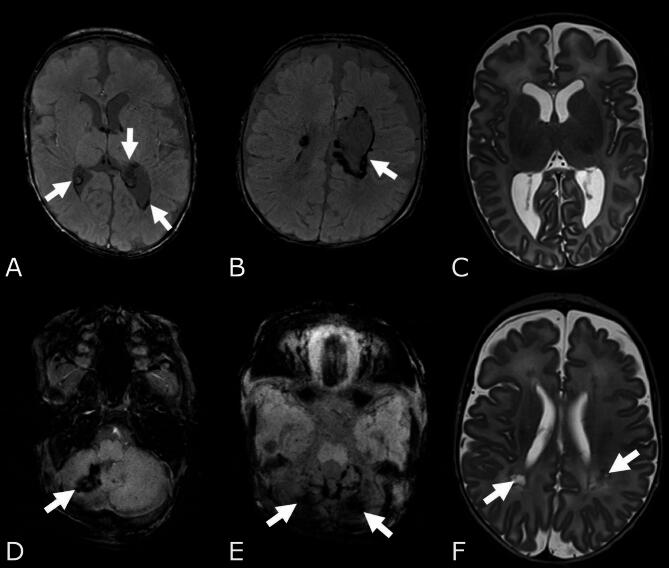
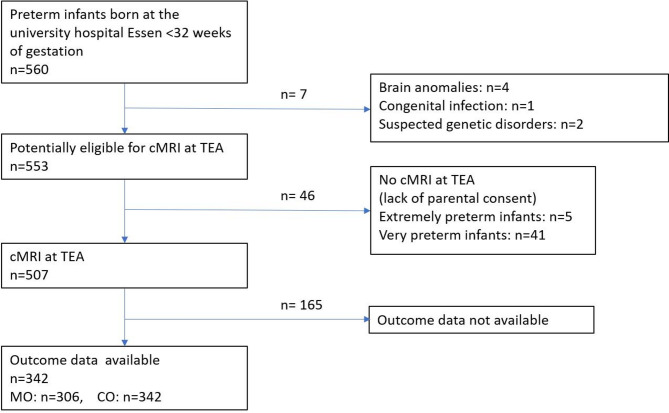
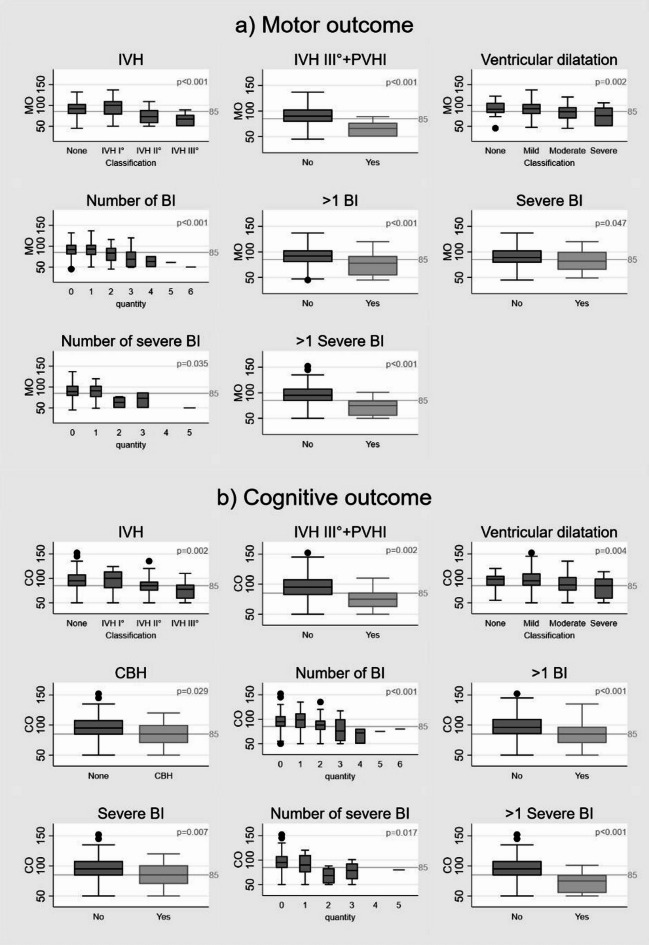
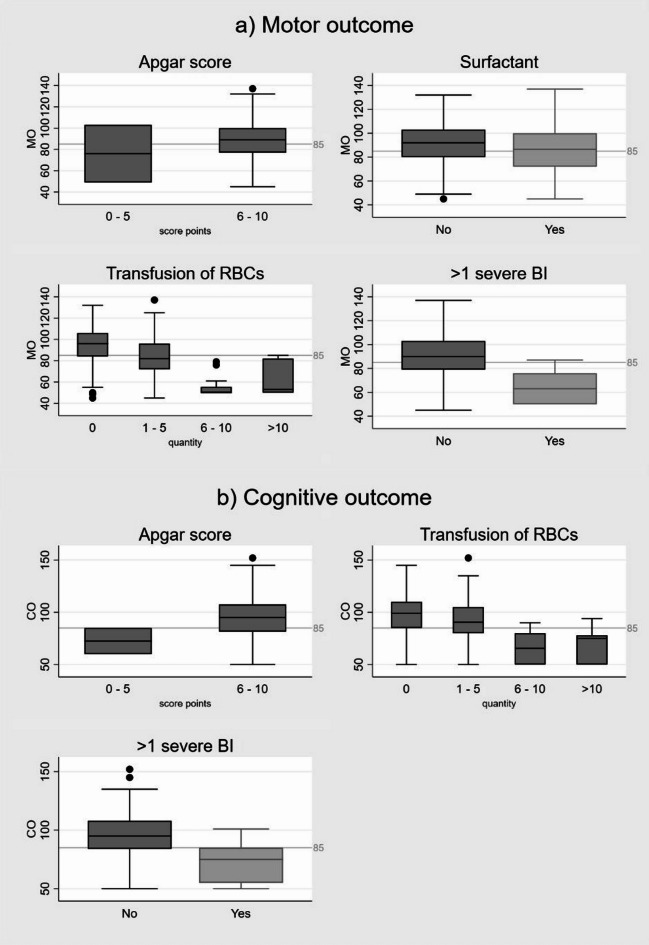
Neurological impairment is high after preterm birth. This study evaluates the impact and interplay of cMRI-detected brain injuries (BI) and clinical risk factors on neurodevelopmental outcomes and extracts the most important key factors. A retrospective analysis was conducted on risk factors (perinatal/neonatal, cMRI-detected BI) for adverse motor (MO) and cognitive (CO) outcomes (Bayley Scales of Infant Development, 24 months corrected age) in a tertiary center cohort (2009-2018) of very preterm infants (< 32 weeks of gestation) using uni-/multivariable regression models. We included 342 infants (mean gestational age:28.0 ± 2.3 weeks; male:49%). Significant clinical predictors for MO/CO included GA, birthweight, APGAR score, catecholamine treatment, ventilation, retinopathy of prematurity, transfusion of red blood cells (RBCs), bronchopulmonary dysplasia, surgery, and patent ductus arteriosus interventions (all p < 0.01/p < 0.01), surfactant (MO: p = 0.037), and sepsis (p < 0.001/p = 0.016). (Severe) cMRI-detected BIs (> 1, all p < 0.05) and not only severe intraventricular hemorrhage (IVH) III°/III°+PVHI and ventricular dilatation (VD) (all p < 0.05), but also mild/moderate injuries like IVH II° (p < 0.001/p < 0.024), cerebellar hemorrhage (CO: p = 0.028), and moderate VD (MO: p = 0.005) significantly impacted outcomes. Independent key factors were > 1 severe cMRI-detected BI (MO/CO:-11.27/-10.3 score points (sp), p = 0.021/0.043), APGAR score (10 min, MO/CO:+5.3/+4.45 sp/point, p < 0.001/p < 0.001), surfactant administration (MO:+4.88 sp, p = 0.031), and transfusion of RBCs (MO/CO:-1.69/-1.96 sp/transfusion, p = 0.006/p < 0.001). In conclusion, combining imaging and clinical (key) risk factors is important for risk stratification of preterm infants. Even mild BI, like IVH II°, significantly contributes to adverse outcomes, underlining the importance of cMRI.
Keywords: Brain injuries; Magnetic resonance imaging; Neurodevelopmental outcomes; Pediatric research; Preterm infants.
© 2025. The Author(s).
Conflict of interest statement
Declarations. Competing interests: The authors declare no competing interests.
Figures
References
-
- Twilhaar, E. S. et al. Profiles of functioning in 5.5-year-old very preterm born children in France: the EPIPAGE-2 study. J. Am. Acad. Child. Adolesc. Psychiatry. 61, 881–891 (2022). - PubMed
MeSH terms
LinkOut - more resources
Full Text Sources
Medical
Miscellaneous
