Association of red blood cell distribution width-platelet ratio with mortality after coronary artery bypass grafting
- PMID: 40416608
- PMCID: PMC12103848
- DOI: 10.7717/peerj.19472
Association of red blood cell distribution width-platelet ratio with mortality after coronary artery bypass grafting
Abstract
Background: This study aims to explore the association between red blood cell distribution width-platelet ratio (RPR) and mortality in patients after coronary artery bypass grafting (CABG).
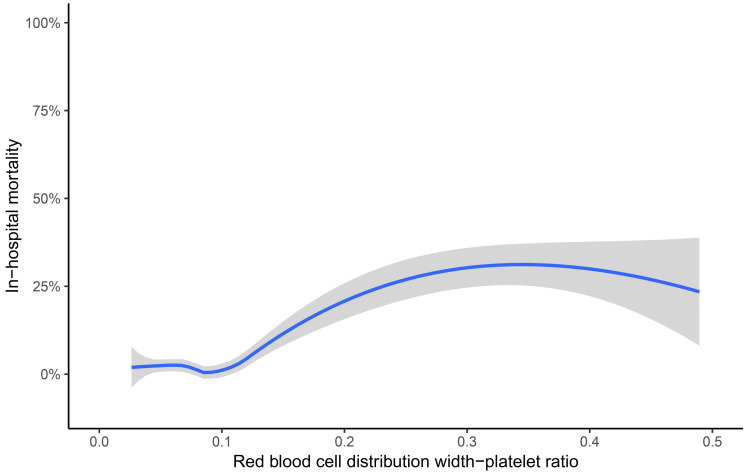
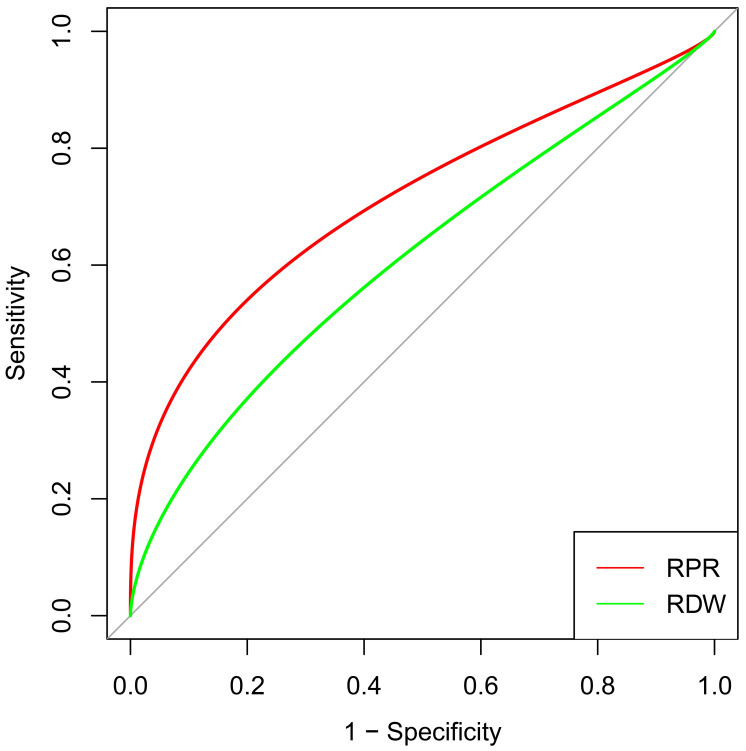
Methods: Data on patients who underwent CABG from January 1, 2021, to July 31, 2022, were retrospectively collected. The locally weighted scatter plot smoothing (Lowess) method was utilized to display the crude association between RPR and in-hospital mortality. The areas under the receiver operating characteristic curves (AUC) were used to assess the discrimination. The cut-off value (0.107) of RPR was calculated using the Youden index method. The primary outcome was in-hospital mortality.
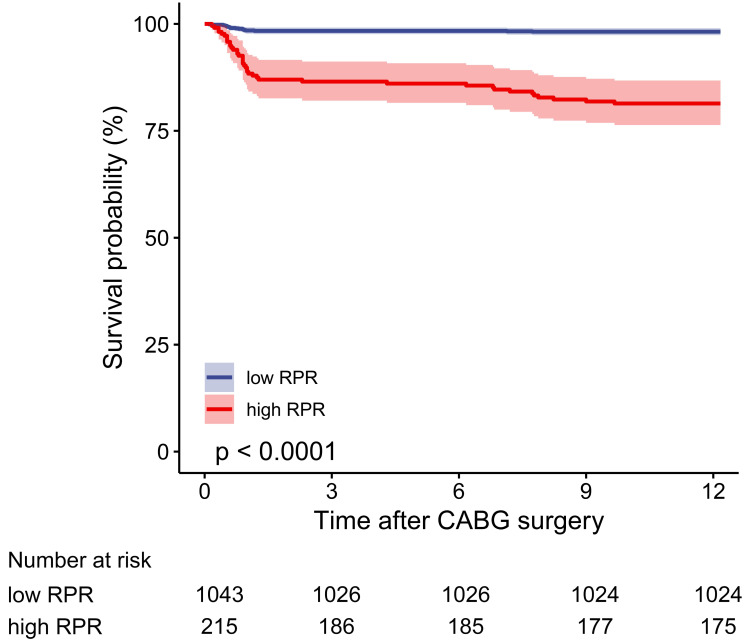
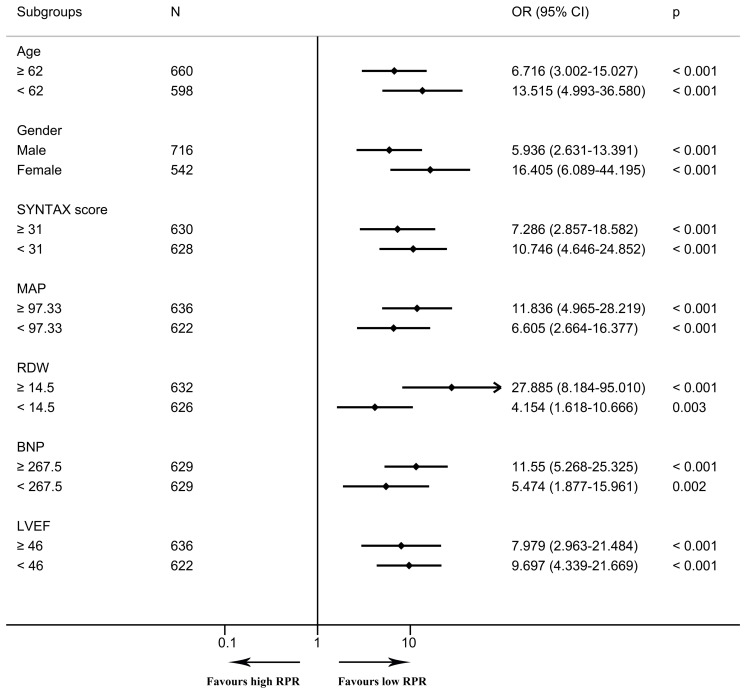
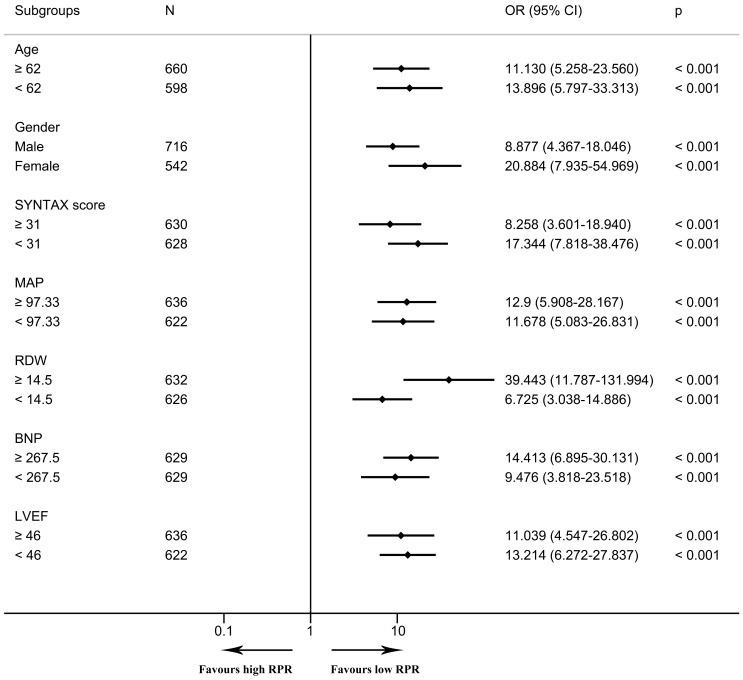
Results: In total, 1,258 patients were included. The Lowess curve showed an approximate positive linear relationship between RPR and in-hospital mortality. In the multivariable logistic regression model, RPR was an independent risk factor (OR 1.493, 95% CI [1.119-1.992] per standard deviation (SD) increase, p = 0.006) for in-hospital mortality after CABG. RPR (AUC 0.716, 95% CI [0.617-0.814]) demonstrated greater discrimination than RDW (AUC 0.578, 95% CI [0.477-0.680], p = 0.002). The cut-off value (0.107) of RPR was calculated for further analysis, and groups were further divided into the high RPR group (≥ 0.107) and the low RPR group (< 0.107). In the multivariable logistic regression model, high RPR (≥ 0.107) correlated with elevated risks of in-hospital mortality (OR 6.097, 95% CI [2.308-16.104], p < 0.001) and one-year mortality (OR 6.395, 95% CI [2.610-15.666], p < 0.001) after adjusting for all included covariates. Subgroup analyses revealed that high RPR consistently had increased risks of in-hospital mortality and one-year mortality. Besides, patients with low RPR show better one-year survival than those with high RPR.
Conclusion: Preoperative high RPR could serve as an independent risk predictor for in-hospital mortality and one-year mortality, which can be utilized to assess the prognosis of patients and further provide guidance for the treatment in patients following CABG.
Keywords: Coronary artery bypass grafting; In-hospital mortality; Red blood cell distribution width-platelet ratio.
©2025 Zhang et al.
Conflict of interest statement
The authors declare there are no competing interests.
Figures
References
-
- Baggen VJM, Van den Bosch AE, Van Kimmenade RR, Eindhoven JA, Witsenburg M, Cuypers J, Leebeek FWG, Boersma E, Roos-Hesselink JW. Red cell distribution width in adults with congenital heart disease: a worldwide available and low-cost predictor of cardiovascular events. International Journal of Cardiology. 2018;260:60–65. doi: 10.1016/j.ijcard.2018.02.118. - DOI - PubMed
-
- Bozorgi A, Khaki S, Mortazavi SH, Sadeghian S, Khoshnevis M, Tofighi S, Khaki A. Effect of baseline red blood cell distribution width on short- and intermediate-term mortality of patients under primary percutaneous coronary intervention: a survival analysis. Critical Pathways in Cardiology. 2016a;15(2):69–74. doi: 10.1097/HPC.0000000000000063. - DOI - PubMed
MeSH terms
LinkOut - more resources
Full Text Sources
Medical