


Case report: Analysis of the efficacy and safety of anti-infectious treatment for brain abscess caused by oral anaerobes
- PMID: 40417222
- PMCID: PMC12098379
- DOI: 10.3389/fphar.2025.1506879
Case report: Analysis of the efficacy and safety of anti-infectious treatment for brain abscess caused by oral anaerobes
Abstract
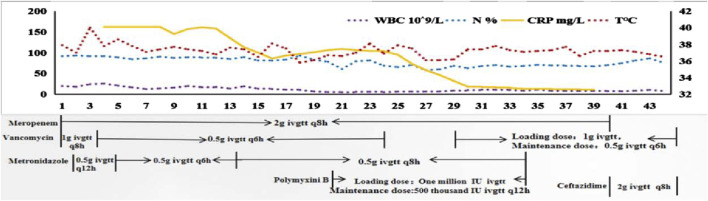
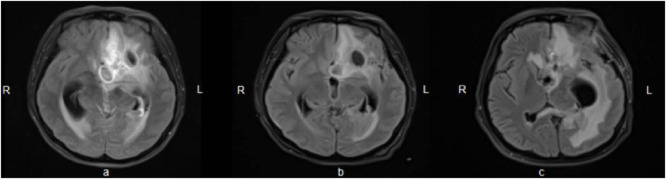
Anaerobic meningitis is relatively rare, and the positivity rate of cerebrospinal fluid (CSF) cultures is exceedingly low, particularly in light of the limited research data regarding bacterial meningitis caused by oral anaerobes. This report presents a case involving a 24-year-old woman who developed fever and headache 32 days after undergoing a cesarean section. The symptoms persisted for 2 weeks, and enhanced nuclear magnetic resonance (NMR) scanning confirmed the suspicion of a brain abscess. Additionally, metagenomic next-generation sequencing (mNGS) of cerebrospinal fluid (CSF) identified several microbial species, including Porphyromonas gingivalis, Prevotella heparinolyticus, Fusobacterium nucleatum, Parvimonas micra and Filifactor alocis. Bacterial culture of CSF revealed the growth of Prevotella heparinolyticus. Following bilateral ventricular external drainage, intracranial lesion resection, and the implantation of an Ommaya reservoir in the right lateral ventricle, cranial decompression treatment was performed. Antimicrobial therapy administered successively over a period of 6 weeks, including vancomycin, meropenem, metronidazole, polymyxin B and ceftazidime, resulting in significant control of the infection. Clinical pharmacists engaged in comprehensive discussions with clinicians regarding the antimicrobial drug regimens and recommended a combined regimen of meropenem and metronidazole. An individualized anti-infective treatment protocol was developed based on therapeutic drug monitoring (TDM), which is anticipated to yield valuable insights for the management of brain abscesses resulting from oral anaerobic bacteria.
Keywords: brain abscess; meropenem; metagenomic next-generation sequencing; metronidazole; oral anaerobes.
Copyright © 2025 Tian, Liu, Chen and Li.
Conflict of interest statement
The authors declare that the research was conducted in the absence of any commercial or financial relationships that could be construed as a potential conflict of interest.
Figures
References
-
- Aldridge K. E., Ashcraft D., Cambre K., Pierson C. L., Jenkins S. G., Rosenblatt J. E. (2001). Multicenter survey of the changing in vitro antimicrobial susceptibilities of clinical isolates of Bacteroides fragilis group, Prevotella, Fusobacterium, Porphyromonas, and Peptostreptococcus species. Antimicrob. agents Chemother. 45 (4), 1238–1243. 10.1128/aac.45.4.1238-1243.2001 - DOI - PMC - PubMed
Publication types
LinkOut - more resources
Full Text Sources
