


Non-Surgical Options for The Diagnosis of Endometriosis in Low-Resource Settings: A Comparative Study
- PMID: 40417644
- PMCID: PMC12102738
- DOI: 10.2147/IJWH.S507556
Non-Surgical Options for The Diagnosis of Endometriosis in Low-Resource Settings: A Comparative Study
Abstract
Purpose: Endometriosis, a chronic estrogen-dependent condition characterized by the implantation of tissue beyond the uterine cavity, impacts 10% of women of reproductive age. Endometriosis manifests through menstrual discomfort, chronic pelvic pain, dyspareunia, and cyclical digestive issues. It is additionally linked to infertility. Early diagnosis and effective treatment are crucial but remain limited in many settings. This study aims to identify specific clinical characteristics that could aid in the early diagnosis and treatment of endometriosis.
Patients and methods: The study conducted at Province General Hospital Margono, Indonesia, involved endometriosis patients who had registered from 2020 to 2024. Some inclusion and exclusion criteria are applied in this study. Statistical analysis was performed to determine the rate, odd ratio and prevalence ratio.
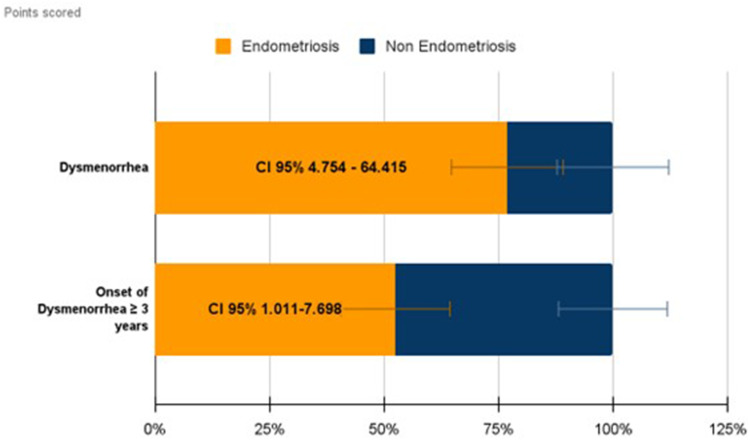
Results: Our analysis indicates that women experiencing dysmenorrhea, particularly with an onset occurring more than three years after menarche, are significantly associated with endometriosis. Dysmenorrhea had nearly 17.5 times higher odds [OR 17.5, 95% CI 4.75-64.4, p-value 0.00] of being correlated with endometriosis, and the onset of dysmenorrhea more than 3 years after menarche had 1.67 times higher [OR 2.790; CI 95%; 1.011-7.698, p-value 0.045] of being associated with endometriosis.
Conclusion: Multiple studies have shown that diagnosing endometriosis early is challenging due to its various symptoms. Our findings highlight the significance of dysmenorrhea characteristics, particularly its onset timing, as potential indicators of endometriosis. This findings suggest that incorporating dysmenorrhea onset into clinical assessments may enhance non-surgical diagnostic approaches, facilitating earlier detection and management of endometriosis.
Keywords: endometriosis; menstrual cycle; non-invasive; predictive model.
© 2025 Marlina et al.
Conflict of interest statement
The authors report no conflicts of interest in this work.
Figures
References
-
- Tsamantioti ES, Mahdy H. Endometriosis. In: StatPearls. Treasure Island (FL): StatPearls Publishing; 2024. - PubMed
-
- World Health Organization (WHO). Endometriosis. 2024. Available from: https://www.who.int/news-room/fact-sheets/detail/endometriosis. Accessed Nov 16, 2024.
LinkOut - more resources
Full Text Sources
