Chimeric antigen receptor T cell immunotherapy‑associated hemophagocytic lymphohistiocytosis: Pathogenesis, clinical manifestation, diagnosis and management compared with cytokine release syndrome (Review)
- PMID: 40417883
- PMCID: PMC12134842
- DOI: 10.3892/mmr.2025.13578
Chimeric antigen receptor T cell immunotherapy‑associated hemophagocytic lymphohistiocytosis: Pathogenesis, clinical manifestation, diagnosis and management compared with cytokine release syndrome (Review)
Abstract
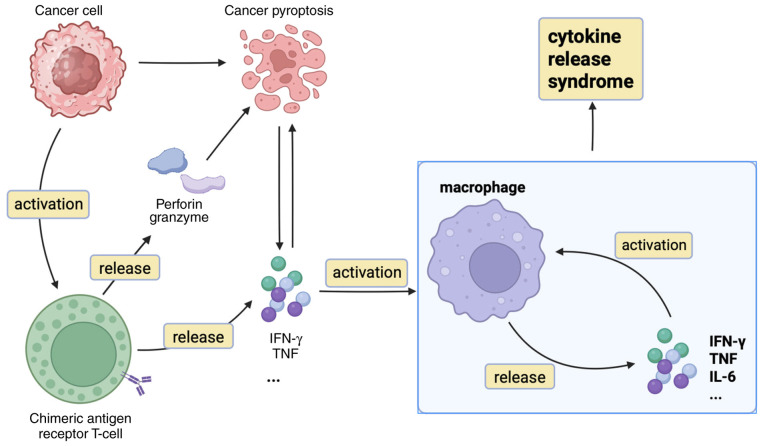
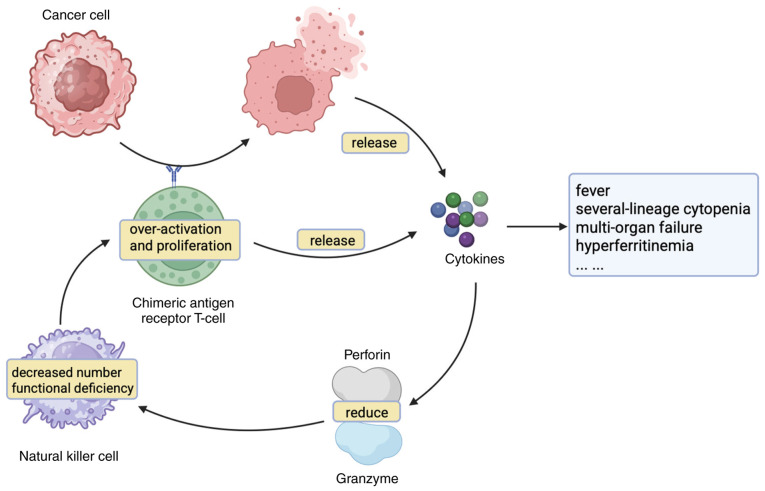
Chimeric antigen receptor (CAR) T cell therapy is used to treat hematological malignancy. However, it carries the risk of life‑threatening inflammatory toxicity, including cytokine release syndrome (CRS) and CAR T cell‑associated hemophagocytic lymphohistiocytosis (CARHLH). CRS is a common side effect of CAR T cell therapy, with fever and multiorgan functional impairment as the primary clinical manifestation. CARHLH and CRS have similar clinical manifestations. However, CARHLH is associated with a high mortality rate. CARHLH was previously considered a specific type of CRS, however, it must be promptly differentiated from CRS for treatment initiation, with management differing from that of CRS. The pathogenesis of CARHLH differs from that of CRS. The present review aimed to summarize the pathogenesis, diagnosis and treatment of CARHLH to assist in its early identification and management.
Keywords: chimeric antigen receptor T cell immunotherapy; chimeric antigen receptor T cell‑associated hemophagocytic lymphohistiocytosis; cytokine release syndrome; diagnosis; hemophagocytic lymphohistiocytosis; treatment.
Conflict of interest statement
The authors declare that they have no competing interests.
Figures
References
-
- Cameron BJ, Gerry AB, Dukes J, Harper JV, Kannan V, Bianchi FC, Grand F, Brewer JE, Gupta M, Plesa G, et al. Identification of a Titin-derived HLA-A1-presented peptide as a cross-reactive target for engineered MAGE A3-directed T cells. Sci Transl Med. 2013;5:197ra103. doi: 10.1126/scitranslmed.3006034. - DOI - PMC - PubMed
Publication types
MeSH terms
Substances
LinkOut - more resources
Full Text Sources