


Perioperative risk factors for postoperative delirium after hemiarthroplasty in geriatric hip fractures: A prospective observational study
- PMID: 40419921
- PMCID: PMC12113965
- DOI: 10.1097/MD.0000000000042025
Perioperative risk factors for postoperative delirium after hemiarthroplasty in geriatric hip fractures: A prospective observational study
Abstract
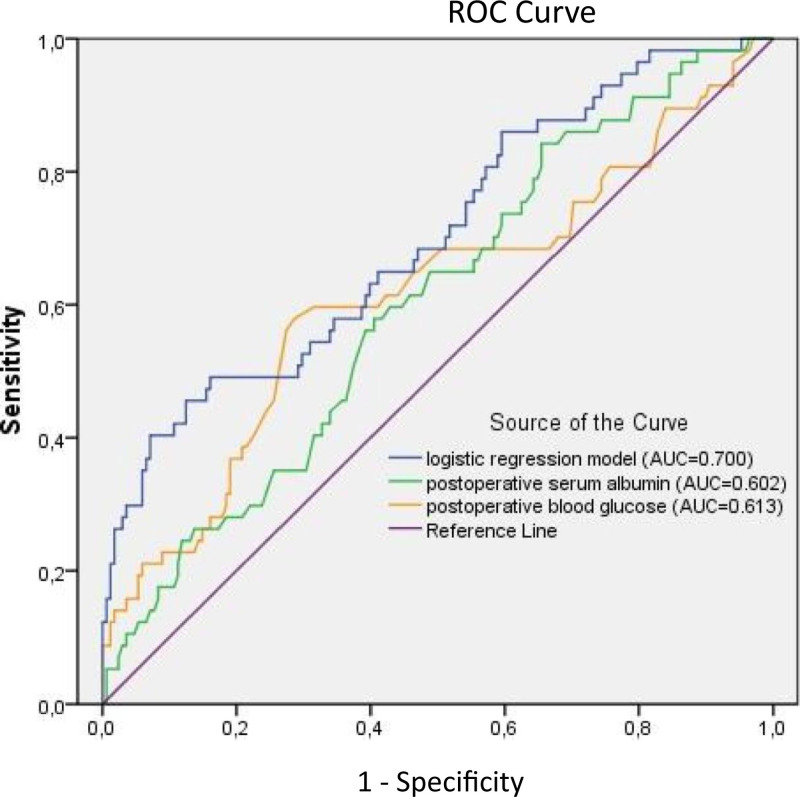
The aim of the study was to investigate the predictors of postoperative delirium (POD) in elderly hip fracture patients, as well as the effects of POD on in-hospital results, including complications, duration of hospital stay, and mortality. In this prospective cohort study, 225 consecutive hip hemiarthroplasty patients over the age of 65 who underwent surgery at a high-volume training and research hospital between June 2021 and June 2023 were investigated. Pathological fracture, death within the postoperative first 5 days, and missing data were exclusion criteria. The collected data included demographics, laboratory examination results, and comorbidities. The main outcome measure was POD, and the assessment tool for delirium was the Confusion Assessment Method. All patients were assessed daily in terms of POD for at least 5 postoperative days. To determine independent predictors of POD, univariate and multivariate logistic regression analyses were carried out. The receiver operating characteristic (ROC) curve was used to investigate the predictive performance of the logistic regression model and determine optimal cutoff points. Fifty-seven (25.3%) patients were diagnosed with delirium. Multivariate analysis showed that lower postoperative albumin (OR: 0.43, P = .012), higher postoperative blood glucose (OR: 1.01, P < .001), and the presence of preoperative delirium (OR: 8.44, P = .003) were independent predictive factors for POD. According to the ROC curves, the area under curve value of the predictive model was 0.700 (95% CI: 0.619-0.781, P < .001), indicating good discriminative ability. The optimal cutoff values of the postoperative blood glucose and postoperative albumin levels for delirium prediction were calculated at 141.5 mg/dL and 3.11 g/dL. The POD group experienced a significantly greater rate of in-hospital mortality as well as longer hospital stays (P = .004 and.012, respectively). Our data suggest that preoperative delirium, higher postoperative blood glucose, and lower postoperative serum albumin levels can be used as perioperative predictors of POD in patients undergoing hemiarthroplasty for hip fracture. Closely monitoring patients with postoperative blood glucose ≥ 141.5 mg/dL and postoperative serum albumin ≤ 3.11 g/dL and implementing preventative strategies may be beneficial to improve patient outcomes.
Keywords: albumin; delirium; glucose; hip hemiarthroplasty; risk factor.
Copyright © 2025 the Author(s). Published by Wolters Kluwer Health, Inc.
Conflict of interest statement
The authors have no funding and conflicts of interest to disclose.
Figures
References
-
- Hshieh TT, Inouye SK, Oh ES. Delirium in the elderly. Clin Geriatr Med. 2020;36:183–99. - PubMed
-
- Scholz AF, Oldroyd C, McCarthy K, Quinn TJ, Hewitt J. Systematic review and meta-analysis of risk factors for postoperative delirium among older patients undergoing gastrointestinal surgery. Br J Surg. 2016;103:e21–28. - PubMed
-
- Ten Broeke M, Koster S, Konings T, Hensens AG, van der Palen J. Can we predict a delirium after cardiac surgery? A validation study of a delirium risk checklist. Eur J Cardiovasc Nurs. 2018;17:255–61. - PubMed
Publication types
MeSH terms
Substances
LinkOut - more resources
Full Text Sources
Medical
