


Diagnostic tools in respiratory medicine (Review)
- PMID: 40420977
- PMCID: PMC12105097
- DOI: 10.3892/br.2025.1990
Diagnostic tools in respiratory medicine (Review)
Abstract
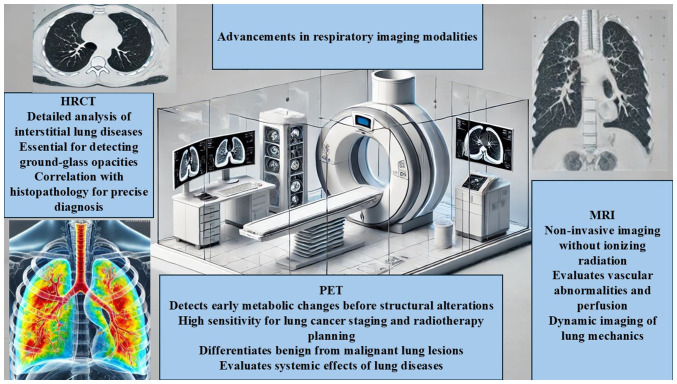
Recent advancements in diagnostic technologies have significantly transformed the landscape of respiratory medicine, aiming for early detection, improved specificity and personalized therapeutic strategies. Innovations in imaging such as multi-slice computed tomography (CT) scanners, high-resolution CT and magnetic resonance imaging (MRI) have revolutionized our ability to visualize and assess the structural and functional aspects of the respiratory system. These techniques are complemented by breakthroughs in molecular biology that have identified specific biomarkers and genetic determinants of respiratory diseases, enabling targeted diagnostic approaches. Additionally, functional tests including spirometry and exercise testing continue to provide valuable insights into pulmonary function and capacity. The integration of artificial intelligence is poised to further refine these diagnostic tools, enhancing their accuracy and efficiency. The present narrative review explores these developments and their impact on the management and outcomes of respiratory conditions, underscoring the ongoing shift towards more precise and less invasive diagnostic modalities in respiratory medicine.
Keywords: artificial intelligence; diagnostic tools; imaging techniques; molecular diagnostics; respiratory medicine.
Copyright: © 2025 Georgakopoulou et al.
Conflict of interest statement
The authors declare that they have no competing interests.
Figures
References
-
- Müller NL. Computed tomography and magnetic resonance imaging: Past, present and future. Eur Respir J Suppl. 2002;35:3s–12s. - PubMed
Publication types
LinkOut - more resources
Full Text Sources