


Gut-Brain Inflammatory Pathways in Attention-Deficit/Hyperactivity Disorder: The Role and Therapeutic Potential of Diet
- PMID: 40422911
- PMCID: PMC12113503
- DOI: 10.3390/metabo15050335
Gut-Brain Inflammatory Pathways in Attention-Deficit/Hyperactivity Disorder: The Role and Therapeutic Potential of Diet
Abstract
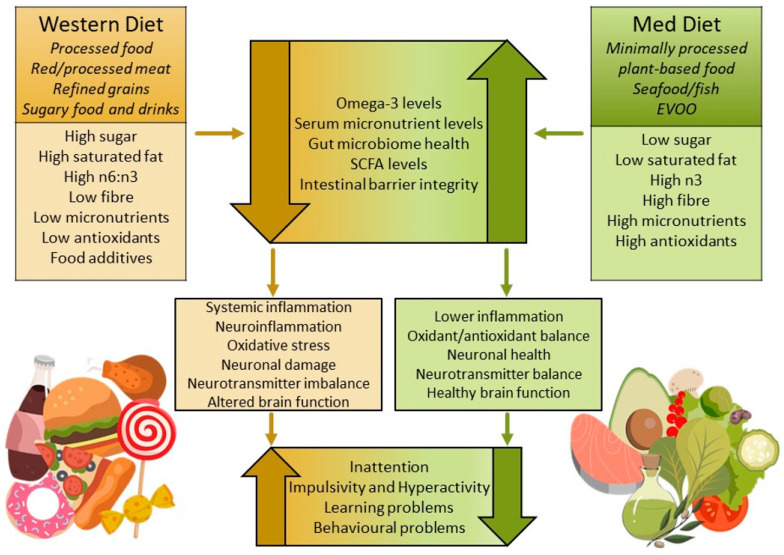
Attention-deficit/hyperactivity disorder (ADHD) is a common childhood-onset neurodevelopmental disorder that often persists into adulthood, leading to various adverse outcomes. Its underlying pathology is multifactorial, involving neurotransmitter imbalances, gut microbiota alterations, and oxidative and inflammatory dysregulation. Diet, a key environmental modifier of gut ecology, is consistently poorer in individuals with ADHD, with multiple nutrients implicated in its pathophysiology. This review examines the role of specific nutrients such as omega-3 fatty acids, key micronutrients, and potentially harmful dietary components, as well as broader dietary patterns, particularly the Western diet and Mediterranean diet (MedDiet), in relation to ADHD symptoms. It also evaluates both whole-diet and supplement-based clinical interventions, supporting the growing recognition of nutrition as a safe and relatively affordable modifiable factor in ADHD management. Additionally, the biological mechanisms linking diet to ADHD are reviewed, highlighting strong evidence for the involvement of gut dysbiosis and inflammatory processes. Despite the well-documented antioxidant, anti-inflammatory, and microbiome benefits of the MedDiet, direct research investigating its role in ADHD remains limited. Most whole-diet approaches to date have focused on elimination diets, leaving a significant gap in understanding the potential role of the MedDiet in ADHD management. Therefore, this review outlines preliminary evidence supporting the MedDiet and its key components as modulators of ADHD-related biological pathways, indicating its potential as a therapeutic approach. However, further research is required to rigorously evaluate its clinical efficacy. Finally, the limitations of observational and interventional nutritional research in ADHD are discussed, along with recommendations for future research directions.
Keywords: Mediterranean diet; Western diet; anti-inflammatory; antioxidant; attention-deficit/hyperactivity disorder; dysbiosis; gut microbiome; inflammation; omega-3s.
Conflict of interest statement
The authors declare no conflicts of interest.
Figures
References
-
- Faraone S.V., Rostain A.L., Blader J., Busch B., Childress A.C., Connor D.F., Newcorn J.H. Practitioner Review: Emotional dysregulation in attention-deficit/hyperactivity disorder—Implications for clinical recognition and intervention. J. Child Psychol. Psychiatry. 2019;60:133–150. doi: 10.1111/jcpp.12899. - DOI - PubMed
Publication types
LinkOut - more resources
Full Text Sources
Miscellaneous
