


From Rare to Common: Genetic Insights into TLR7 Variants in a Multicentric Spanish Study on COVID-19 Severity
- PMID: 40423910
- PMCID: PMC12116960
- DOI: 10.1007/s10875-025-01892-0
From Rare to Common: Genetic Insights into TLR7 Variants in a Multicentric Spanish Study on COVID-19 Severity
Abstract
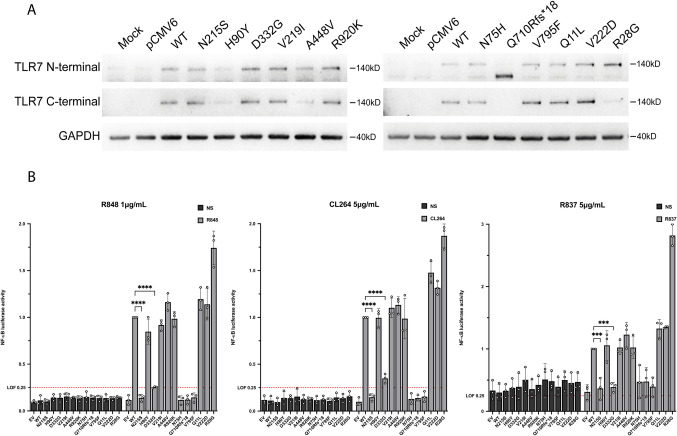
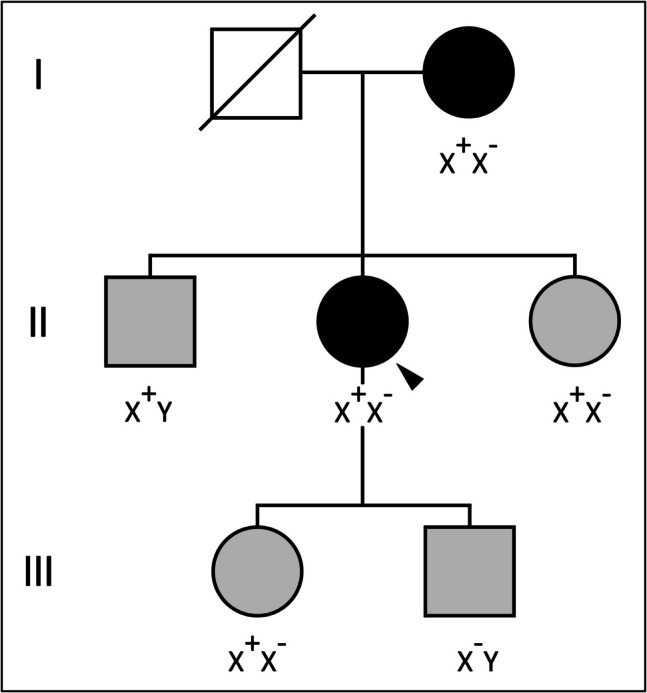
TLR7, which encodes a key receptor for single-stranded RNA (ssRNA) virus of the innate immune system, was recently associated with X-linked immunodeficiency and COVID-19 susceptibility. This study investigates the association between TLR7 variants and susceptibility to severe COVID-19 in a multicentric Spanish cohort. The TLR7 gene was sequenced in a cohort of 365 COVID-19 patients, stratified into two groups: one comprising mild and asymptomatic patients, considered as controls (n = 87), and the other consisting of moderate to severely affected patients hospitalized due to COVID-19 pneumonia, considered as cases (n = 278). A total of 152 unique TLR7 variants were identified, of note, six rare variants were identified in 11 cases (3.96%), all of whom belonged to the case group. The functional impact of rare TLR7 variants was assessed using a luciferase reporter assay and revealed that N215S is a loss-of-function (LOF) variant, while D332G exhibits an hypomorphic behavior. Conversely, H90Y, V219I, A448V, and R902K maintained normal signaling. No skewed X-inactivation was observed in female carriers of N215S or D332G. In addition, the common variants Q11L (rs179008), c.4-151A>G (rs179009) and c.*881C>G (rs3853839) were associated with severe pneumonia, while c.4-151A>G (rs179009) was specifically linked to Intensive Care Unit (ICU) admission. These findings highlight the role of TLR7 in antiviral immune response and its association with severe COVID-19 in men. The luciferase assay proves to be a reliable tool for evaluating TLR7 signaling, effectively distinguishing between neutral, LOF, and gain-of-function (GOF) variants. Further research is needed to better understand TLR7 variants and its implications in immunodeficiency and immune dysregulation.
Keywords: COVID-19; TLR7; X-linked; immunodeficiency; innate immunity.
© 2025. The Author(s).
Conflict of interest statement
Declarations. Ethics Approval: The study involving human participants was reviewed and approved by Bellvitge University Hospital Research Ethics Committee (approval number PR040/21). The patients/participants provided their written informed consent to participate in this study, and for the publication of any data included in this article. Competing interests: The authors declare no competing interests.
Figures
References
-
- Du X, Poltorak A, Wei Y, Beutler B. Three novel mammalian toll-like receptors: gene structure, expression, and evolution. Eur Cytokine Netw. 2000;11(3):362–71. - PubMed
-
- Chuang TH, Ulevitch RJ. Cloning and characterization of a sub-family of human Toll-like receptors: hTLR7, hTLR8 and hTLR9. Eur Cytokine Netw. 2000;11(3):372–8. - PubMed
-
- Medzhitov R, Janeway C Jr. Innate immune recognition: mechanisms and pathways. Immunol Rev. 2000;173:89–97. 10.1034/j.1600-065x.2000.917309.x. - PubMed
-
- Hemmi H, Kaisho T, Takeuchi O, Sato S, Sanjo H, Hoshino K, et al. Small anti-viral compounds activate immune cells via the TLR7 MyD88-dependent signaling pathway. Nat Immunol. 2002;3(2):196–200. 10.1038/ni758. - PubMed
