


Strategies for Anticancer Treatment in p53-Mutated Head and Neck Squamous Cell Carcinoma
- PMID: 40426992
- PMCID: PMC12108584
- DOI: 10.3390/biomedicines13051165
Strategies for Anticancer Treatment in p53-Mutated Head and Neck Squamous Cell Carcinoma
Abstract
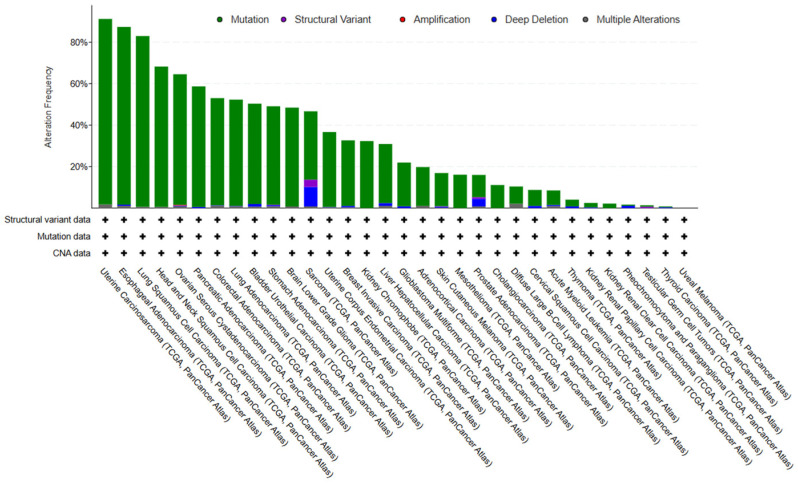
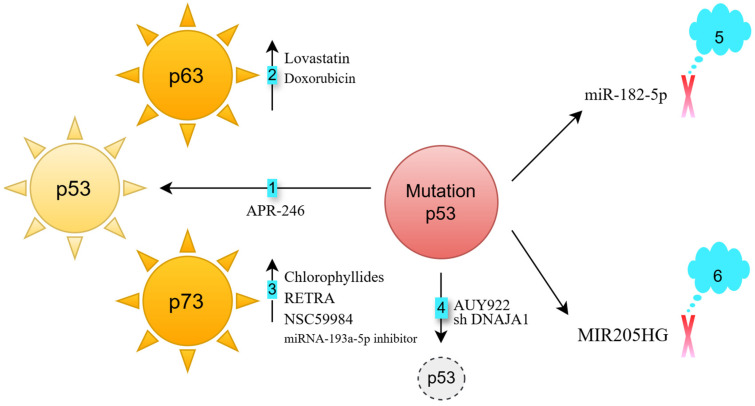
This Opinion summarizes the strategies for anticancer treatment in p53-mutated head and neck squamous cell carcinoma (HNSCC). It examines six strategies for anticancer treatment in p53-mutated HNSCC: 1. direct reactivation of mutated p53; 2. activation of p63; 3. activation of p73; 4. degradation of mutated p53; 5. blocking the p53-regulated oncogenic microRNA; and 6. blocking the p53-regulated oncogenic long non-coding RNA. Since HNSCC has a high p53 mutation rate compared to other types of cancers, these strategies for combating p53-mutated HNSCC may prove useful for generating new ideas or methods for developing treatments for other cancers with p53 mutations. This article also explores other factors that may impact the effectiveness of anticancer therapies in p53-mutated HNSCC.
Keywords: HNSCC; head and neck cancer; mutation; p53.
Conflict of interest statement
The authors declare no conflicts of interest.
Figures
References
-
- Hagiwara K., McMenamin M.G., Miura K., Harris C.C. Mutational analysis of the p63/p73L/p51/p40/CUSP/KET gene in human cancer cell lines using intronic primers. Cancer Res. 1999;59:4165–4169. - PubMed
Grants and funding
LinkOut - more resources
Full Text Sources
Research Materials
Miscellaneous
