


Influence of Lifestyle Habits on Psychological Well-Being of University Students: A Quantitative Cross-Sectional Study
- PMID: 40428032
- PMCID: PMC12111242
- DOI: 10.3390/healthcare13101197
Influence of Lifestyle Habits on Psychological Well-Being of University Students: A Quantitative Cross-Sectional Study
Abstract
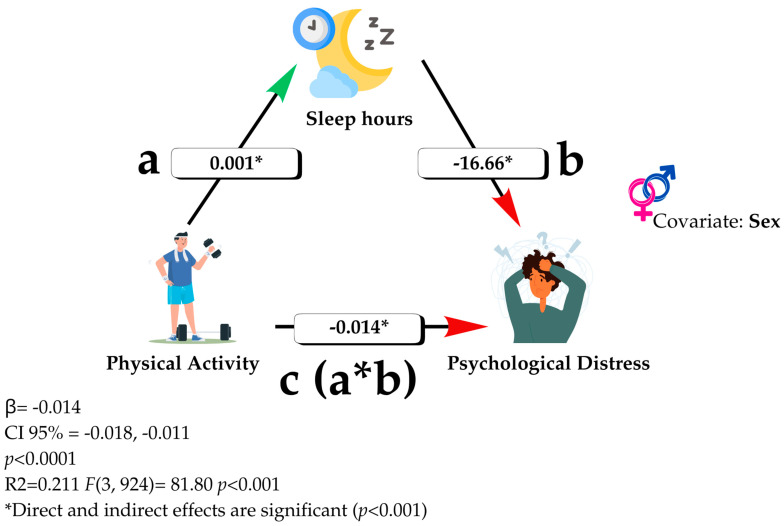
Background: This study explored the influence of three key lifestyle habits-physical activity (PA), adherence to the Mediterranean diet (MD), and sleep duration-on psychological well-being indicators (resilience, psychological distress, and self-esteem) in university students. Methods: A total of 928 students (67.3% females; total sample mean age = 21.01 ± 1.95) from the Faculty of Education at the University of Granada participated. Validated self-report instruments were used to assess all variables: the International Physical Activity Questionnaire (IPAQ-SF), the KIDMED index, the Connor-Davidson Resilience Scale (CD-RISC), the Depression Anxiety Stress Scales (DASS-21), and the Rosenberg Self-Esteem Scale. Results: Results showed that male students reported higher levels of PA, better MD adherence, longer sleep duration, and more favorable psychological outcomes. Stepwise regression analyses indicated that MD adherence was the strongest and most consistent predictor of resilience, self-esteem, and psychological distress. Sleep duration emerged as a key factor, particularly in predicting resilience among men. Although no direct association was found between PA and psychological distress, mediation analysis revealed a significant indirect effect through sleep duration. Conclusions: These findings underscore the relevance of promoting healthy lifestyle habits in an integrated and sex-sensitive manner to enhance mental health (MH) in university students. In particular, targeting future teachers may be essential, given their potential role as promoters of well-being in school settings.
Keywords: Mediterranean diet; future teachers; mental health; physical activity; psychological distress; psychological well-being; resilience; self-esteem; sleep duration; university students.
Conflict of interest statement
The authors declare no conflicts of interest.
Figures
References
-
- Gasser P., Grajeda A., Cordova J.P., La Fuente I., Cordova P., Naranjo H., Sanjinés A. Mental cost in higher education: A comparative study on academic stress as a predictor of mental health in university students during and after the COVID-19 pandemic. Cogent Educ. 2025;12:2445968. doi: 10.1080/2331186X.2024.2445968. - DOI
Grants and funding
LinkOut - more resources
Full Text Sources
