


Phenotypic Spectrum of KATNIP-Associated Joubert Syndrome: Possible Association with Esophageal Atresia and Review of the Literature
- PMID: 40428346
- PMCID: PMC12111208
- DOI: 10.3390/genes16050524
Phenotypic Spectrum of KATNIP-Associated Joubert Syndrome: Possible Association with Esophageal Atresia and Review of the Literature
Abstract
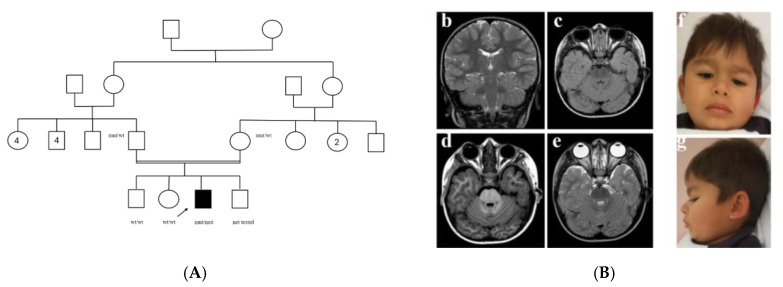
Background: Joubert syndrome (JS) is a multi-systemic ciliopathy, characterized by intellectual disability and congenital anomalies involving the brain, kidney, heart, and eye. Even if clinical presentation is variable, most authors consider a brain abnormality known as the molar tooth sign (MTS) as mandatory for diagnosis. About 40 genes were identified to be associated with JS, usually with an autosomal recessive pattern. KATNIP variants represent a rare cause of JS; only six families were previously reported. Methods: We performed exome sequencing in a child with a syndromic phenotype, described the clinical features and molecular findings, and performed a review of the literature to identify known individuals with pathogenic variants in KATNIP, highlighting clinical characteristics and gene-phenotype correlations. Results: Using exome sequencing, we identified a homozygous novel frameshift variant c.808del, p.Ser270ValfsTer28 in KATNIP in a 5-year-old male from a consanguineous family of Roma ethnic background. Notable clinical features of the proband include severe developmental delay, hypotonia, and post-axial polydactyly. He did not have MTS, but showed severe anemia and esophageal atresia, which was already reported in association with a KATNIP variant. We collected the phenotypes of all reported patients and discussed common and distinct features with respect to typical JS. Affected individuals shared JS clinical features, although the typical MTS was not always present, polydactyly and renal abnormalities were absent, while pituitary abnormalities were common. Conclusions: Our report provides new data for KATNIP-related JS, expanding the clinical phenotypic spectrum and suggesting a possible role of KATNIP defects in the development of esophageal atresia.
Keywords: Joubert syndrome; KATNIP; esophageal atresia; molar tooth sign.
Conflict of interest statement
Author Anna Patanè was employed by the company R&I Genetics SRL. The remaining authors declare that the research was conducted in the absence of any commercial or financial relationships that could be construed as a potential conflict of interest.
Figures
References
Publication types
MeSH terms
Supplementary concepts
LinkOut - more resources
Full Text Sources
Medical
