


Integrated Chemical and Biological Evaluation of Linden Honeydew Honey from Bosnia and Herzegovina: Composition and Cellular Effects
- PMID: 40428448
- PMCID: PMC12110744
- DOI: 10.3390/foods14101668
Integrated Chemical and Biological Evaluation of Linden Honeydew Honey from Bosnia and Herzegovina: Composition and Cellular Effects
Abstract
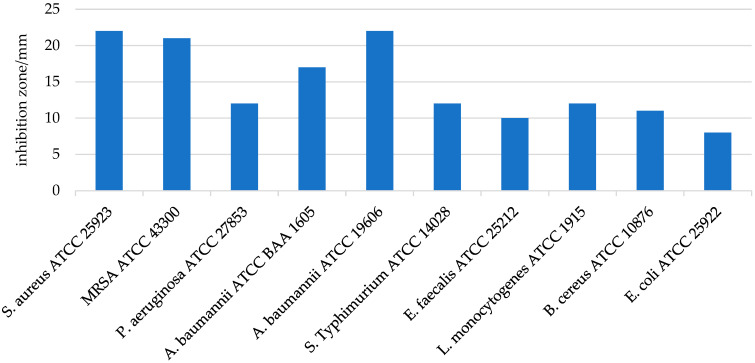
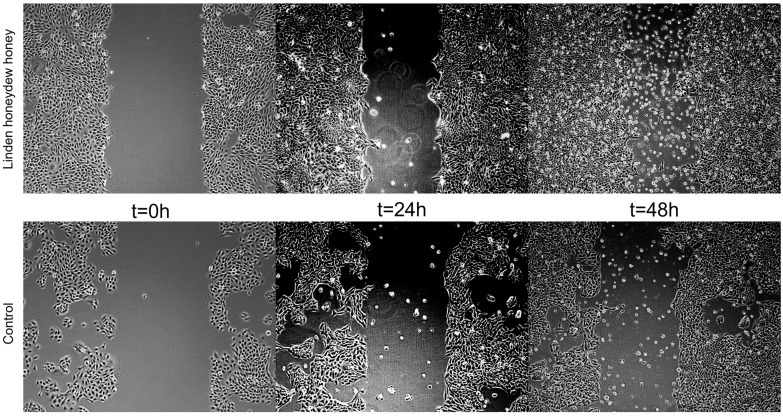
Honeydew honey (HH) is a distinctive type of honey known for its dark colour, high mineral and polyphenol content, and pronounced biological activity. This study continues previous research on beech and chestnut honeydew honeys by presenting a comprehensive analysis of linden honeydew honey (LHH) from Bosnia and Herzegovina-a variety that, until now, has not been characterised in detail. Physicochemical parameters confirmed its classification as HH, with high electrical conductivity (1.21 mS/cm) and low moisture (15.1%). GC-MS analysis revealed a unique volatile profile dominated by α-terpinolene (17.4%), distinguishing LHH from other HH types. The sample exhibited high total phenolic content (816.38 mg GAE/kg) and moderate antioxidant capacity (1.11 mmol TE/kg). Antimicrobial testing demonstrated strong activity against Staphylococcus aureus and Methicillin-resistant Staphylococcus aureus (MRSA), with lower efficacy against Gram-negative bacteria. No cytotoxic effects were observed in HaCaT keratinocytes at concentrations up to 60 mg/mL, and wound healing assays showed improved scratch closure reaching approximately 30% after 24 h and 41% after 48 h compared to the control. These results indicate that LHH possesses promising bioactive properties and potential for dermatological application. Further studies with broader sample sets are needed to explore variability and confirm the therapeutic relevance of LHH in comparison to other honeydew types.
Keywords: HaCaT cells; Tilia spp.; antimicrobial activity; antioxidant activity; cytotoxicity; linden honeydew honey; phenolic profile; physicochemical properties; volatile compounds; wound healing.
Conflict of interest statement
The authors declare no conflicts of interest.
Figures




References
-
- Azevedo M.S., Valentim-Neto P.A., Seraglio S.K.T., Da Luz C.F.P., Arisi A.C.M., Costa A.C.O. Proteome Comparison for Discrimination between Honeydew and Floral Honeys from Botanical Species Mimosa Scabrella Bentham by Principal Component Analysis. J. Sci. Food Agric. 2017;97:4515–4519. doi: 10.1002/jsfa.8317. - DOI - PubMed
-
- Dżugan M., Ciszkowicz E., Tomczyk M., Miłek M., Lecka-Szlachta K. Coniferous Honeydew Honey: Antibacterial Activity and Anti-Migration Properties against Breast Cancer Cell Line (MCF-7) Appl. Sci. 2024;14:710. doi: 10.3390/app14020710. - DOI
-
- Council Directive 2001/110/EC of 20 December 2001 Relating to Honey. [(accessed on 22 January 2025)]. Available online: https://eur-lex.europa.eu/LexUriServ/LexUriServ.do?uri=OJ:L:2002:010:004....
Grants and funding
LinkOut - more resources
Full Text Sources
Miscellaneous
