


Opposing Calcium-Dependent Effects of GsMTx4 in Acute Lymphoblastic Leukemia: In Vitro Proliferation vs. In Vivo Survival Advantage
- PMID: 40429963
- PMCID: PMC12112700
- DOI: 10.3390/ijms26104822
Opposing Calcium-Dependent Effects of GsMTx4 in Acute Lymphoblastic Leukemia: In Vitro Proliferation vs. In Vivo Survival Advantage
Abstract
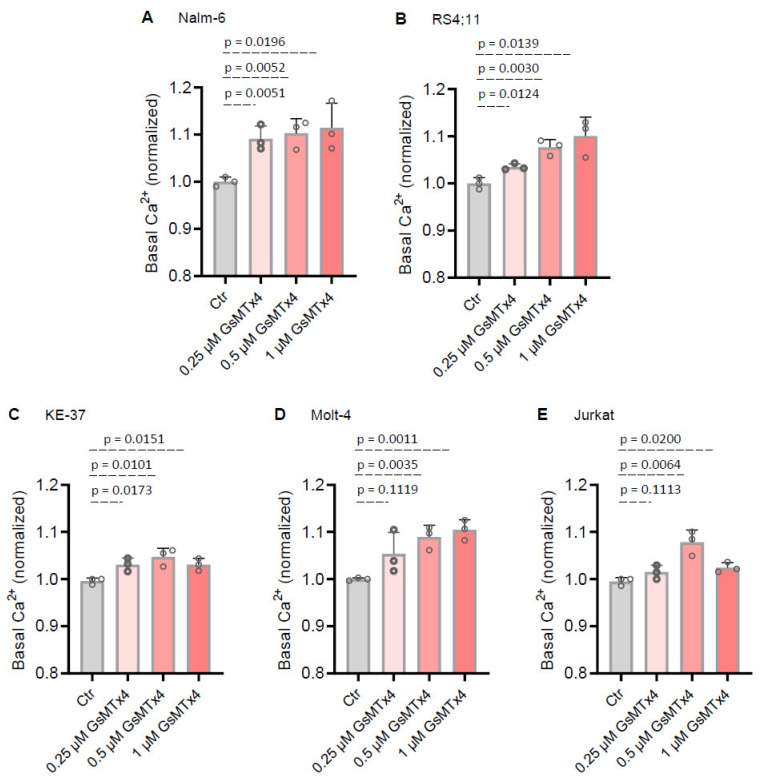
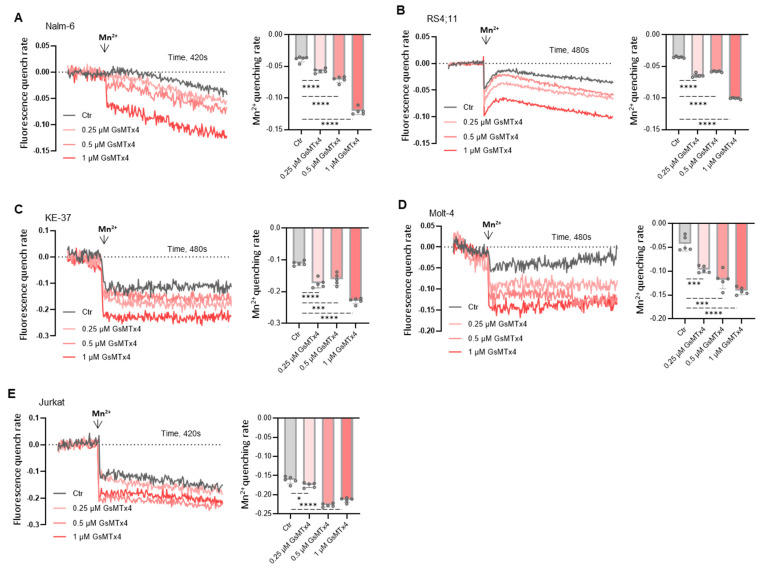
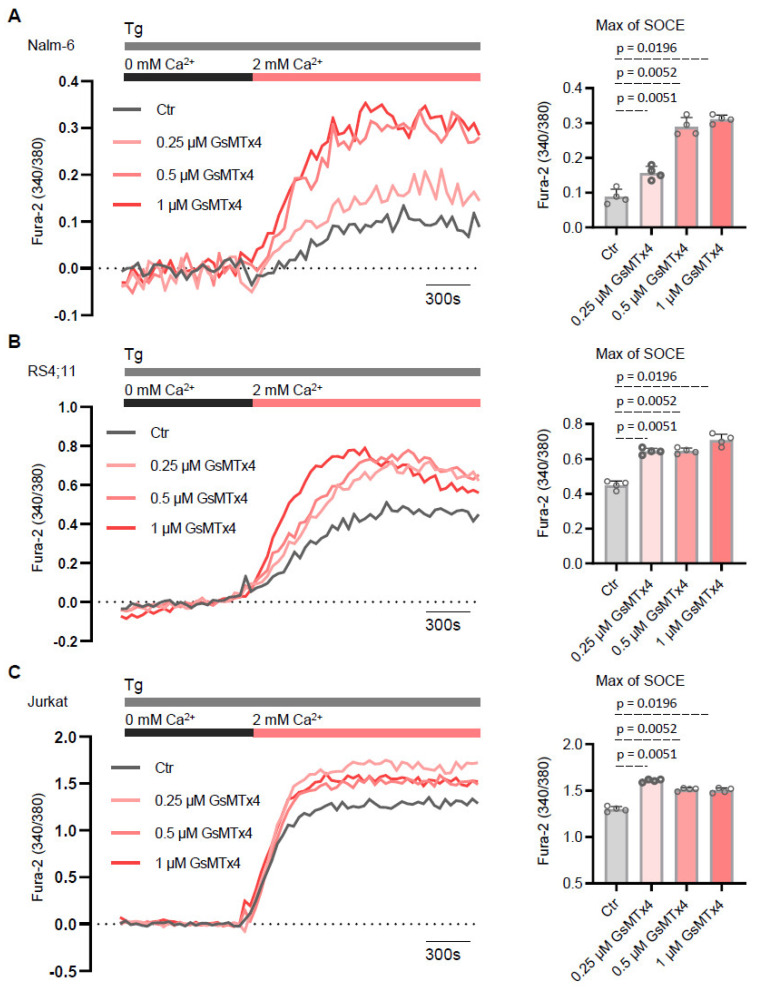
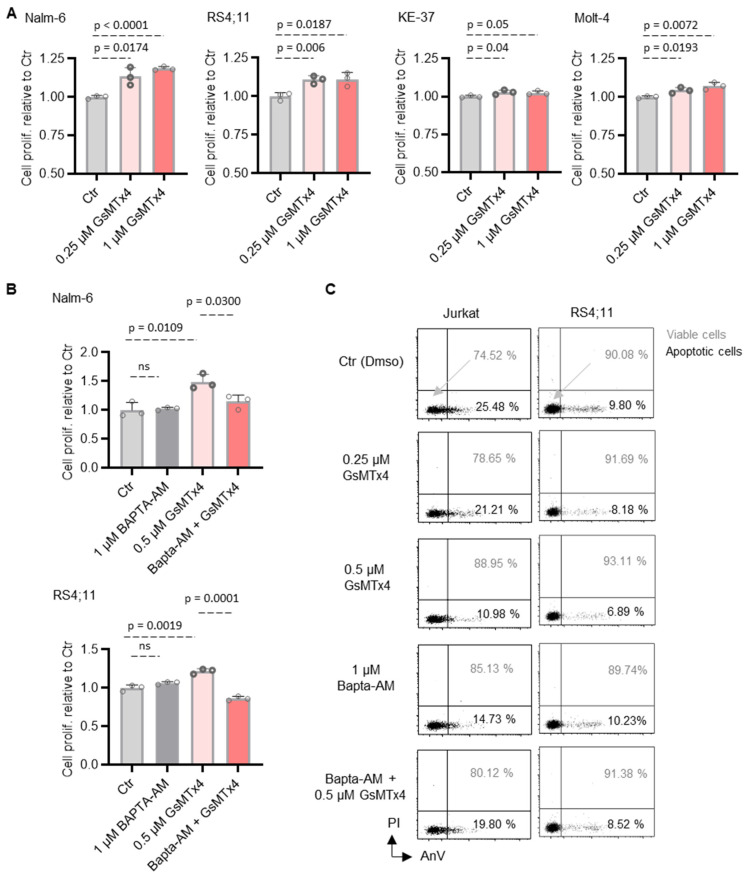
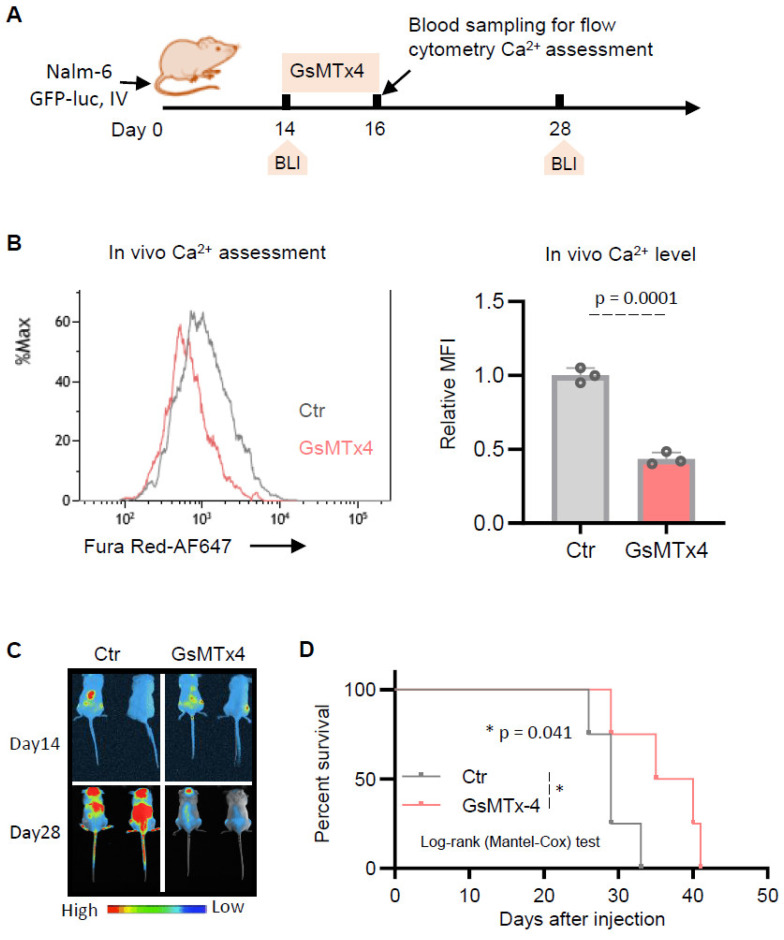
Mechanogated (MG) ion channels play a crucial role in mechano-transduction and immune cell regulation, yet their impact on blood cancers, particularly acute lymphoblastic leukemia (ALL), remains poorly understood. This study investigates the pharmacological effects of GsMTx4, an MG channel inhibitor, in human ALL cells both in vitro and in vivo. Unexpectedly, we found that GsMTx4 remarkably increased basal calcium (Ca2+) levels in ALL cells through constitutive Ca2+ entry and enhanced store-operated Ca2⁺ influx upon thapsigargin stimulation. This increase in basal Ca2+ signaling promoted ALL cell viability and proliferation in vitro. Notably, chelating intracellular Ca2+ with BAPTA-AM reduces GsMTx4-mediated leukemia cell viability and proliferation. However, in vivo, GsMTx4 decreases cytosolic Ca2+ levels in Nalm-6 GFP⁺ cells isolated from mouse blood, effectively countering leukemia progression and significantly extending survival in NSG mice transplanted with leukemia cells (median survival: GsMTx4 vs. control, 37.5 days vs. 29 days, p = 0.0414). Our results highlight the different properties of GsMTx4 activity in in vitro and in vivo models. They also emphasize that Ca2+ signaling is a key vulnerability in leukemia, where its precise modulation dictates disease progression. Thus, targeting Ca2+ channels could offer a novel therapeutic strategy for leukemia by exploiting Ca2+ homeostasis.
Keywords: ALL; Ca2+ signaling; GsMTx4; cell survival.
Conflict of interest statement
The authors declare no competing interests.
Figures
References
-
- Conter V., Aricò M., Basso G., Biondi A., Barisone E., Messina C., Parasole R., De Rossi G., Locatelli F., Pession A., et al. EDUCATIONAL REPORT Long-Term Results of the Italian Association of Pediatric Hematology and Oncology (AIEOP) Studies 82, 87, 88, 91 and 95 for Childhood Acute Lymphoblastic Leukemia. Leukemia. 2010;24:255–264. doi: 10.1038/leu.2009.250. - DOI - PubMed
-
- Serafin V., Capuzzo G., Milani G., Minuzzo S.A., Pinazza M., Bortolozzi R., Bresolin S., Porcù E., Frasson C., Indraccolo S., et al. Glucocorticoid Resistance Is Reverted by LCK Inhibition in Pediatric T-Cell Acute Lymphoblastic Leukemia. Blood. 2017;130:2750–2761. doi: 10.1182/blood-2017-05-784603. - DOI - PubMed
-
- Oskarsson T., Söderhäll S., Arvidson J., Forestier E., Frandsen T.L., Hellebostad M., Lähteenmäki P., Jónsson Ó.G., Myrberg I.H., Heyman M., et al. Treatment-Related Mortality in Relapsed Childhood Acute Lymphoblastic Leukemia. Pediatr. Blood Cancer. 2018;65:e26909. doi: 10.1002/pbc.26909. - DOI - PubMed
MeSH terms
Substances
Grants and funding
LinkOut - more resources
Full Text Sources
Miscellaneous
