


Galectin-3 and Pentraxin-3 as Potential Biomarkers in Chronic Coronary Syndrome and Atrial Fibrillation: Insights from a 131-Patient Cohort
- PMID: 40430046
- PMCID: PMC12112307
- DOI: 10.3390/ijms26104909
Galectin-3 and Pentraxin-3 as Potential Biomarkers in Chronic Coronary Syndrome and Atrial Fibrillation: Insights from a 131-Patient Cohort
Abstract
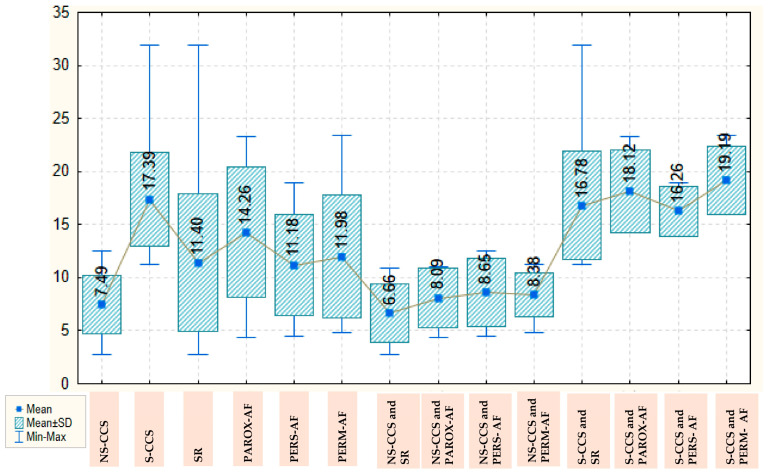
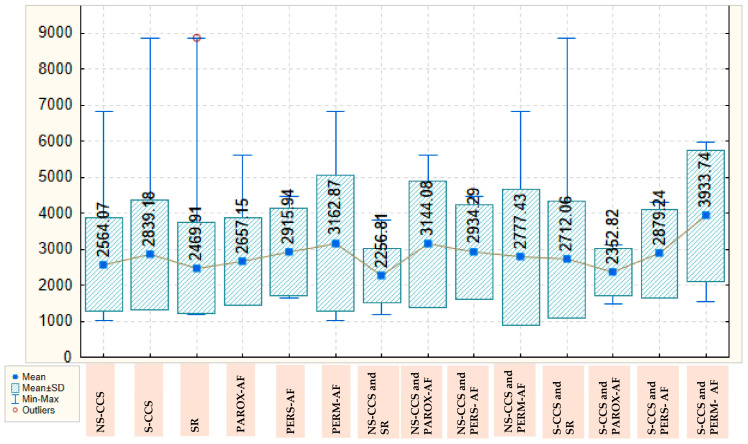
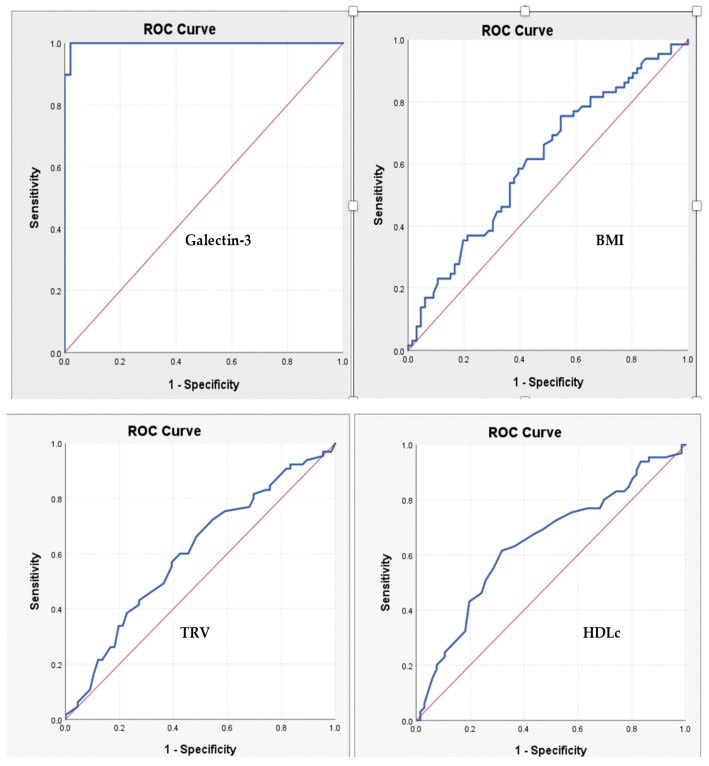
Chronic coronary syndrome (CCS) and atrial fibrillation (AF) are prevalent cardiovascular conditions between whom there is a dual relationship, with significant morbidity and mortality. Recent studies have highlighted the roles of galectin-3 and pentraxin-3 as potential biomarkers in coronary atherosclerosis, yet their specific interactions and implications in patients with CCS and AF remain underexplored. This proof-of-concept study aimed to evaluate the levels of galectin-3 and pentraxin-3 in a cohort of patients with CCS and AF. A total of 131 patients diagnosed with CCS or/and AF were stratified based on coronary stenosis severity (significant, S-CCS and nonsignificant, N-CCS coronary lesions) and arrhythmia burden. Blood samples were collected to measure serum levels of galectin-3 and pentraxin-3 using enzyme-linked immunosorbent assay (ELISA) techniques. Clinical data, including demographic information, comorbidities, medication use, and biological markers of systemic inflammation, were recorded. The galectin-3 value was more than double in patients with S-CCS compared with those with N-CCS (17.39 ± 4.459 ng/mL versus 7.49 ± 2.732 ng/mL, p < 0.001). Atrial fibrillation was not associated with statistically significant variations in galectin-3 values, neither overall nor separately in the group of S-CCS or N-CCS. However, pentraxin-3 values were similar in S-CCS compared with those with N-CCS (2839.18 ± 1521.639 pg/mL versus 2564.07 ± 1299.055 pg/mL, p = 0.417). These values were lower in patients with sinus rhythm, with a mean of 2469.91 ± 1253.782 pg/mL, and steadily increased in those with paroxysmal, persistent, and permanent AF, for whom they reached a mean of 3162.87 ± 1893.068 pg/mL. Elevated levels of galectin-3 appear to correlate with coronary stenosis severity and may inform future strategies for risk stratification, patients' selection for invasive coronarography or therapeutic targeting in CCS.
Keywords: atrial fibrillation; biomarkers; chronic coronary syndrome; coronary ischemic disease; galectin-3; pentraxin-3.
Conflict of interest statement
The authors declare no conflicts of interest.
Figures
References
-
- Bertolone D.T., Gallinoro E., Esposito G., Paolisso P., Bermpeis K., De Colle C., Fabbricatore D., Mileva N., Valeriano C., Munhoz D., et al. Contemporary Management of Stable Coronary Artery Disease. High Blood Press. Cardiovasc. Prev. 2022;29:207–219. doi: 10.1007/s40292-021-00497-z. - DOI - PMC - PubMed
-
- Gallinoro E., D’Elia S., Prozzo D., Lioncino M., Natale F., Golino P., Cimmino G. Cognitive Function and Atrial Fibrillation: From the Strength of Relationship to the Dark Side of Prevention. Is There a Contribution from Sinus Rhythm Restoration and Maintenance? Medicina. 2019;55:587. doi: 10.3390/medicina55090587. - DOI - PMC - PubMed
MeSH terms
Substances
LinkOut - more resources
Full Text Sources
Medical
