. 2025 May 14;14(10):1459.
doi: 10.3390/plants14101459.

Stilbene Glycosides in Pinus cembra L. Bark: Isolation, Characterization, and Assessment of Antioxidant Potential and Antitumor Activity on HeLa Cells

Affiliations

Stilbene Glycosides in Pinus cembra L. Bark: Isolation, Characterization, and Assessment of Antioxidant Potential and Antitumor Activity on HeLa Cells

Cristina Lungu et al. Plants (Basel). .

Abstract

Stilbenes are plant secondary metabolites with remarkable antidiabetic, anti-inflammatory, antimicrobial, antioxidant, antitumor, and neuroprotective properties. As these compounds are valuable constituents in healthcare products and promising drug candidates, exploring new sources of stilbenes is essential for therapeutic advancement. The present study reports the isolation of two stilbene glycosides, resveratroloside and pinostilbenoside, from Pinus cembra L. bark. Their antioxidant activity and cytotoxic effects against HeLa cells were evaluated in comparison to the raw bark extract. The structures of resveratroloside and pinostilbenoside were confirmed by nuclear magnetic resonance (NMR) and mass spectrometry (MS) data analyses. Antioxidant activity was assessed by 2,2-diphenyl-1-picrylhydrazyl (DPPH) radical scavenging and reducing power assays. Cell viability, apoptosis, cell proliferation, and cell cycle assays were used to evaluate the cytotoxic potential against HeLa cells. Resveratroloside and pinostilbenoside exhibited lower activity as free radical scavengers and reducing agents. However, they showed greater efficacy in reducing viability and suppressing proliferation in human cervical carcinoma HeLa cells. Given the promising findings of our study, the therapeutic potential of resveratroloside and pinostilbenoside should be further investigated.

Keywords: HeLa cells; Pinus cembra L.; antioxidant activity; antitumor activity; bark extract; pinostilbenoside; resveratroloside.


Conflict of interest statement

Author Cosmin-Teodor Mihai was employed by the company Medical Investigations Praxis SRL. The remaining authors declare that the research was conducted in the absence of any commercial or financial relationships that could be construed as a potential conflict of interest.

Figures
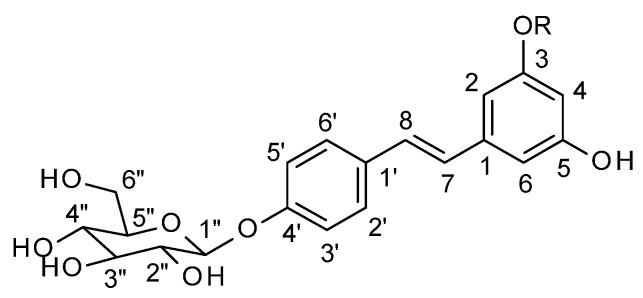
Figure 1
Figure 1
Stilbene glycosides isolated from Pinus cembra L. bark [resveratroloside (1) R = H, pinostilbenoside (2) R = Me].
Figure 2
Figure 2
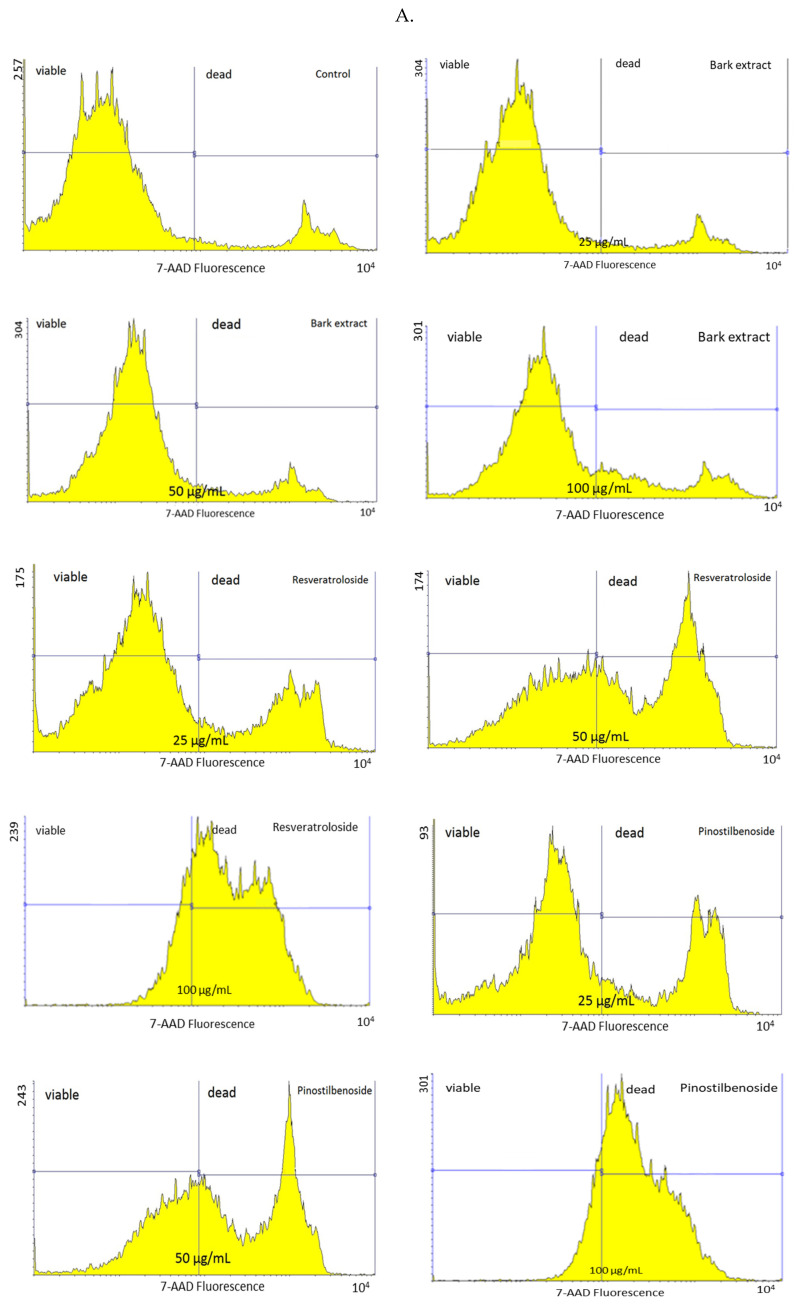
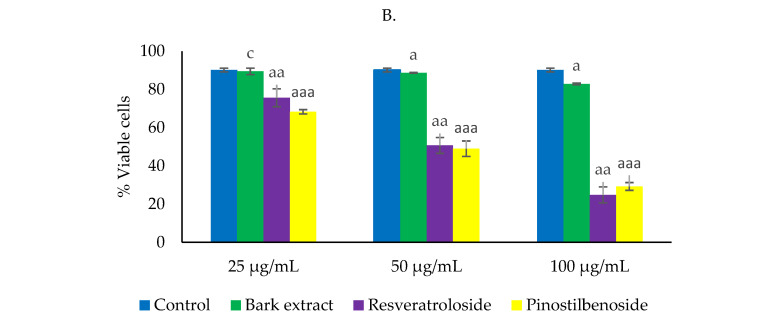
Viability of HeLa cells after 48 h exposure to the raw bark extract, resveratroloside (1), and pinostilbenoside (2), assessed by 7-amino-actinomycin (7-AAD) staining ((A)—histograms; (B)—HeLa cell viability); (a) p < 0.001, (c) p > 0.05.
Figure 2
Figure 2
Viability of HeLa cells after 48 h exposure to the raw bark extract, resveratroloside (1), and pinostilbenoside (2), assessed by 7-amino-actinomycin (7-AAD) staining ((A)—histograms; (B)—HeLa cell viability); (a) p < 0.001, (c) p > 0.05.
Figure 3
Figure 3
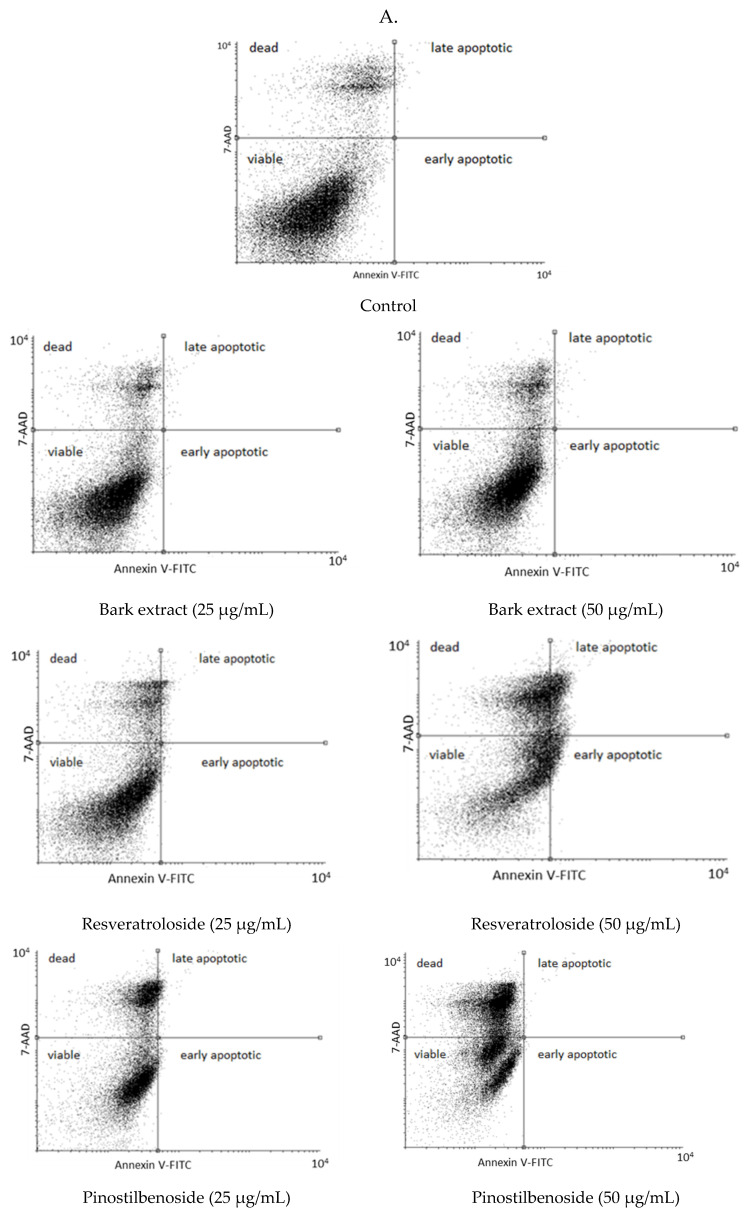
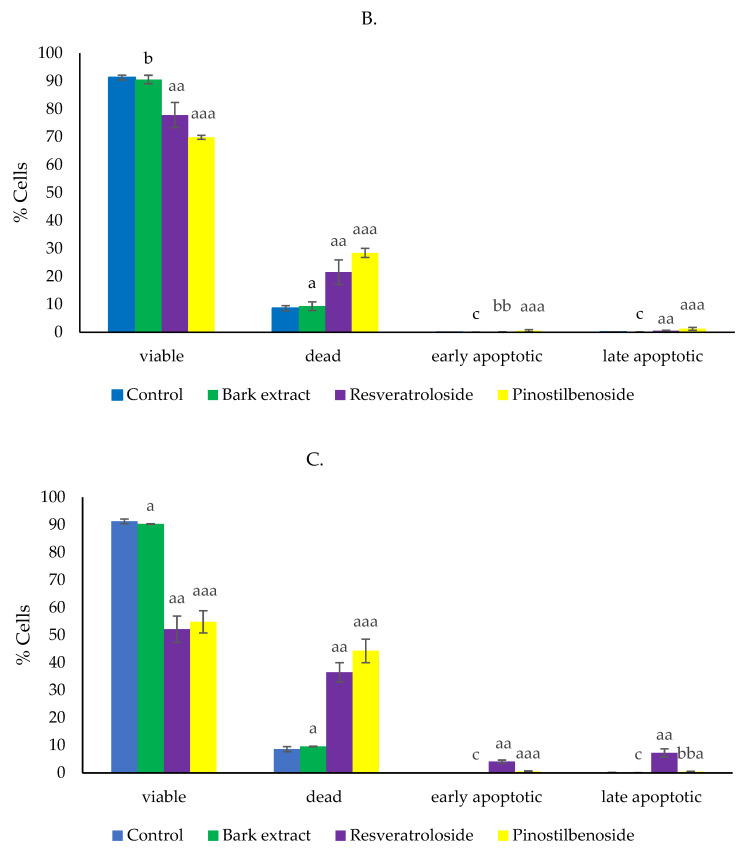
Percentage distribution of viable, dead, early apoptotic, and late apoptotic HeLa cells after 48 h exposure to the raw bark extract, resveratroloside (1), and pinostilbenoside (2) at 25 μg/mL (A,B) and 50 μg/mL (A,C), assessed by annexin V–fluorescein isothiocyanate (FITC)/7-amino-actinomycin (7-AAD) staining ((A)—cytograms; (B,C)—HeLa cell distribution); (a) p < 0.001, (b) p < 0.05; (c) p > 0.05.
Figure 3
Figure 3
Percentage distribution of viable, dead, early apoptotic, and late apoptotic HeLa cells after 48 h exposure to the raw bark extract, resveratroloside (1), and pinostilbenoside (2) at 25 μg/mL (A,B) and 50 μg/mL (A,C), assessed by annexin V–fluorescein isothiocyanate (FITC)/7-amino-actinomycin (7-AAD) staining ((A)—cytograms; (B,C)—HeLa cell distribution); (a) p < 0.001, (b) p < 0.05; (c) p > 0.05.
Figure 4
Figure 4
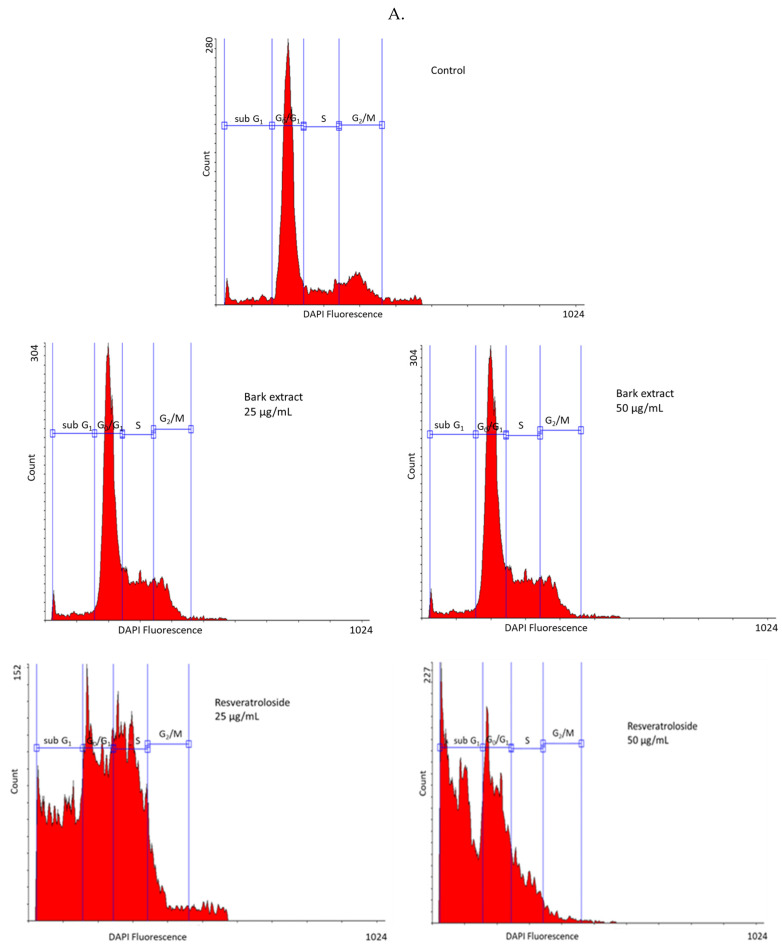
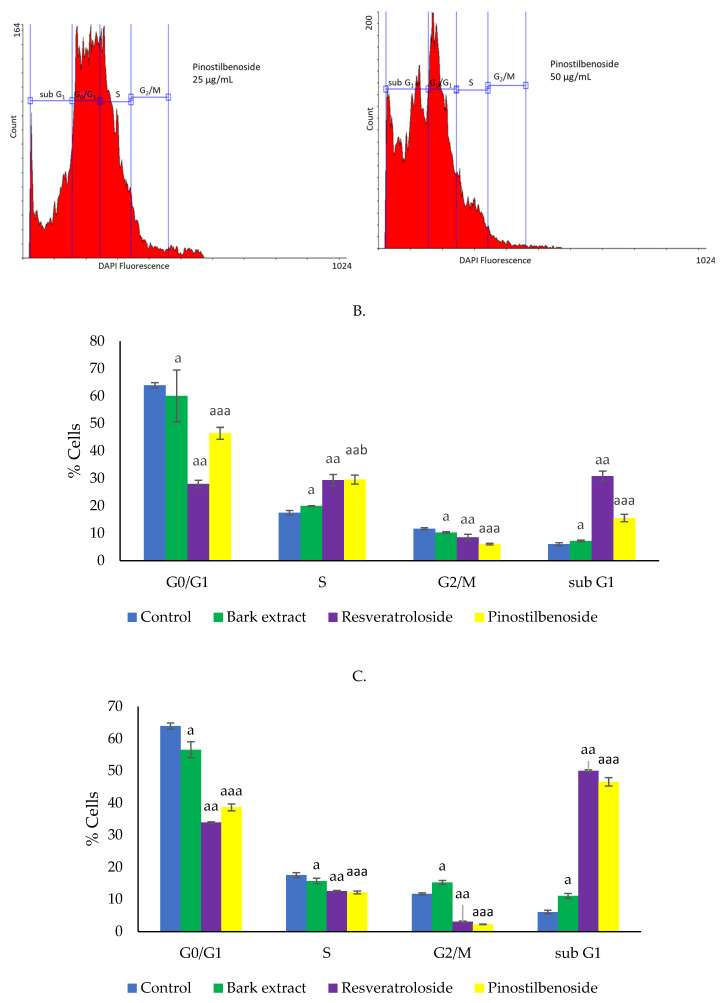
Cell cycle analysis in HeLa cells after 48 h exposure to the raw bark extract, resveratroloside (1), and pinostilbenoside (2) at 25 μg/mL (A,B) and 50 μg/mL (A,C), assessed by nuclear isolation medium—4′,6-diamidino-2-phenylindole dihydrochloride (NIM-DAPI) staining ((A)—histograms; (B,C)—cell cycle distribution); (a) p < 0.001; (b) p < 0.05.
Figure 4
Figure 4
Cell cycle analysis in HeLa cells after 48 h exposure to the raw bark extract, resveratroloside (1), and pinostilbenoside (2) at 25 μg/mL (A,B) and 50 μg/mL (A,C), assessed by nuclear isolation medium—4′,6-diamidino-2-phenylindole dihydrochloride (NIM-DAPI) staining ((A)—histograms; (B,C)—cell cycle distribution); (a) p < 0.001; (b) p < 0.05.
Figure 5
Figure 5
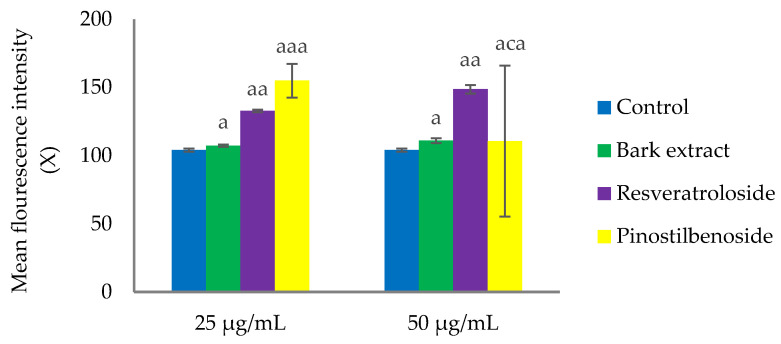
Mean fluorescence intensity in HeLa cells after 48 h exposure to the raw bark extract, resveratroloside (1), and pinostilbenoside (2), assessed by carboxyfluorescein succinimidyl ester (CFSE) staining; (a) p < 0.001, (c) p > 0.05.

References

    1. Pecyna P., Wargula J., Murias M., Kucinska M. More Than Resveratrol: New Insights into Stilbene-Based Compounds. Biomolecules. 2020;10:1111. doi: 10.3390/biom10081111. - DOI - PMC - PubMed
    1. Teka T., Zhang L., Ge X., Li Y., Han L., Yan X. Stilbenes: Source plants, chemistry, biosynthesis, pharmacology, application and problems related to their clinical Application-A comprehensive review. Phytochemistry. 2022;197:113128. doi: 10.1016/j.phytochem.2022.113128. - DOI - PubMed
    1. Mendonça E.L.S.S., Xavier J.A., Fragoso M.B.T., Silva M.O., Escodro P.B., Oliveira A.C.M., Tucci P., Saso L., Goulart M.O.F. E-Stilbenes: General Chemical and Biological Aspects, Potential Pharmacological Activity Based on the Nrf2 Pathway. Pharmaceuticals. 2024;17:232. doi: 10.3390/ph17020232. - DOI - PMC - PubMed
    1. Farkhondeh T., Folgado S.L., Pourbagher-Shahri A.M., Ashrafizadeh M., Samarghandian S. The therapeutic effect of resveratrol: Focusing on the Nrf2 signaling pathway. Biomed. Pharmacother. 2020;127:110234. doi: 10.1016/j.biopha.2020.110234. - DOI - PubMed
    1. Alavi M., Farkhondeh T., Aschner M., Samarghandian S. Resveratrol mediates its anti-cancer effects by Nrf2 signaling pathway activation. Cancer Cell. Int. 2021;21:579. doi: 10.1186/s12935-021-02280-5. - DOI - PMC - PubMed

LinkOut - more resources