


The Impact of Litter from Different Belowground Organs of Phragmites australis on Microbial-Mediated Soil Organic Carbon Accumulation in a Lacustrine Wetland
- PMID: 40431316
- PMCID: PMC12114342
- DOI: 10.3390/microorganisms13051146
The Impact of Litter from Different Belowground Organs of Phragmites australis on Microbial-Mediated Soil Organic Carbon Accumulation in a Lacustrine Wetland
Abstract
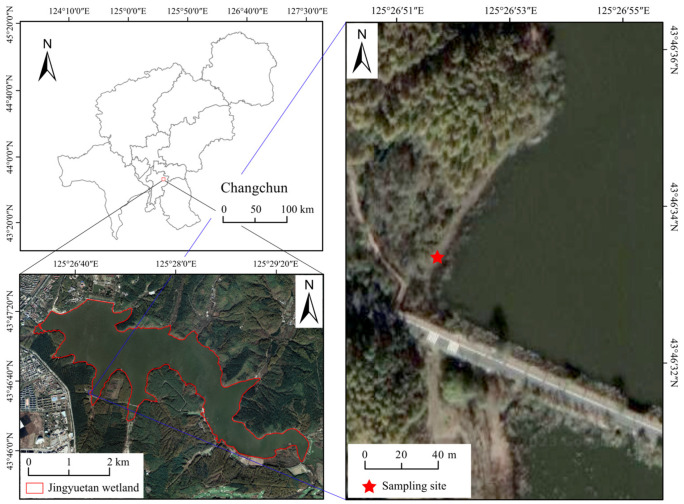
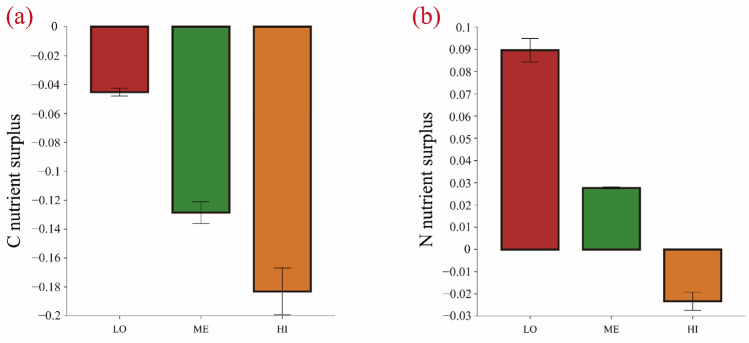
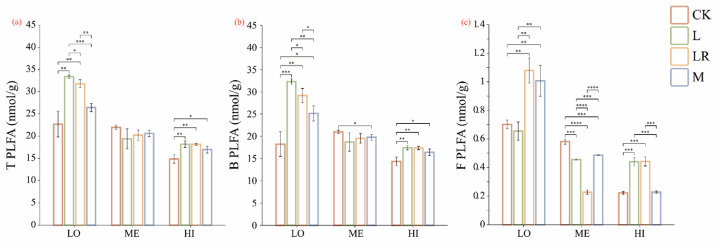
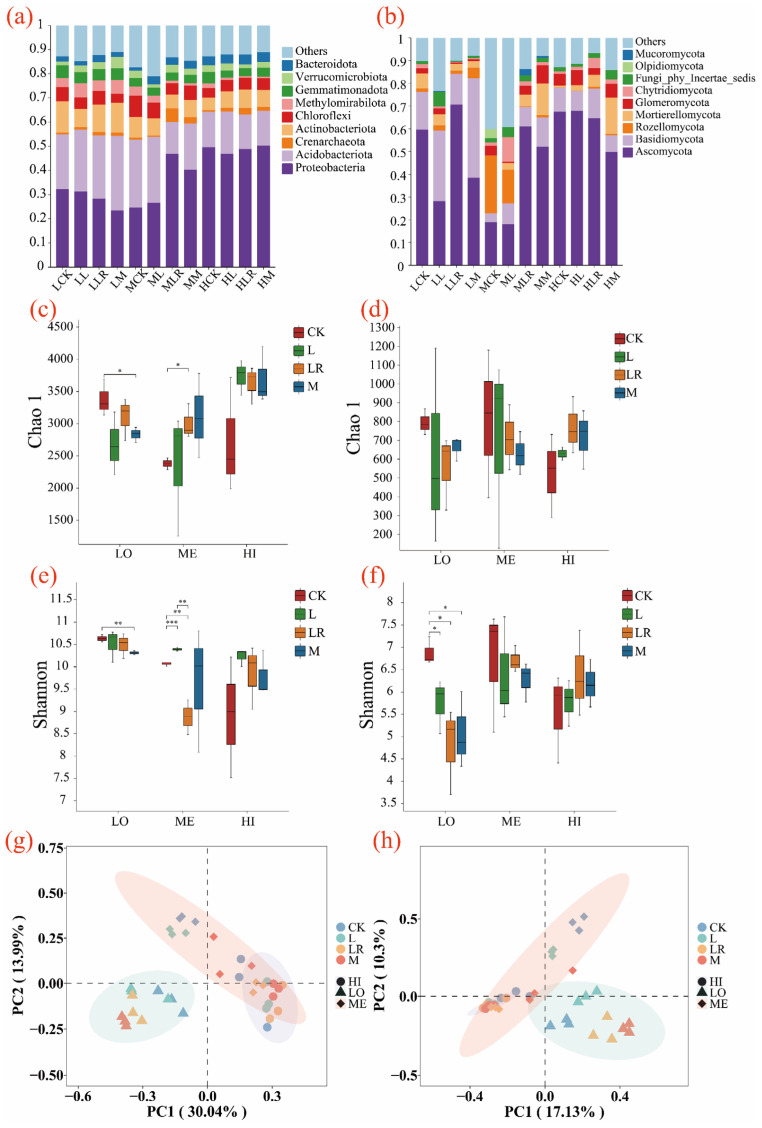
Although belowground litter decomposition critically influences lacustrine wetland soil carbon dynamics, the organ-specific microbial mechanisms driving soil organic carbon (SOC) accumulation remain unclear. Existing research has predominantly focused on aboveground litter, leaving a significant gap in the understanding of how roots and rhizomes differentially regulate carbon cycling through microbial community assembly and survival strategies. This study took Phragmites australis (a plant characteristic of lacustrine wetland) as the research object and examined how decomposing belowground litter from different organs affects microbial-mediated SOC accumulation through a one-year in situ field incubation in Jingyuetan National Forest Park, Changchun City, Jilin Province, China. Our findings reveal that root litter exhibited the highest decomposition rate, which was accelerated by intermittent flooding, reaching up to 1.86 times that of rhizome. This process enriched r-strategist microbial taxa, intensified homogeneous selection, and expanded niche width, directly promoting SOC accumulation. Rhizome litter decomposition enhanced dispersal limitation, promoted K-strategist microbial dominance, and indirectly modulated SOC through soil acidification. Mixed-litter treatments significantly enhanced SOC accumulation (up to three times higher than single-litter treatments) through synergistic nutrient release (non-additive effects < 0.04) and reinforced microbial network interactions. SOC accumulation varied significantly with the flooding regime as follows: non-flooded > intermittent flooding > permanent flooding. This study provides new insights into the microbially driven mechanisms of plant-organ-specific decomposition in the carbon cycling of wetland ecosystems.
Keywords: belowground plant litter; community assembly; soil microorganisms; soil organic carbon; survival strategies.
Conflict of interest statement
The authors declare no conflicts of interest.
Figures
References
-
- Mitsch W.J., Bernal B., Nahlik A.M., Mander U., Zhang L., Anderson C.J., Jorgensen S.E., Brix H. Wetlands, carbon, and climate change. Landsc. Ecol. 2013;28:583–597. doi: 10.1007/s10980-012-9758-8. - DOI
-
- Nie X.Q., Wang D., Yang L.C., Zhou G.Y. Storage and Climatic Controlling Factors of Litter Standing Crop Carbon in the Shrublands of the Tibetan Plateau. Forests. 2019;10:987. doi: 10.3390/f10110987. - DOI
LinkOut - more resources
Full Text Sources
Miscellaneous
