


Socioeconomic and Health-Related Determinants of Eating Habits in Polish Caucasian Older Population-The Nationwide PolSenior2 Study Results
- PMID: 40431380
- PMCID: PMC12113886
- DOI: 10.3390/nu17101640
Socioeconomic and Health-Related Determinants of Eating Habits in Polish Caucasian Older Population-The Nationwide PolSenior2 Study Results
Abstract
Background/objectives: Adherence to a healthy diet may increase the chance of healthy aging. This study's objective was to evaluate the nutritional quality of the diet and socioeconomic and health-related correlations of adherence to a healthy diet in older individuals.
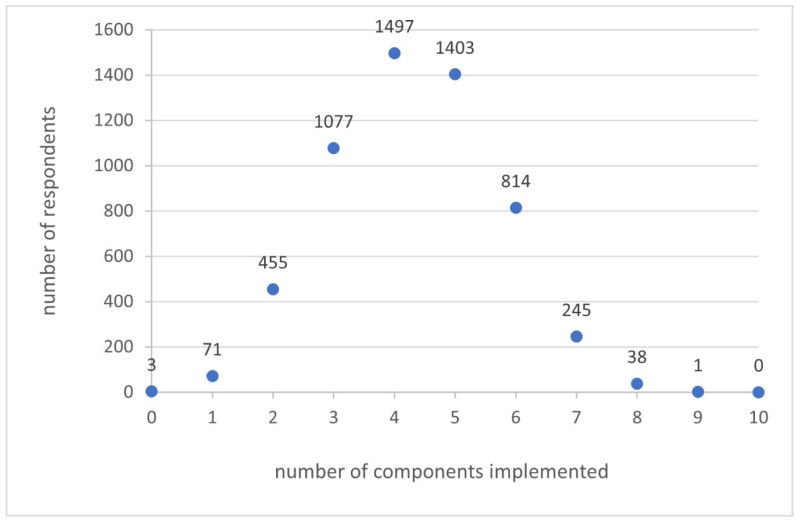
Methods: This analysis was part of the PolSenior2 project, which comprised 5987 respondents aged ≥60 years, representatives of the community-dwelling Polish population. Eating habits were categorized according to the Senior Healthy Diet Index (SHDI), with a score between 0 and 100 points, based on the 42-item food frequency questionnaire filled out by participants. Higher adherence to the SHDI was defined as fulfilling at least five components.
Results: The mean SHDI score was significantly higher in women, 58.5 ± 11.7, compared to men (55.8 ± 11.8); p < 0.001. Only 0.7% of respondents were fully adherent to dietary recommendations (fulfilling at least eight of ten SHDI components). In univariate analysis, a lower prevalence of typical geriatric problems (functional impairment, dementia, depression, falls, frailty, visual impairment, lack of functional dentition) and an additional occurrence of diabetes, hypertension, and heart failure in men were significantly correlated with higher compliance with SHDI recommendations. According to multivariate regression analysis, female sex, higher education level, regular physical activity, functional dentition, diabetes, and the absence of depression or dementia were factors most strongly associated with better adherence to a healthy diet.
Conclusions: Full adherence to dietary recommendations in Polish seniors is rare. Aging-related diseases correlate in various ways with better eating habits. Especially, men are more likely to choose a healthy diet when signs of deterioration appear.
Keywords: eating habits; healthy aging; healthy diet; nutritional status; older persons.
Conflict of interest statement
The authors declare no conflicts of interest.
Figures
References
-
- Vega-Cabello V., Struijk E.A., Caballero F.F., Yévenes-Briones H., Ortolá R., Calderón-Larrañaga A., Lana A., Rodríguez-Artalejo F., Lopez-Garcia E. Diet quality and multimorbidity in older adults: A Prospective Cohort Study. J. Gerontol. Ser. A. 2024;79:glad285. doi: 10.1093/gerona/glad285. - DOI - PubMed
-
- Gajda R., Raczkowska E., Sobieszczańska M., Noculak Ł., Szymala-Pędzik M., Godyla-Jabłoński M. Diet quality variation among Polish older adults: Association with selected metabolic diseases, demographic characteristics and socioeconomic status. Int. J. Environ. Res. Public Health. 2023;20:2878. doi: 10.3390/ijerph20042878. - DOI - PMC - PubMed
-
- Dorrington N., Fallaize R., Hobbs D., Weech M., Lovegrove J.A. Diet Quality Index for older adults (DQI-65): Development and use in predicting adherence to dietary recommendations and health markers in the UK National Diet and Nutrition Survey. Br. J. Nutr. 2022;128:2193–2207. doi: 10.1017/S0007114521005043. - DOI - PubMed
MeSH terms
Grants and funding
LinkOut - more resources
Full Text Sources
