


Opioid Prescription Trends for Isolated Diaphyseal Femur Fractures in Pediatric Patients
- PMID: 40433334
- PMCID: PMC12088172
- DOI: 10.55275/JPOSNA-2023-663
Opioid Prescription Trends for Isolated Diaphyseal Femur Fractures in Pediatric Patients
Abstract
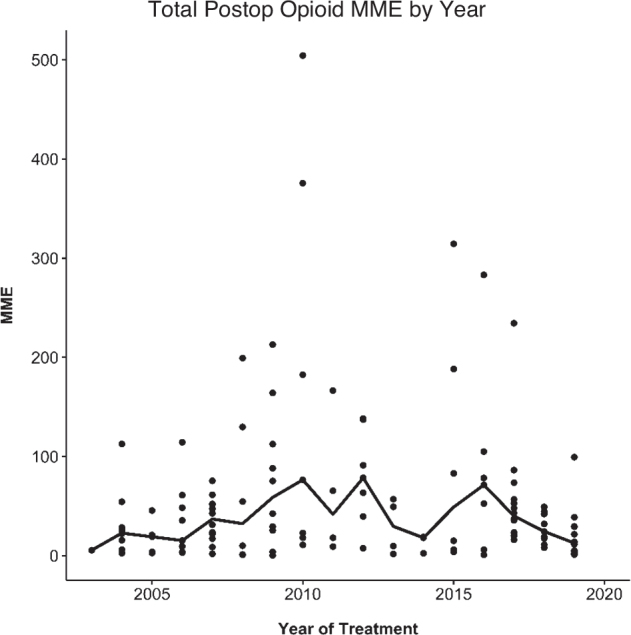
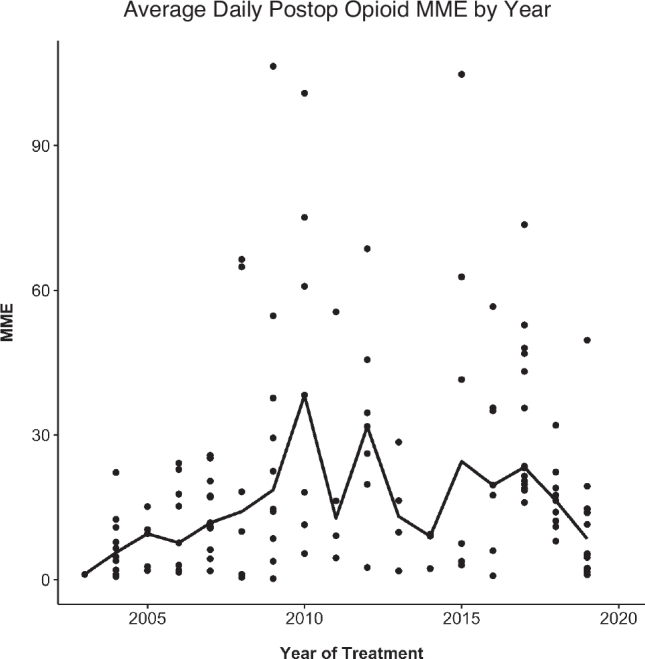
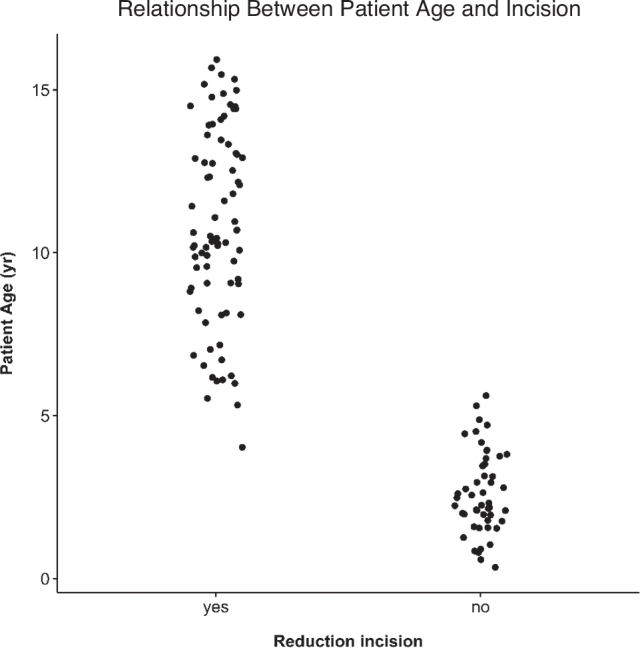
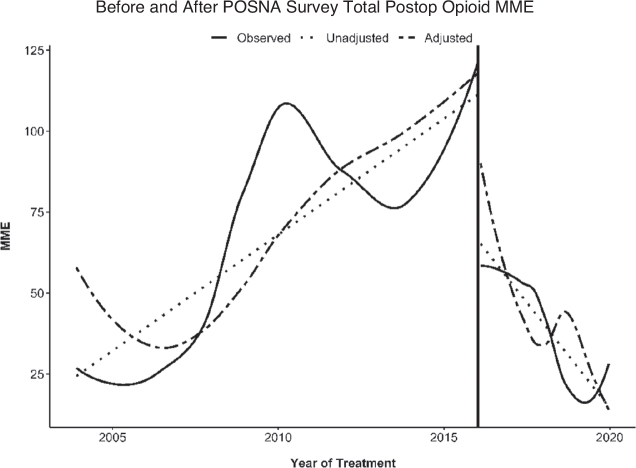
Purpose: Despite the ongoing opioid epidemic, there is a lack of research on narcotic prescribing in the pediatric orthopaedic population. The Pediatric Orthopaedic Society of North America (POSNA) therefore published a survey on pain management to provide recommendations for opioid dosing. The goal of this study was to characterize opioid prescribing patterns for pediatric femur fractures in the context of the opioid epidemic and emerging national studies/guidelines.Methods: A retrospective review of 128 pediatric patients (age < 16) with isolated diaphyseal femur fractures was conducted between 2003-2019 at a level I pediatric trauma center. Comparison groups included before distribution of the POSNA survey (pre-POSNA = 01/01/2016 or earlier, N = 85) and after the survey (post-POSNA, N = 43).Results: Median total hospital postoperative opioids prescribed was 27.2 morphine milligram equivalents (MME). The two groups differed in age (pre-POSNA = 9.0 years, post-POSNA = 3.7 years, P = 0.0381), hospital length of stay (LOS) (pre-POSNA = 2 days, post-POSNA = 1 day, P < 0.0001), and procedural incision required for fracture reduction (pre-POSNA = 28.3%, post-POSNA = 58.1%, P = 0.0019). Adjusted postoperative opioid dosing was significantly lower post-POSNA (median reduction of 18.351 MME per year, P = 0.0408).Conclusions: The period following the POSNA survey was associated with a significant decline in postoperative narcotic prescriptions for pediatric femur fractures. The timing of the survey likely represents an increased concern for pediatric opioid use and a shift in clinical practice. Further work is needed to optimize injury and patient-specific narcotic prescribing.Level of Evidence: Therapeutic Level III.
Key concepts: •The 2016 POSNA survey identified a lack of consensus on opioid prescribing practices for common orthopaedic procedures in the United States.•The 2016 POSNA survey and subsequent 2019 published narcotic prescription recommendations represent a shift in the specialty of orthopaedic surgery regarding opioid usage in the pediatric population.•Postoperative morphine milligram equivalents significantly decreased for the treatment of pediatric diaphyseal femur fractures at a single-level I pediatric trauma center following administration of the 2016 POSNA survey.
© 2023 JPOSNA. Published by Elsevier on behalf of the Pediatric Orthopaedic Society of North America.
Figures
References
-
- Manchikanti L., Singh A. Therapeutic opioids: a ten-year perspective on the complexities and complications of the escalating use, abuse, and nonmedical use of opioids. Pain Physician. 2008;11(2 Suppl):S63–S88. - PubMed
-
- Wide-ranging online data for epidemiologic research (WONDER) CDC: National Center for Health Statistics; 2020. http://wonder.cdc.gov Available at:
-
- Rudd R.A., Aleshire N., Zibbell J.E., et al. Increases in drug and opioid overdose deaths--United States, 2000-2014. MMWR Morb Mortal Wkly Rep. 2016;64(50-51):1378–1382. - PubMed
-
- Fortuna R.J., Robbins B.W., Caiola E., et al. Prescribing of controlled medications to adolescents and young adults in the United States. Pediatrics. 2010;126(6):1108–1116. - PubMed
LinkOut - more resources
Full Text Sources
Miscellaneous
