


Diagnosis and treatment of giant colonic fecalith in a child: a case report
- PMID: 40433475
- PMCID: PMC12107826
- DOI: 10.3389/fped.2025.1598807
Diagnosis and treatment of giant colonic fecalith in a child: a case report
Abstract
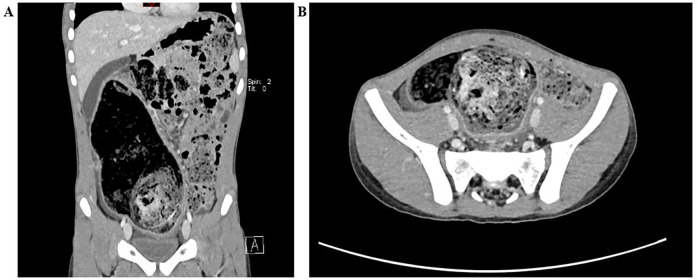
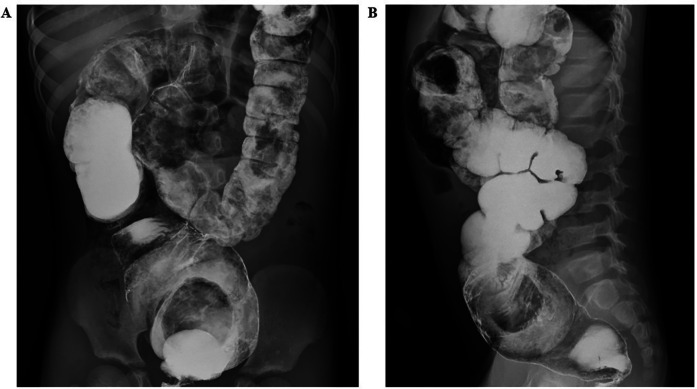
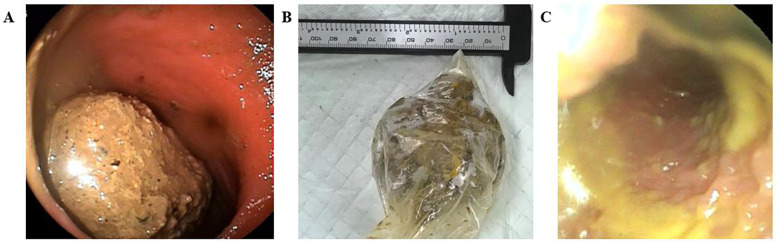
Fecaliths are concretions composed of undigested or partially digested substances formed within the gastrointestinal lumen, potentially causing obstruction or partial obstruction. The most common type of fecalith is phytobezoar, composed of plant fibers. Due to their high cellulose, hemicellulose, and lignin content, phytobezoars remain undigested within the stomach and intestines, causing blockage in the narrowest portions of the gastrointestinal tract. Obstructions caused by fecaliths typically occur in the stomach and small intestine, whereas colonic obstructions are rare, particularly in pediatric cases. In this study, we report for the first time a case of colonic obstruction caused by a giant fecalith measuring 6 cm × 6 cm, which was successfully managed by colonoscopy-assisted manual extraction under general anesthesia.
Keywords: colonic stone; fecalith; intestinal obstruction; manual extraction; phytobezoar.
© 2025 Su, Chen, Zhao, Xu, Yuan, Luo, Liu and Wang.
Conflict of interest statement
The authors declare that the research was conducted in the absence of any commercial or financial relationships that could be construed as a potential conflict of interest.
Figures
References
Publication types
LinkOut - more resources
Full Text Sources
