


Blood feeding patterns of malaria mosquitoes collected using pit shelters and clay pots in the West Gojjam zone of Ethiopia
- PMID: 40437536
- PMCID: PMC12117803
- DOI: 10.1186/s12936-025-05408-4
Blood feeding patterns of malaria mosquitoes collected using pit shelters and clay pots in the West Gojjam zone of Ethiopia
Abstract
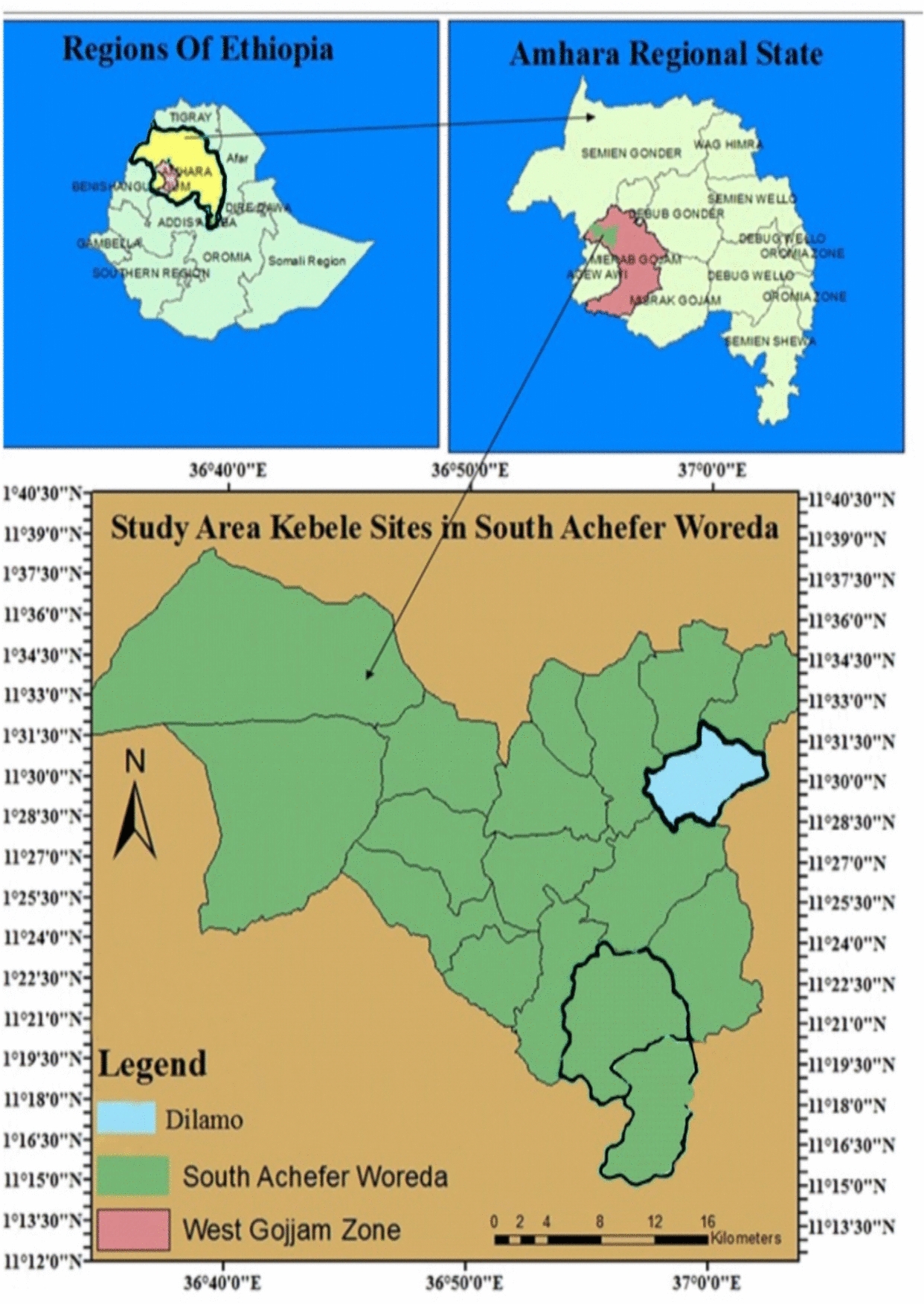
Background: Understanding the feeding behaviours and infection rates of malaria-transmitting Anopheles species is essential for designing effective vector control strategies. Therefore, this study investigated the species composition, blood meal sources, and infection rates of Anopheles mosquitoes in the rural village of Dilamo, West Gojjam, Ethiopia.
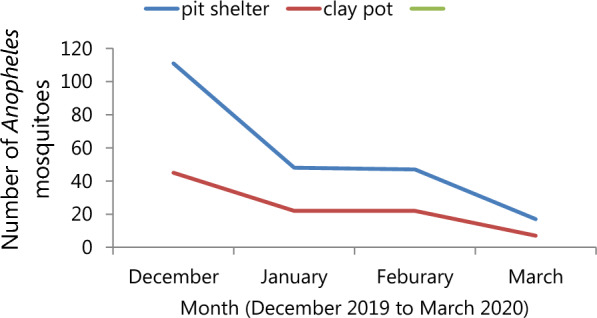
Methods: Ten households were randomly selected in a malaria-endemic village. Two clay pots were placed under shade outside each house within a radius of 10 m, one in front of the house and the other at the back. Two other clay pots were placed inside the same household. Ten pit shelters were built, one at a distance of 10 m from each house, under shade. Mosquito sampling was done twice a month for four months. Anopheles mosquitoes were identified to species using morphological keys. The species of the Anopheles gambiae complex were molecularly identified. Testing for blood meal sources and circumsporozoite proteins (CSPs) was conducted using an enzyme-linked immunosorbent assay (ELISA).
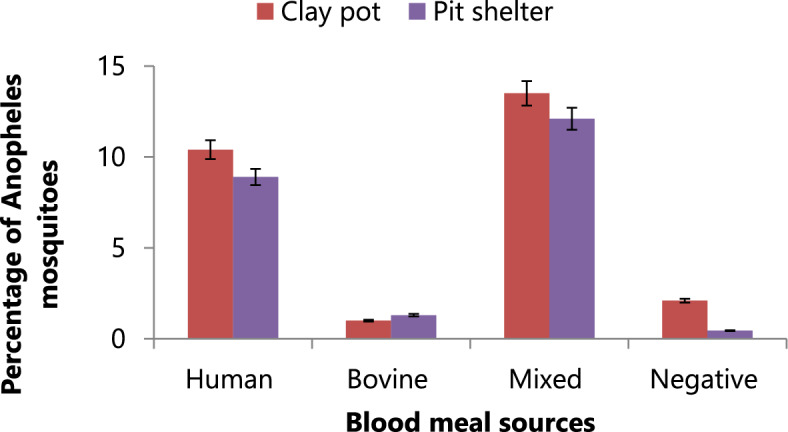
Results: A total of 319 female Anopheles mosquitoes were collected, including the species Anopheles demeilloni, An. gambiae complex, Anopheles garnhami, Anopheles pretoriensis, and Anopheles cinereus. Among these, An. demeilloni was the dominant species, comprising 90.9% of the collection (290/319). The An. gambiae complex represented only 4.4% of the total (14/319). Out of 89 freshly fed Anopheles mosquitoes, 77 (86.5%) were examined for the source of their blood meal. Of these, 74 (96%) tested positive for blood from cattle, humans, or both. The overall human blood meal index was 43% (95% CI 31.1-55.3), while the bovine blood meal index was 6% (95% CI 1.6-13.9). The prevalence of Anopheles mosquitoes feeding on humans and cattle (mixed feeding) was 57% (95% CI 44.8-68.9). None of the Anopheles mosquitoes tested positive for Plasmodium falciparum or Plasmodium vivax-210 CSPs.
Conclusion: The human blood meal index reflects human exposure to mosquito bites. Future research could investigate whether mosquitoes, along with human behaviours and activities, prefer to bite humans indoors or outdoors.
Keywords: Anopheles species composition; Blood meal sources; CSP rates; Ethiopia; West Gojjam.
© 2025. The Author(s).
Conflict of interest statement
Declarations. Ethics approval and consent to participate: This study received ethical approval from the Institutional Review Board of Arba Minch University. The homeowner gave consent before installing clay pots and digging pit shelters. Consent for publication: Not applicable. Competing interests: The authors declare no competing interests.
Figures
References
-
- WHO. World malaria report. Geneva: World Health Organization; 2023.
MeSH terms
LinkOut - more resources
Full Text Sources
