


Associations of infectious disease-specific, electronic, and general health literacy among high school students with prevalent health challenges: a cross-sectional study
- PMID: 40438059
- PMCID: PMC12117663
- DOI: 10.3389/fpubh.2025.1613375
Associations of infectious disease-specific, electronic, and general health literacy among high school students with prevalent health challenges: a cross-sectional study
Abstract
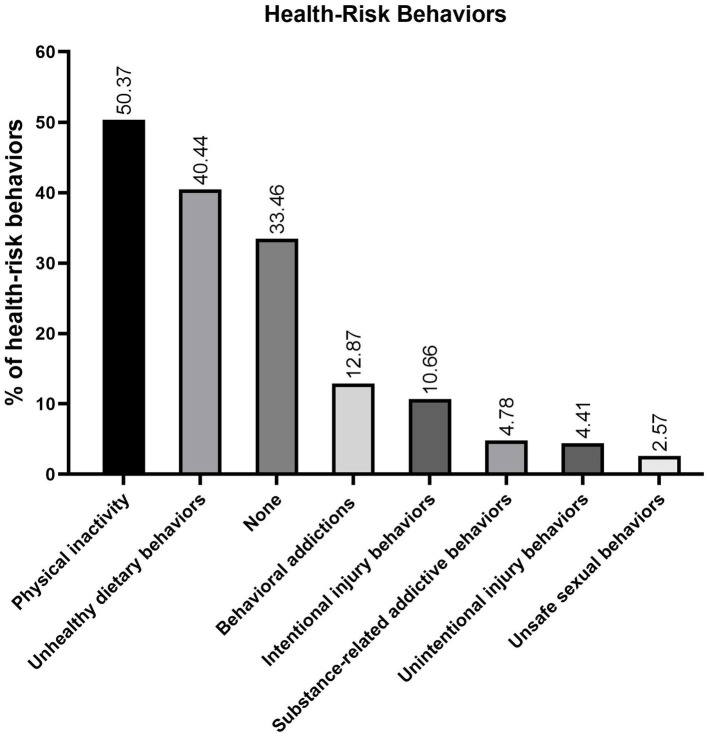
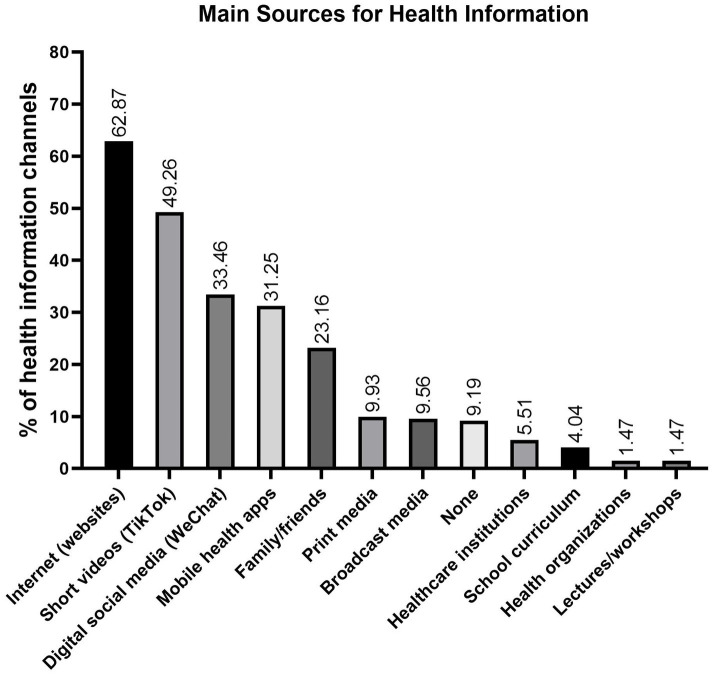
The interplay of infection-specific (IDSHL), electronic (eHL), and general health literacy (HL) in shaping adolescent health disparities during recurrent infections remains underexplored. This cross-sectional study mainly evaluated the levels and associations of IDSHL, eHL and HL among 10th-11th graders (n = 272) using validated instruments (IDSHLS, eHEALS, HLS-SF12) via anonymous questionnaires. Results revealed that 89.7% of participants reported prevalent health concerns, most notably mood (52.2%), sleep (51.8%), vision (47.8%), weight (34.5%) and gastrointestinal (28.3%) issues, with 66.5% engaging in risk behaviors such as physical inactivity (50.4%) and poor dietary habits (40.4%), while electronic new media overwhelmingly dominated health information acquisition. Literacy proficiency varied: 85.29% exhibited high IDSHL (mean ± SD: 23.23 ± 7.69), 51.1% in high eHL (28.22 ± 8.10) and 48.9% in high HL (34.81 ± 10.29). Binary logistic regression identified IDSHL as an independent HL predictor (OR = 10.28, 95% CI 1.79-59.14, p < 0.01) and revealed reciprocal eHL-HL associations (eHL → HL: OR = 23.31; HL → eHL: OR = 23.15; both p < 0.01). These findings highlight adolescents' disproportionate health burdens, digital-focused information acquisition, literacy gaps, and preliminary evidence of a reciprocal IDSHL-eHL relationship within health literacy frameworks. The study advocates integrated interventions combining infection-specific education, digital health training, and behavior modification to address adolescent health disparities in prevention-focused digital healthcare systems.
Keywords: adolescent health literacy; eHealth literacy; general health literacy; health risk behaviors; infectious disease-specific health literacy.
Copyright © 2025 Qin, Gong, Hu, Lou, Xuan, Wang and Gong.
Conflict of interest statement
The authors declare that the research was conducted in the absence of any commercial or financial relationships that could be construed as a potential conflict of interest.
Figures

References
MeSH terms
LinkOut - more resources
Full Text Sources
Medical
