


Research hotspots and trends in unexplained recurrent spontaneous abortion (URSA) from 2014 to 2024: a bibliometric analysis
- PMID: 40438372
- PMCID: PMC12116356
- DOI: 10.3389/fmed.2025.1554875
Research hotspots and trends in unexplained recurrent spontaneous abortion (URSA) from 2014 to 2024: a bibliometric analysis
Abstract
Introduction: Recurrent spontaneous abortion (RSA) represents a significant challenge in obstetrics and reproductive medicine. Causative factors in 40%-50% of RSA couples remain unknown, a condition termed unexplained recurrent spontaneous abortion (URSA). This study employed bibliometric analysis to elucidate global research trends and identify key areas of interest in URSA.
Methods: We utilized the Web of Science Core Collection (WoSCC), including Science Citation Index Expanded (SCI-EXPANDED) and Social Sciences Citation Index (SSCI), as our data source. Our search encompassed all publications on URSA published between 1 January 2014 and 30 October 2024. Following rigorous removal of duplicates, we retained 586 relevant publications, including 532 original articles and 54 reviews. We conducted bibliometric analysis using CiteSpace, VOSviewer and Microsoft Excel.
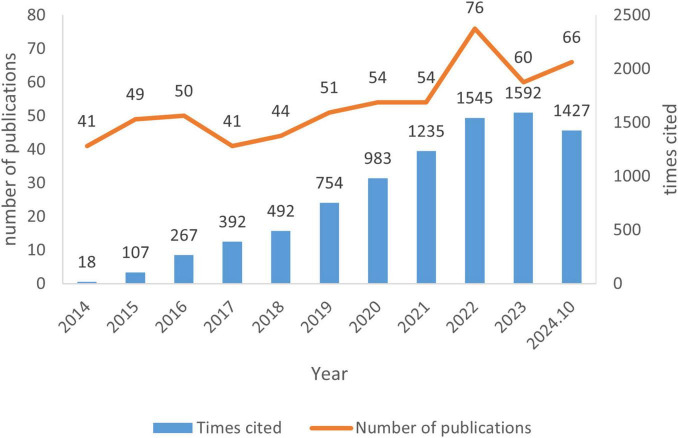
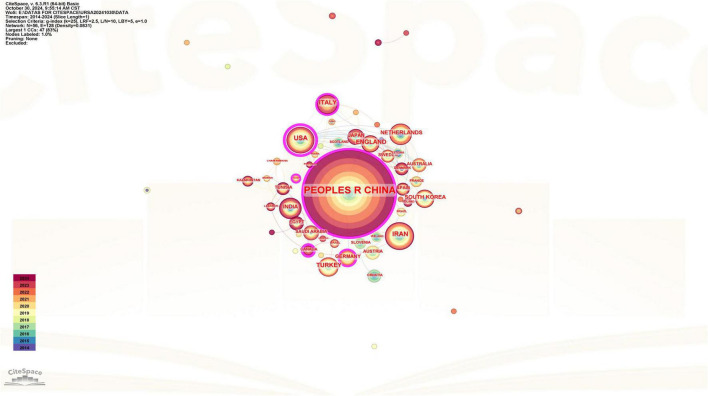
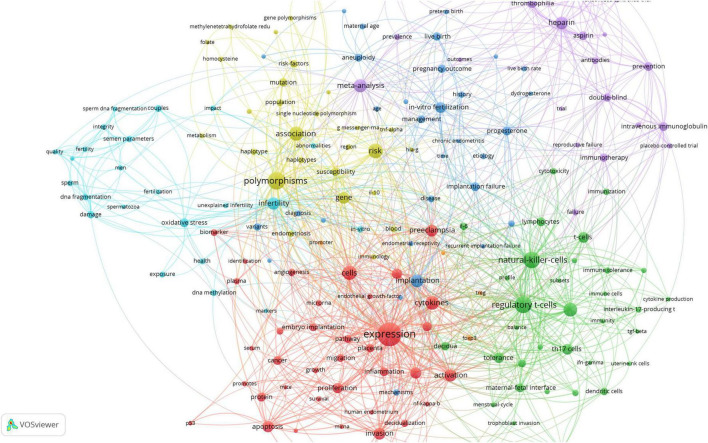
Results: Analysis of annual publications and their citations demonstrated significant growth over the last 10 years. China, the United States and Iran emerged as the most productive countries in the field. Author distribution indicated the absence of a cohesive core author group, suggesting a dispersed research community. The top five cited publications included one prospective observational study, one randomized controlled trial, two reviews, and one immunohistochemistry study, focusing on the etiology, interventions, and therapies of URSA. Keyword cluster analysis identified six categories, with the top three keywords being "expression," "polymorphisms," and "regulatory T-cells."
Conclusion: This bibliometric analysis reveals three key research domains over the last decade in URSA: immunological mechanism and therapies, genetic mechanism, and anticoagulation therapies. While these areas have advanced our understanding, limitations persist in etiological heterogeneity and therapeutic inconsistencies. Future studies should prioritize rigorous multicenter trials with phenotypic stratification, and multi-omics approaches for mechanistic insights. Enhanced global collaboration and interdisciplinary integration are essential to transition from empirical management to evidence-based precision medicine in URSA.
Keywords: CiteSpace; VOSviewer; bibliometric analysis; habitual abortion; spontaneous abortion; unexplained recurrent spontaneous abortion (URSA); visual analysis; women health.
Copyright © 2025 Jiang, Zhang, Li and Che.
Conflict of interest statement
The authors declare that the research was conducted in the absence of any commercial or financial relationships that could be construed as a potential conflict of interest.
Figures
References
-
- Obstetrics Subgroup, Chinese Society of Obstetrics and Gynecology, Chinese Medical Association, Expert Consensus on the Diagnosis and Treatment of Recurrent Spontaneous Abortion. A consensus statement on the diagnosis and treatment of recurrent spontaneous abortion. Chin J Obstetr Gynecol. (2022) 57:653–67. 10.3760/cma.j.cn112141-20220421-00259 - DOI - PubMed
-
- Toth B, Bohlmann M, Hancke K, Kuon R, Nawroth F, von Otte S, et al. Recurrent miscarriage: Diagnostic and therapeutic procedures. guideline of the Dggg, Oeggg and Sggg (S2k-Level, Awmf registry No. 015/050, May 2022). Geburtshilfe Frauenheilkd. (2023) 83:49–78. 10.1055/a-1895-9940 - DOI - PMC - PubMed
Publication types
LinkOut - more resources
Full Text Sources
