


Analysis of the emergency response capacity of nursing staff for public health emergencies and the influencing factors: A cross-sectional study in China
- PMID: 40445922
- PMCID: PMC12124578
- DOI: 10.1371/journal.pone.0323992
Analysis of the emergency response capacity of nursing staff for public health emergencies and the influencing factors: A cross-sectional study in China
Abstract
Background: The frequent occurrence of public health emergencies poses a serious challenge to the emergency response capacity of Chinese nurses. However, nurses still suffer from insufficient emergency response knowledge and unskilled skills. An in-depth understanding of the risk factors affecting the emergency response capacity of nursing staff is needed to promote the overall improvement of the emergency response capacity of the healthcare system.
Aims: To investigate the current situation and influencing factors of nursing staff's emergency response capacity for public health emergencies, and to provide a reference for the design of a standardized emergency response process, targeted training courses and revision of emergency plans.
Methods: A descriptive cross-sectional survey was conducted from March to April 2024, using a self-designed general information questionnaire and a public health emergency response capacity scale for nursing staff. A survey was carried out among 4,680 nursing staff from secondary and above general hospitals in the Xinjiang region of China. Univariate analysis and multiple linear regression analysis were used to explore the influencing factors of nursing staff's emergency response capacity for public health emergencies.
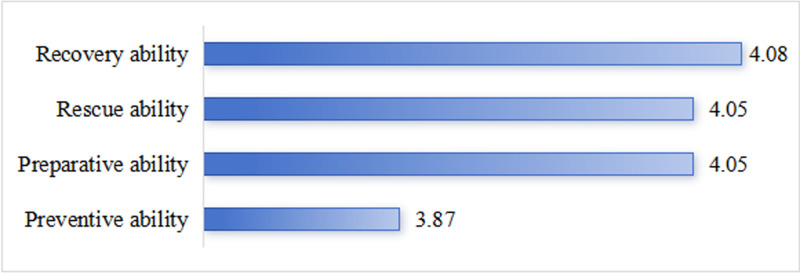
Results: A total of 4292 valid questionnaires were collected. The average score on the emergency response capacity scale was 160.42 ± 24.22, with a mean item score of 4.01 ± 0.61. Multiple linear regression showed that sex, work experience, job title, position, rescue experience, emergency drill experience, presence of anxiety or fear, and willingness to rescue were the factors influencing the emergency response capacity of nursing staff for public health emergencies.
Conclusions: Nursing staff in Xinjiang have the ability to deal with public health emergencies, but they still need to accumulate practical experience. Hospital administrators should improve the emergency response ability of nursing staff to address public health emergencies through a tiered training and assessment mechanism.
Copyright: © 2025 Gu et al. This is an open access article distributed under the terms of the Creative Commons Attribution License, which permits unrestricted use, distribution, and reproduction in any medium, provided the original author and source are credited.
Conflict of interest statement
The authors have declared that no competing interests exist.
Figures
References
-
- Ankunda C, Kanyesigye SM, Nakubulwa S, Kyomuhangi B, Cramer J, Chacon-Cruz E, et al. Assessment of health care workers preparedness to epidemics: a case of Ebola virus disease preparedness in private hospitals in Kampala, Uganda. J Infect Dev Ctries. 2024;18(4):556–64. doi: 10.3855/jidc.17642 - DOI - PubMed
MeSH terms
LinkOut - more resources
Full Text Sources
Miscellaneous
