


The effectiveness of e-learning in focused cardiac ultrasound training: a prospective controlled study
- PMID: 40448066
- PMCID: PMC12125877
- DOI: 10.1186/s12909-025-07409-y
The effectiveness of e-learning in focused cardiac ultrasound training: a prospective controlled study
Abstract
Introduction: Focused Cardiac Ultrasound (FOCUS) is an essential tool for rapid cardiac assessment across various clinical subspecialties. Consequently, teaching foundational FOCUS skills is of critical importance. This study investigates the effectiveness of e-learning in imparting FOCUS skills.
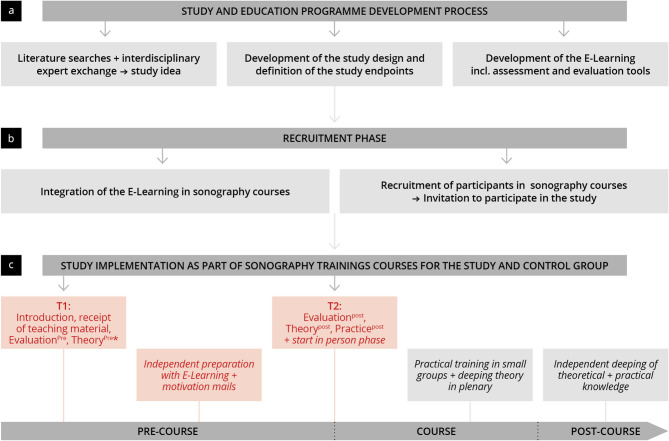
Materials and methods: This prospective, controlled study assessed competency development among medical students attending a FOCUS workshop (study group) at two time points: T1 (pre-training) and T2 (post-training, after completing e-learning). The competence gain of the group was compared to a reference group (control group) of physicians who had also used the e-learning in preparation for a certified FOCUS workshop. Objective competencies were measured at both time points using short-answer and multiple-choice theory tests. Subjective self-assessments of competencies and opinions of the e-learning were investigated through evaluation forms at T2 using a 7-point Likert scale (1 = strongly disagree, 7 = strongly agree). Demographic information was collected at T1, and user behaviour during e-learning was assessed at T2. Primary endpoints were the increase in theoretical competencies (study group) and the comparison of subjective and objective competency levels (study vs. reference).
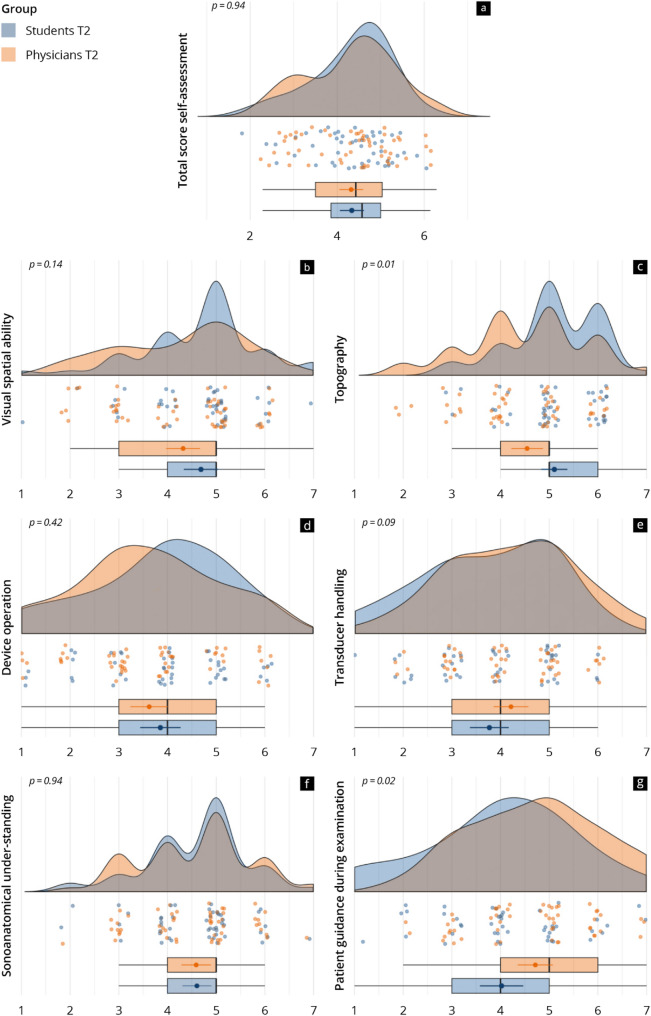
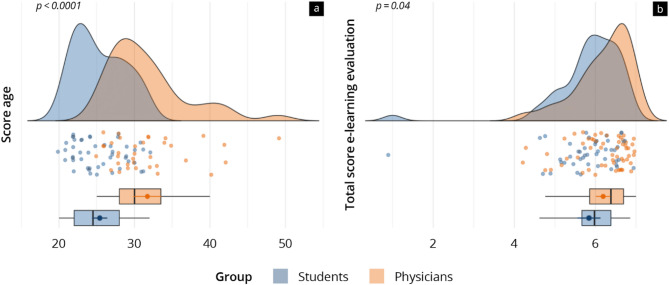
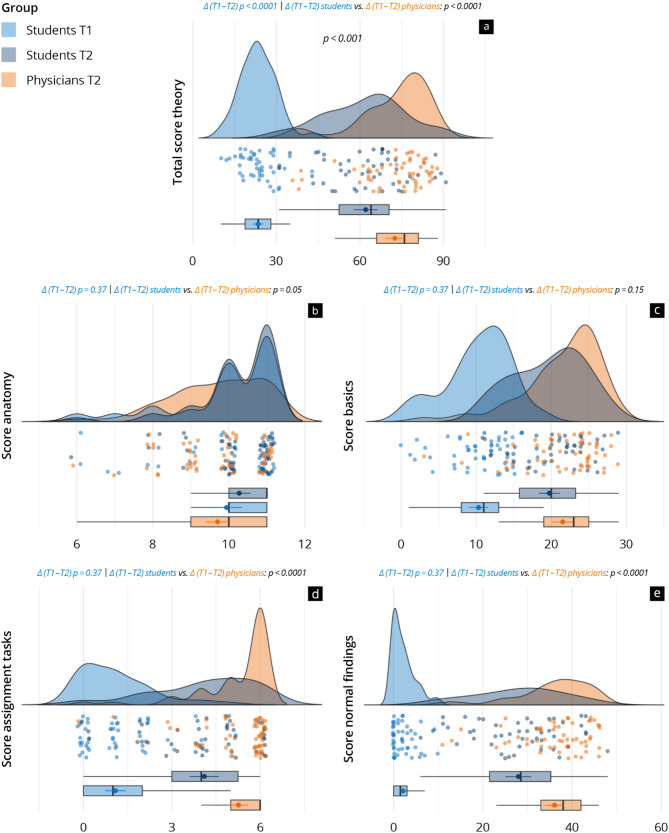
Results: A total of 104 participants (study group = 48; reference group = 56) were included. The study group exhibited a significant (p < 0.001) increase in theoretical competencies. However, at T2 the reference group achieved significantly higher theoretical test scores (p < 0.001). One influencing factor was previous practical experience (p = 0.02), which was significantly higher in the reference group (p < 0.001). Both groups estimated their competency at the end of preparation to be at similar levels (4.3 ± 0.9 scalepoints [SP] versus 4.3 ± 1.0 SP; p = 0.94). Evaluation results of the e-learning were positive in both groups (5.8 ± 0.9 SP versus 6.2 ± 0.7 SP; p = 0.04), with results in the reference group being significantly higher.
Conclusion: Both the improvement in competencies and the positive reception of digital learning media should encourage the increased implementation of e-learning formats. This study shows that such formats in ultrasound training can effectively complement face-to-face workshops and should be included in certified training curricula.
Keywords: Blended learning; Competency-Based education; E-Learning; Focused cardiac ultrasound; Medical education; Ultrasonography.
© 2025. The Author(s).
Conflict of interest statement
Declarations. Ethics approval and consent to participate: The approval for the study was waived by the local ethics committee of the State medical association of Rhineland-Palatinate (“Ethik-Kommission der Landesärztekammer Rheinland-Pfalz”, Mainz, Germany). All procedures performed in studies involving human participants were in accordance with the ethical standards of the institutional and national research committee and with the 1964 Helsinki declaration and its later amendments or comparable ethical standards. Informed written consent was obtained from all the participants. Consent for publication: Not Applicable. Competing interests: J.W. is one of the Editorial Board Members of BMC Medical Education The other authors declare no conflicts of interest. Clinical trial number: Not Applicable.
Figures
References
-
- Ruiz JG, Mintzer MJ, Leipzig RM. The impact of E-learning in medical education. Acad Med. 2006;81(3):207–12. - PubMed
-
- Darras KE, Spouge RJ, de Bruin ABH, Sedlic A, Hague C, Forster BB. Undergraduate radiology education during the COVID-19 pandemic: A review of teaching and learning strategies [Formula: see text]. Can Assoc Radiol J. 2021;72(2):194–200. - PubMed
MeSH terms
LinkOut - more resources
Full Text Sources
