


Mind the (research) gap: a retrospective observational study on the utilization of new medical technologies and related research activities in German hospitals
- PMID: 40448162
- PMCID: PMC12124022
- DOI: 10.1186/s12961-025-01342-8
Mind the (research) gap: a retrospective observational study on the utilization of new medical technologies and related research activities in German hospitals
Abstract
Objectives: Hospitals play a major role in generating clinical evidence on new medical technologies. Thus far, the extent of German hospitals' contribution to the evidence base has not been sufficiently investigated. This study aims to: (1) examine the utilization of new medical technologies in German hospitals and its relationship to different hospital characteristics; (2) investigate the participation of German hospitals in research on these technologies and the association between hospital characteristics and research involvement; and (3) investigate the contribution of German hospitals to international research activities, including the levels of evidence of any studies conducted.
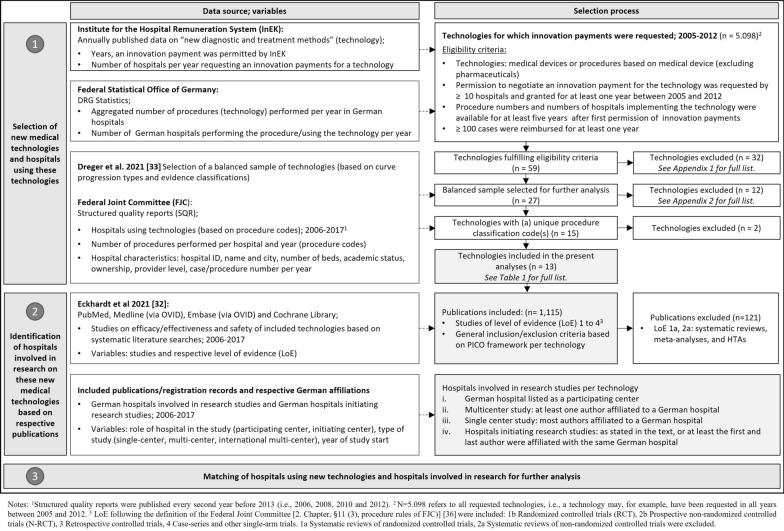
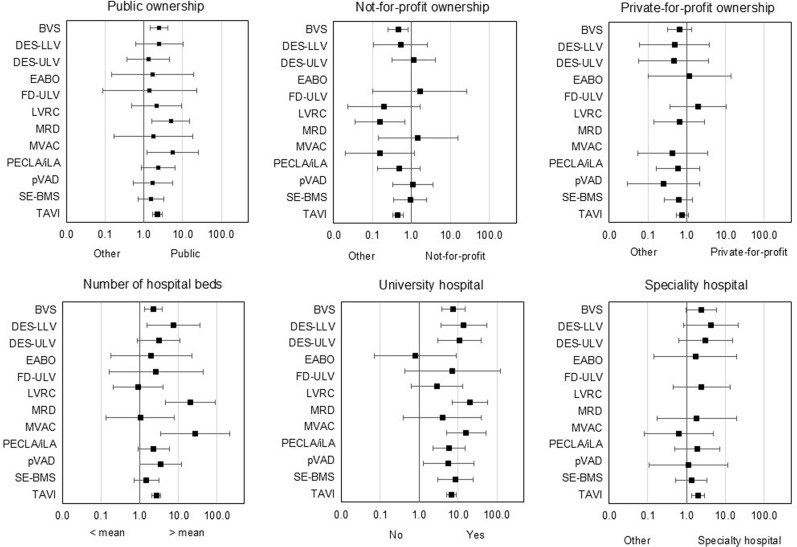
Methods: Using a systematically derived sample of 13 new medical technologies and various data sources, we retrospectively analyzed the utilization of and research activities by German hospitals between 2005 and 2017 and explored which hospital characteristics they were associated with. The data were analyzed descriptively and are expressed as bar plots, box plots, quartiles, and crude odds ratios (ORs).
Results: The proportion of German hospitals using new technologies while also being involved in related clinical research was relatively low (ranging from 0.3% to 29.4%, except for transcatheter aortic valve implantation (TAVI), with 60.7%), particularly for prospective studies. Research involvement was positively associated with university hospital status, larger bed capacity, and public ownership. Overall, the research involving German hospitals predominantly consisted of single-arm studies and not randomized controlled trials (RCTs).
Conclusions: Our study identified a gap between hospitals using new medical technologies and their involvement in evidence generation. This imbalance can contribute to uncertainty regarding the actual efficacy, effectiveness and safety of new medical technologies. To ensure evidence-based patient care, it is therefore essential to strengthen the link between research and practice, in both directions. A first step to achieve this could entail restricting the use of new medical technologies to specialized innovation centers (e.g., university hospitals, specialized hospitals) during the initial years of their utilization to ensure an adequate evidence base is generated before widespread implementation.
© 2025. The Author(s).
Conflict of interest statement
Declarations. Ethics approval and consent to participate: Not applicable. Consent for publication: Not applicable. Competing interests: The authors declare no competing interests.
Figures
References
-
- World Health Organization. Global Spending on Health Weathering the Storm. Geneva: World Health Organization; 2020.
Publication types
MeSH terms
Grants and funding
LinkOut - more resources
Full Text Sources
Medical
Miscellaneous
