


Bile acids enhance fat metabolism and skeletal muscle development in Zhijiang duck by modulating gut microbiota
- PMID: 40449103
- PMCID: PMC12166883
- DOI: 10.1016/j.psj.2025.105319
Bile acids enhance fat metabolism and skeletal muscle development in Zhijiang duck by modulating gut microbiota
Abstract
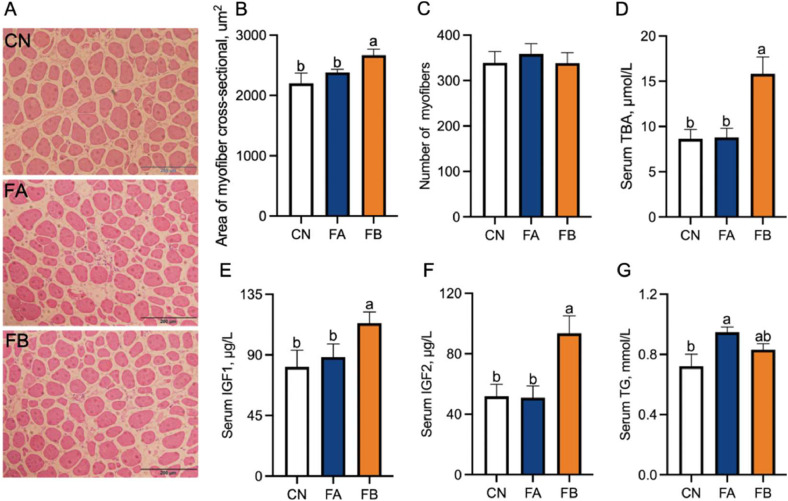
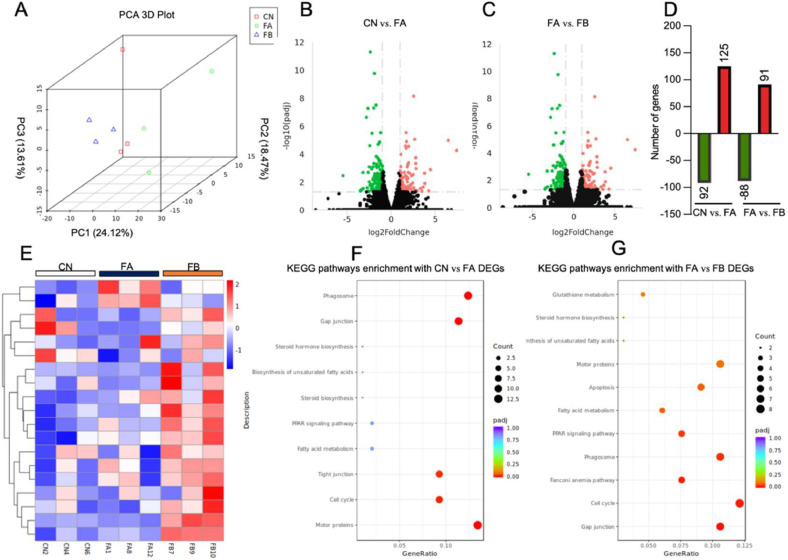
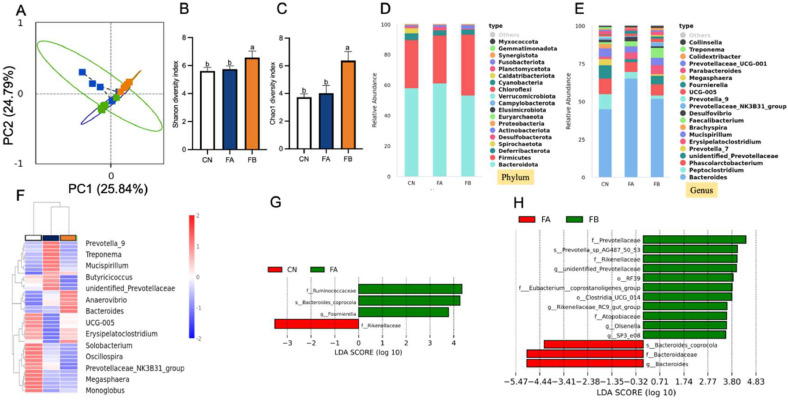
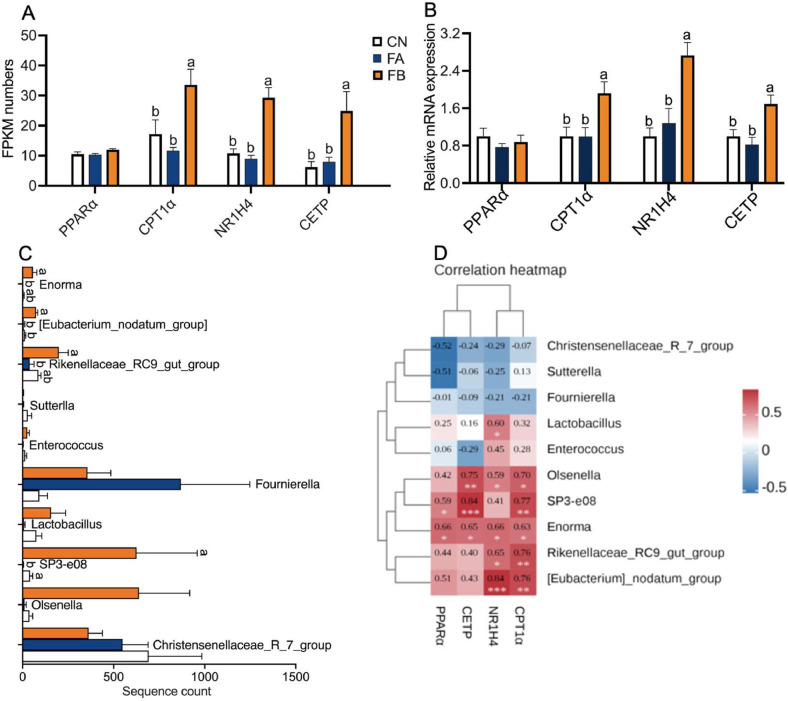
To optimize livestock production of integrated farms, dietary crude fat levels are often increased, making efficient fat utilization crucial. Bile acids are known to improve fat utilization, but their impact on growth performance and breast muscle development in Zhijiang ducks remains unclear. In this study, a total of 360 twenty-day-old Zhijiang ducks with similar body weights were divided into three groups: the control group (CN) received a basal diet; the high-fat group (FA) received the basal diet plus 1.25 % rapeseed oil; and the high-fat plus bile acids compound (BA) group (FB) received the FA diet supplemented with 250 mg/kg BA for 30 days. Results indicated that the addition of rapeseed oil and BA significantly increased (P < 0.05) average daily gain (ADG) and reduced (P < 0.05) feed conversion ratio (FCR). Slaughter data showed that BA significantly enhanced (P < 0.05) breast muscle weight and percentage while decreasing (P < 0.05) abdominal fat weight. Additionally, BA increased (P < 0.05) the cross-sectional area of breast muscle fibers, total bile acid content, and levels of insulin-like growth factors 1/2 (IGF1/2). Transcriptomic analysis further revealed that BA significantly upregulated (P < 0.05) the levels of PPARα, CPT1α, NR1H4, and CETP in breast muscle. 16S rRNA analysis showed a significant increase (P < 0.05) in the relative abundances of genera Enorma, [Eubacterium nodatum group], Rikenellaceae RC9 gut group, and SP3-e08. Additionally, the Spearman correlation suggested a positive correlation between the genera Olsenella, SP3-e08, Enorma, Rikenellaceae_RC9_gut_group, and [Eubacterium_nodatum_group] with PPARα, CETP, NR1H4, and CPT1α. In contrast, the genera Christensenellaceae_R_7_group and Sutterella exhibited negative correlations with PPARα. These findings provide new insights into the role of BA in promoting growth performance and skeletal muscle development in Zhijiang ducks fed a high-fat diet, with this effect potentially linked to changes in the gut microbiota.
Keywords: Bile acids; Breast muscle; Fat metabolism; Gut microbiome; Zhijiang duck.
Copyright © 2025. Published by Elsevier Inc.
Conflict of interest statement
Declaration of competing interest This manuscript is an original, unpublished work and has not been submitted to any other journals for publication, in whole or in part. All authors listed have read and approved this manuscript, and there is no conflict of interest in the submission of this manuscript.
Figures

References
-
- Chen Q., Mao X., Hu Z. Effects of cholic acid loading on plasma IGF-2, insulin and metabolites in pregnant rats and their fetuses. Prog. Vet. Med. 2002;2:51–53.
-
- Codina M., Garcia de la serrana D., Sanchez-Gurmaches J., Montserrat N., Chistyakova O., Navarro I., Gutierrez J. Metabolic and mitogenic effects of IGF-II in rainbow trout (Oncorhynchus mykiss) myocytes in culture and the role of IGF-II in the PI3K/Akt and MAPK signalling pathways. Gen. Comp. Endocrinol. 2008;157:116–124. - PubMed
-
- Dou L., Liu C., Chen X., Yang Z., Hu G., Zhang M., Sun L., Su L., Zhao L., Jin Y. Supplemental Clostridium butyricum modulates skeletal muscle development and meat quality by shaping the gut microbiota of lambs. Meat. Sci. 2023;204 - PubMed
MeSH terms
Substances
LinkOut - more resources
Full Text Sources
Medical
Miscellaneous
