Longitudinal analysis of step counts in Parkinson's disease patients: insights from a web-based application and generalized additive model
- PMID: 40452938
- PMCID: PMC12126969
- DOI: 10.7717/peerj.19519
Longitudinal analysis of step counts in Parkinson's disease patients: insights from a web-based application and generalized additive model
Abstract
Background: Parkinson's disease (PD) is a chronic neurological disorder that affects millions of people worldwide. A common motor symptom associated with PD is gait impairment, leading to reduced step count and mobility.
Methods: Monitoring and analyzing step count data can provide valuable insights into the progression of the disease and the effectiveness of various treatments. In our study, the generalized additive model (GAM) was used to identify statistically significant variables for step counts. Additionally, a web application was developed as an interactive visualization tool.
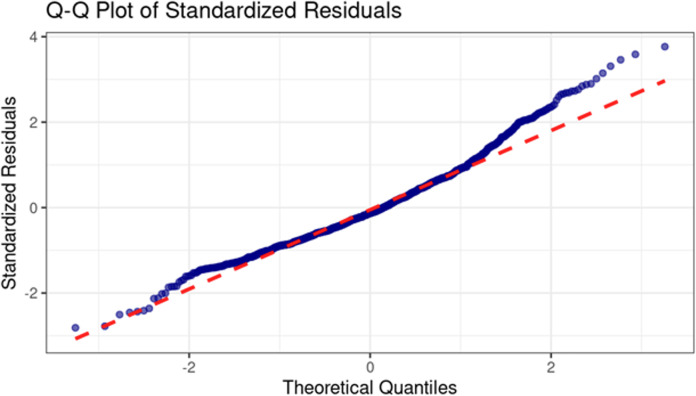
Results: The GAM model shows that the following variables are statistically significant for daily step counts: sex (p = 0.03), handedness (p = 0.015), PD status of father (p = 0.056), COVID-19 status (Yes vs. No, p = 0.008), cohort (PD vs. Healthy, p < 0.0001), the cubic regression spline with three basis functions of age by cohorts (p < 0.0001), and the random effect of individual age trajectories (p = 0.0001).
Conclusions: Based on the PPMI data, we find that sex, handedness, PD status of father, COVID-19 status, cohort, and the smoothing functions of age are all statistically significant for step counts. Additionally, a web application tailored specifically for step count analysis in PD patients was developed. This tool provides a user-friendly interface for patients, caregivers, and healthcare professionals to track and analyze step count data, facilitating personalized treatment plans and enhancing the management of PD.
Keywords: Longitudinal; Parkinson’s disease; Shiny; Step count; Web-application.
©2025 Gu and Gong.
Conflict of interest statement
The authors declare there are no competing interests.
Figures



References
-
- Adams JL, Kangarloo T, Tracey B, O’Donnell P, Volfson D, Latzman RD, Zach N, Alexander R, Bergethon P, Cosman J, Anderson D, Best A, Severson J, Kostrzebski MA, Auinger P, Wilmot P, Pohlson Y, Waddell E, Jensen-Roberts S, Gong Y, Kilambi KP, Herrero TR, Ray Dorsey E, Parkinson Study Group Watch-PD Study Investigators and Collaborators Using a smartwatch and smartphone to assess early Parkinson’s disease in the WATCH-PD study. Npj Parkinson’s Disease. 2023;9(1):64. doi: 10.1038/s41531-023-00497-x. - DOI - PMC - PubMed
-
- Ahmadi MN, Rezende LFM, Ferrari G, del Pozo Cruz B, Lee IM, Stamatakis E. Do the associations of daily steps with mortality and incident cardiovascular disease differ by sedentary time levels? A device-based cohort study. British Journal of Sports Medicine. 2024;58(5):261–268. doi: 10.1136/bjsports-2023-107221. - DOI - PMC - PubMed
-
- Amara AW, Chahine L, Seedorff N, Caspell-Garcia CJ, Coffey C, Simuni T, The Parkinson’s Progression Markers Initiative Self-reported physical activity levels and clinical progression in early Parkinson’s disease. Parkinsonism and Related Disorders. 2019;61:118–125. doi: 10.1016/j.parkreldis.2018.11.006. - DOI - PubMed
-
- Banach M, Lewek J, Surma S, Penson PE, Sahebkar A, Martin SS, Bajraktari G, Henein MY, Reiner Ž, da Browa AB, Bytyçi I. The association between daily step count and all-cause and cardiovascular mortality: a meta-analysis. European Journal of Preventive Cardiology. 2023;30(18):1975–1985. doi: 10.1093/eurjpc/zwad229. - DOI - PubMed
MeSH terms
LinkOut - more resources
Full Text Sources
Medical