


Additive Effects of Clonidine Used in Propofol Sedation in Colonoscopy
- PMID: 40452956
- PMCID: PMC12125656
- DOI: 10.5812/aapm-156833
Additive Effects of Clonidine Used in Propofol Sedation in Colonoscopy
Abstract
Background: Propofol is commonly used for sedation during colonoscopy but often requires high doses.
Objectives: This study aimed to compare the outcomes of propofol alone versus propofol combined with clonidine for colonoscopy sedation.
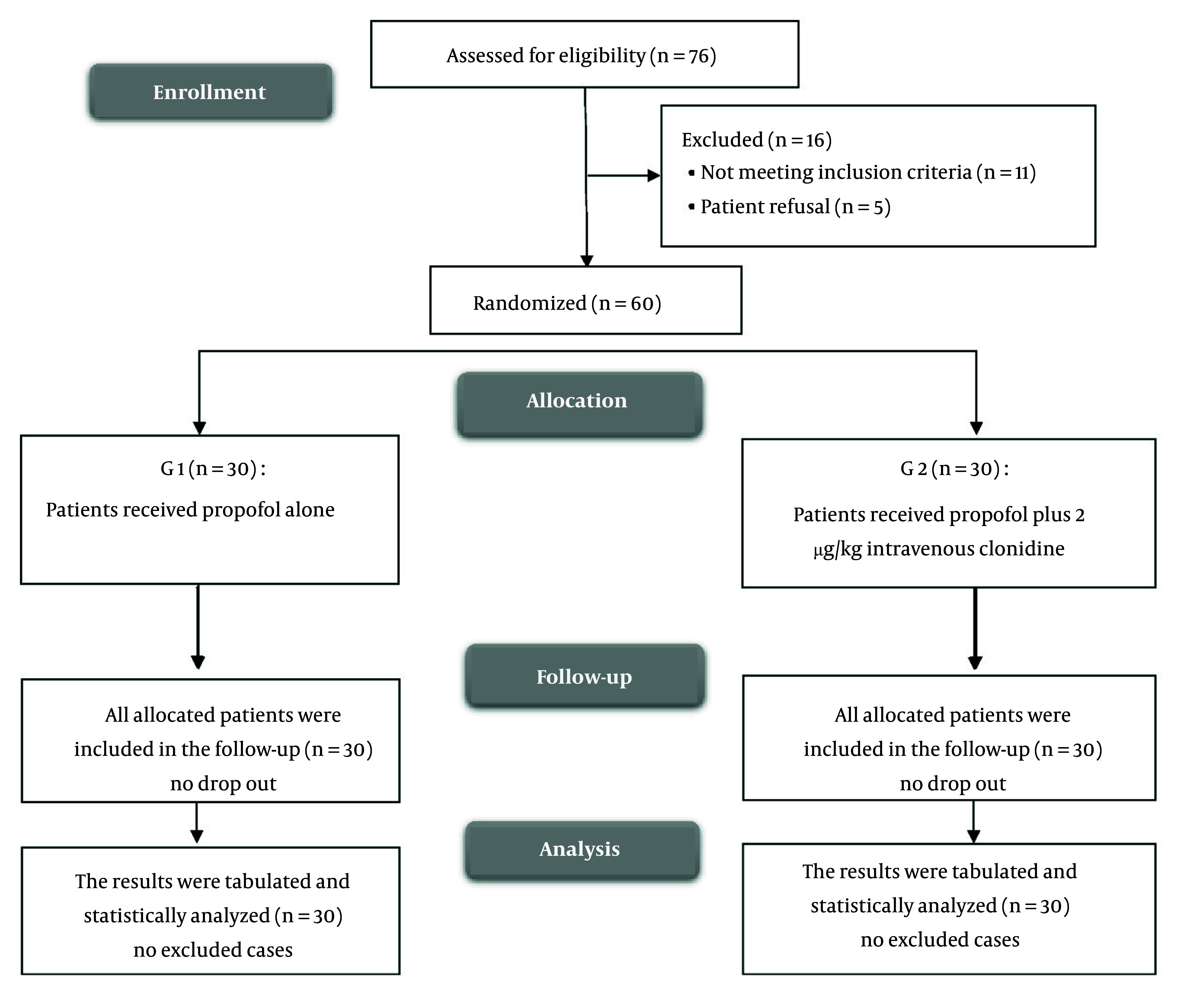
Methods: In this randomized, double-blind controlled trial, 60 adult patients scheduled for elective colonoscopy were enrolled. Patients were divided into two groups: Group 1 (G1) received propofol alone, while group 2 (G2) received propofol plus 2 μg/kg clonidine intravenously over 10 minutes. Propofol infusion was initiated at 25 - 75 μg/kg/min IV for the first 10 - 15 minutes, then titrated to 25 - 50 μg/kg/min based on clinical response.
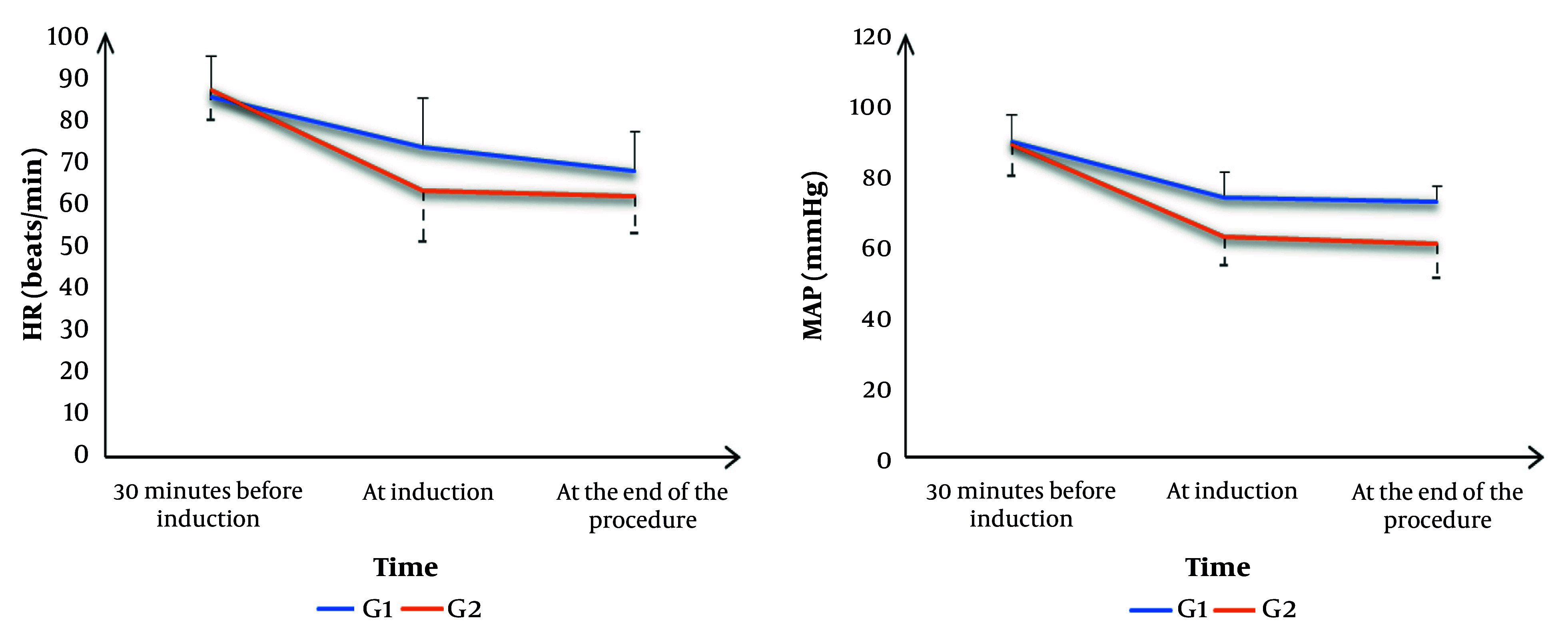
Results: Sedation onset was significantly faster in G2 than in G1 (P = 0.001). The total propofol requirement was 22% lower in G2 (P = 0.001). Heart rate (HR) and mean arterial pressure (MAP) were significantly lower in G2 at induction and at the end of the procedure (P < 0.05). Patient satisfaction scores were higher in G2 (P = 0.042). The observer's assessment of alertness/sedation (OAA/S) score after induction was lower in G2 (P = 0.015), indicating deeper sedation. However, Aldrete scores in the post-anesthesia care unit (PACU) were lower in G2 (P = 0.001), suggesting a slower recovery.
Conclusions: The addition of clonidine to propofol for colonoscopy sedation led to faster sedation onset, reduced propofol requirements, improved patient satisfaction, and deeper sedation, but with potentially prolonged recovery times.
Keywords: Clonidine; Colonoscopy; Patient Satisfaction; Propofol; Sedation.
Copyright © 2025, Mohamed Mohamed et al.
Conflict of interest statement
The authors have no financial or proprietary interests in any material discussed in this article.
Figures
References
LinkOut - more resources
Full Text Sources