


Comparison of access to stroke diagnostics, treatment, rehabilitation, and outcome between men and women
- PMID: 40453909
- PMCID: PMC12123334
- DOI: 10.1016/j.gloepi.2025.100201
Comparison of access to stroke diagnostics, treatment, rehabilitation, and outcome between men and women
Abstract
Background: We aimed to compare access to diagnostics, treatment, rehabilitation, and outcome in women and men with stroke.
Methods: In this observational study we used routinely-collected, aggregate health data from all patients admitted with a stroke in the Capital Region and Region Zealand, Denmark from May 2016 until October 2022.
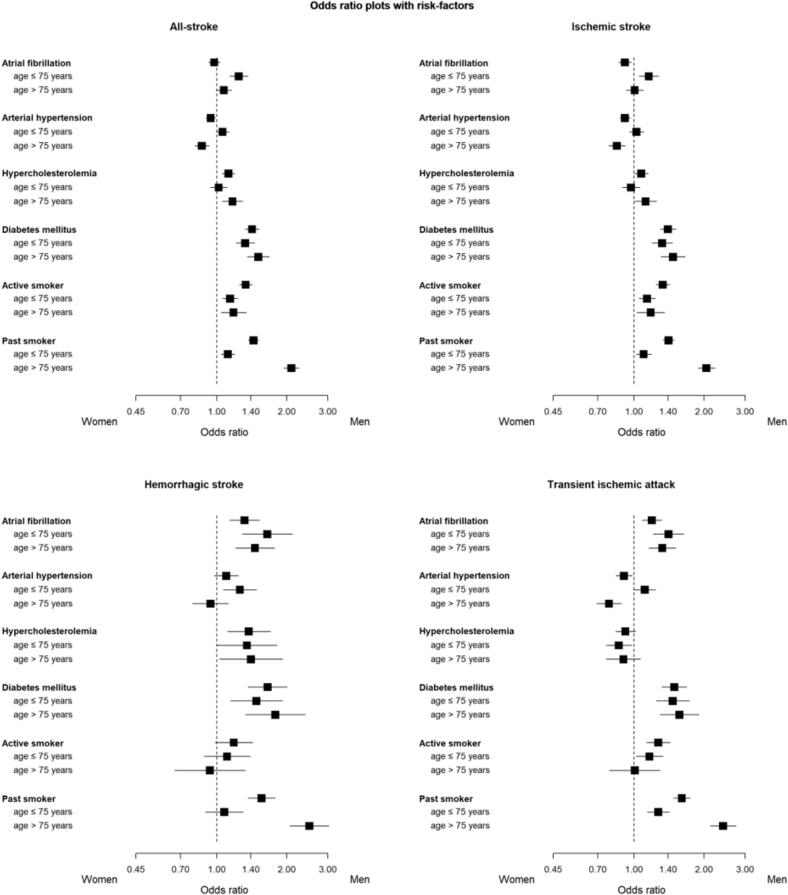
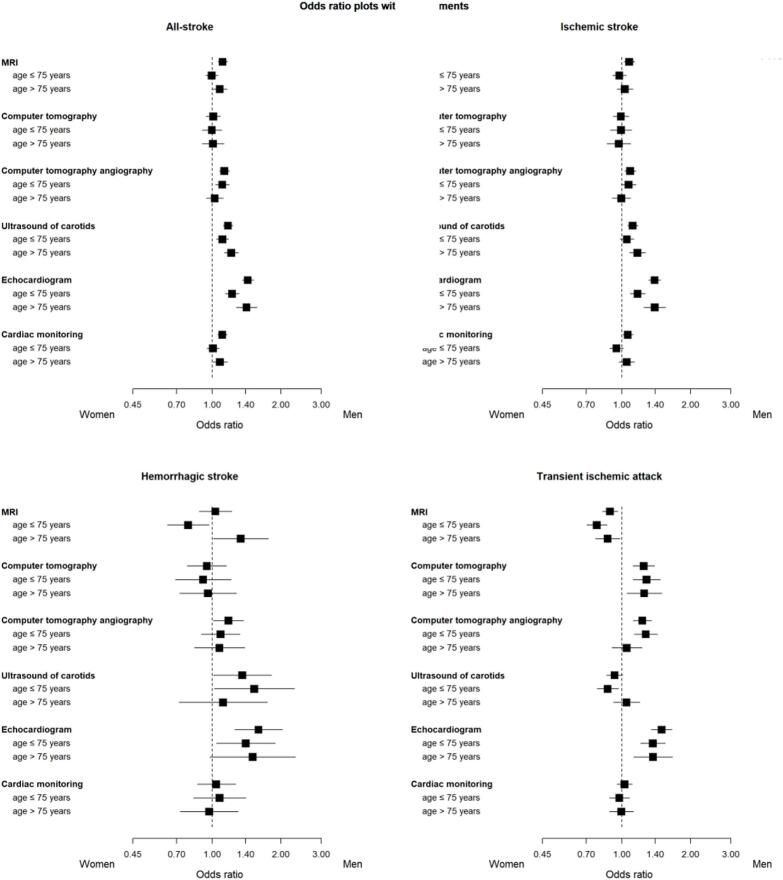
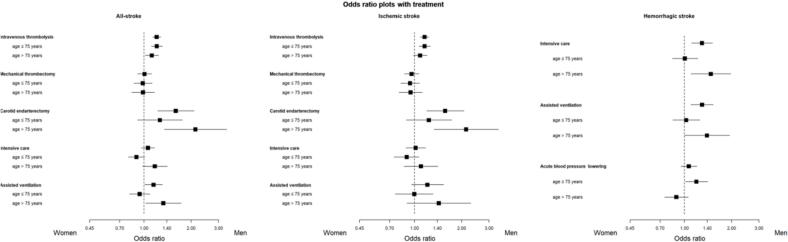
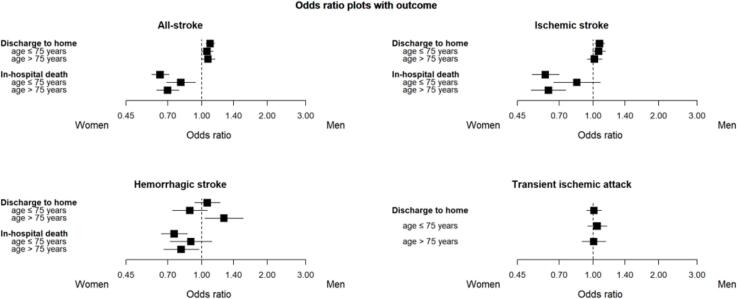
Results: Among 28,855 stroke patients (55 % men, 45 % women), women were older (53 % women vs. 47 % men with age > 75 years). Overall, women had reduced access to: magnetic resonance imaging (MRI; 40 % vs. 43 %, CI 95 %: 1.06-1.16), computer tomography (CT)-angiography (25 % vs. 28 %, CI95%: 1.07-1.19), carotid ultrasound (48 % vs. 52 %, CI95%: 1.12-1.23), thrombolysis (16 % vs. 18 %, CI95%: 1.13-1.28), and neuropsychological assessment (9 % vs. 16 %, CI95%: 1.70-1.97). Home discharge rates were lower for women (45 % vs. 47 %, CI95%: 1.04-1.15), while in-hospital mortality was higher (8 % vs. 6 %, CI95%: 0.59-0.71). For patients >75 years, women had less access to MRI (34 % vs. 35 %, CI95%: 1-1.16), carotid ultrasound (46 % vs. 51 %, CI95%: 1.13-1.30), thrombolysis (15 % vs. 16 %, CI95%: 1.02-1.24), and neuropsychological assessment (2 % vs. 4 %, CI95%: 1.60-2.42). Women's in-hospital mortality remained higher also in patients >75 years (12 % vs. 8 %, CI95%: 0.62-0.79).
Conclusions: Women had reduced access to testing, treatment, and rehabilitation across all age groups and stroke types. This disparity was most notable in interventions not included in the national quality assessment program.
Keywords: Diagnosis; Rehabilitation; Sex; Stroke.
© 2025 The Authors.
Conflict of interest statement
The authors declare that they have no known competing financial interests or personal relationships that could have appeared to influence the work reported in this paper.
Figures

References
LinkOut - more resources
Full Text Sources
