


DAPK1 acts as a positive regulator of hypertension via induction of vasoconstriction
- PMID: 40454931
- PMCID: PMC12238816
- DOI: 10.1042/CS20255840
DAPK1 acts as a positive regulator of hypertension via induction of vasoconstriction
Abstract
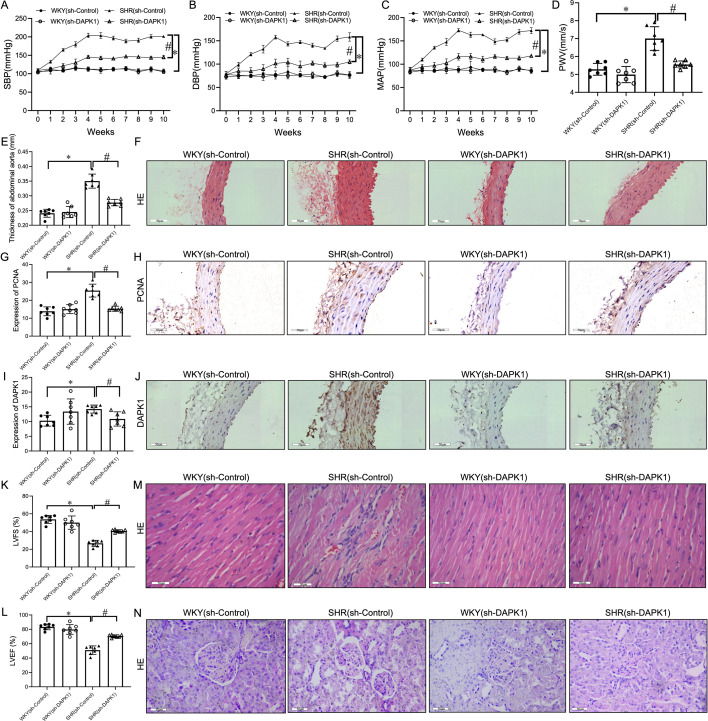
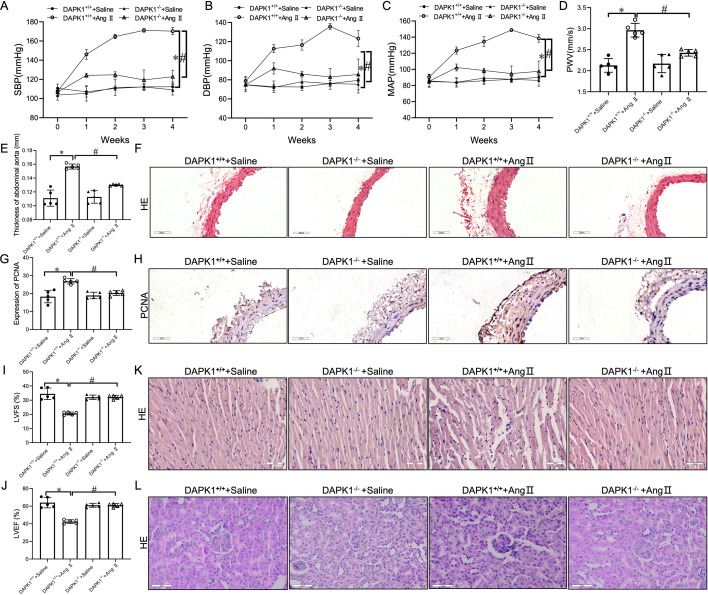
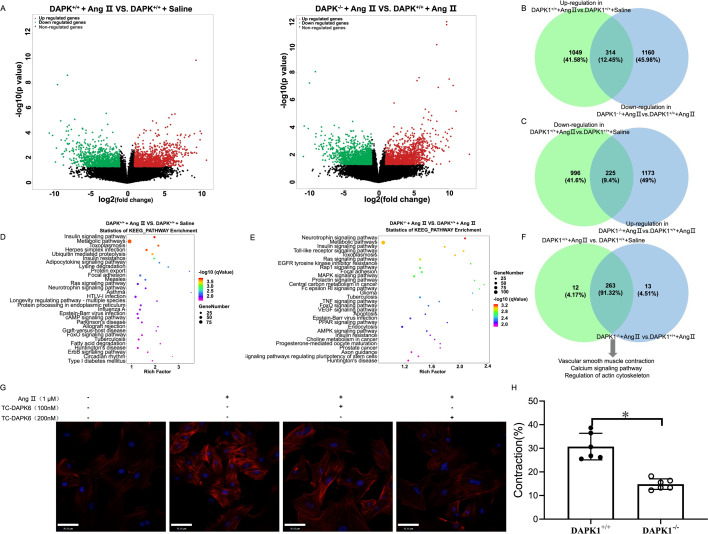
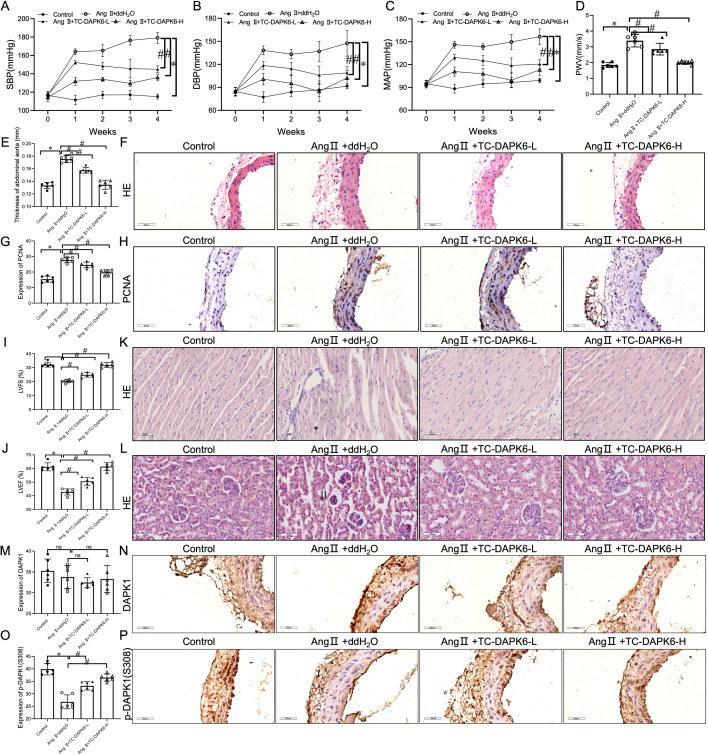
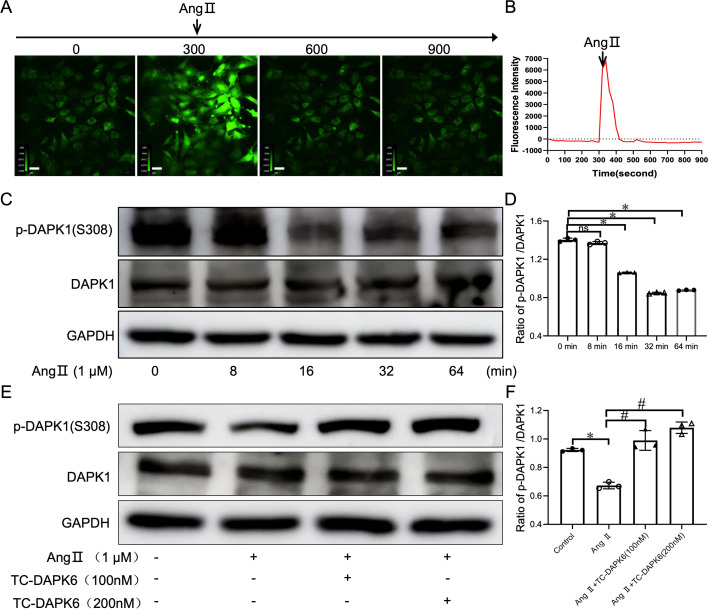
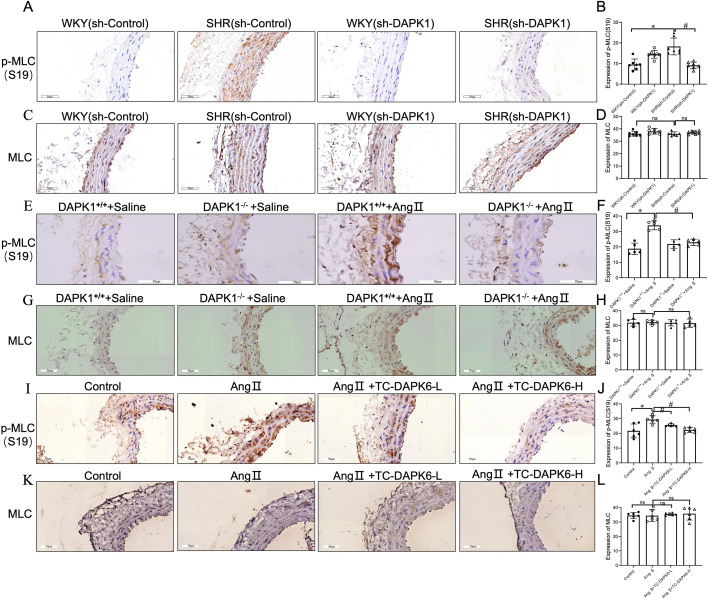
Death-associated protein kinase 1 (DAPK1) is a tumor suppressor gene involved in apoptosis, autophagy, and tumor progression. However, its role in hypertension (HTN) remains largely unexplored and lacks systematic evaluation. We administered adeno-associated virus (AAV) harboring short hairpin RNA targeting DAPK1 or control short hairpin RNA to male spontaneously hypertensive rats (SHRs) and Wistar-Kyoto rats. Additionally, wildtype and DAPK1 knockout mice were infused with angiotensin II (Ang II) or saline for four weeks. Male C57BL/6 mice underwent a four-week Ang II infusion and were treated with TC-DAPK6, a selective DAPK1 inhibitor. We examined the abdominal aortas (AAs) of mice and rats for pathological changes, measured blood pressure (BP) and pulse wave velocity using noninvasive BP methods, ultrasound, and hematoxylin and eosin staining. The role of DAPK1 in early HTN was further assessed through immunofluorescence, ex vivo isometric constriction of the AA, RNA sequencing, Western blot, and immunohistochemistry. Our study demonstrated that the targeted inhibition of DAPK1 with AAV significantly ameliorated HTN in SHRs and reduced damage to the AAs and target organs, including the heart and kidneys. Meanwhile, DAPK1 knockout or inhibition in mice significantly ameliorates Ang II-induced HTN in mice, as well as reducing damage to the AAs and target organs, including the heart and kidneys. Mechanistically, DAPK1 inhibition prevents myosin light chain (MLC) phosphorylation at serine 19, reducing vasoconstriction and protecting against HTN. In conclusion, DAPK1 is involved in HTN pathogenesis by regulating the MLC pathway to mediate vascular constriction, highlighting potential as a therapeutic target for HTN.
Keywords: DAPK1; MLC; hypertension; kinase activity; vasoconstriction.
© 2025 The Author(s).
Conflict of interest statement
The authors declare that they have no known competing financial interests or personal relationships that could have appeared to influence the work reported in this paper.
Figures
References
MeSH terms
Substances
Grants and funding
- 82304758/National Natural Science Foundation of China
- 2022J01840/Natural Science Foundation of Fujian Province
- 2021-QNRC2-B19/China Association of Chinese Medicine
- CKJ2020003/Development Fund of Chen Keji Integrative Medicine
- Fujian University of Traditional Chinese Medicine/youth talent support program from Fujian University of Traditional Chinese Medicine
LinkOut - more resources
Full Text Sources
Medical
Molecular Biology Databases
Miscellaneous
