


Flavonoid Stability and Biotransformation in Agricultural Soils: Effects of Hydroxylation, Methoxylation, and Glycosylation
- PMID: 40455566
- PMCID: PMC12164328
- DOI: 10.1021/acs.jafc.5c02814
Flavonoid Stability and Biotransformation in Agricultural Soils: Effects of Hydroxylation, Methoxylation, and Glycosylation
Abstract
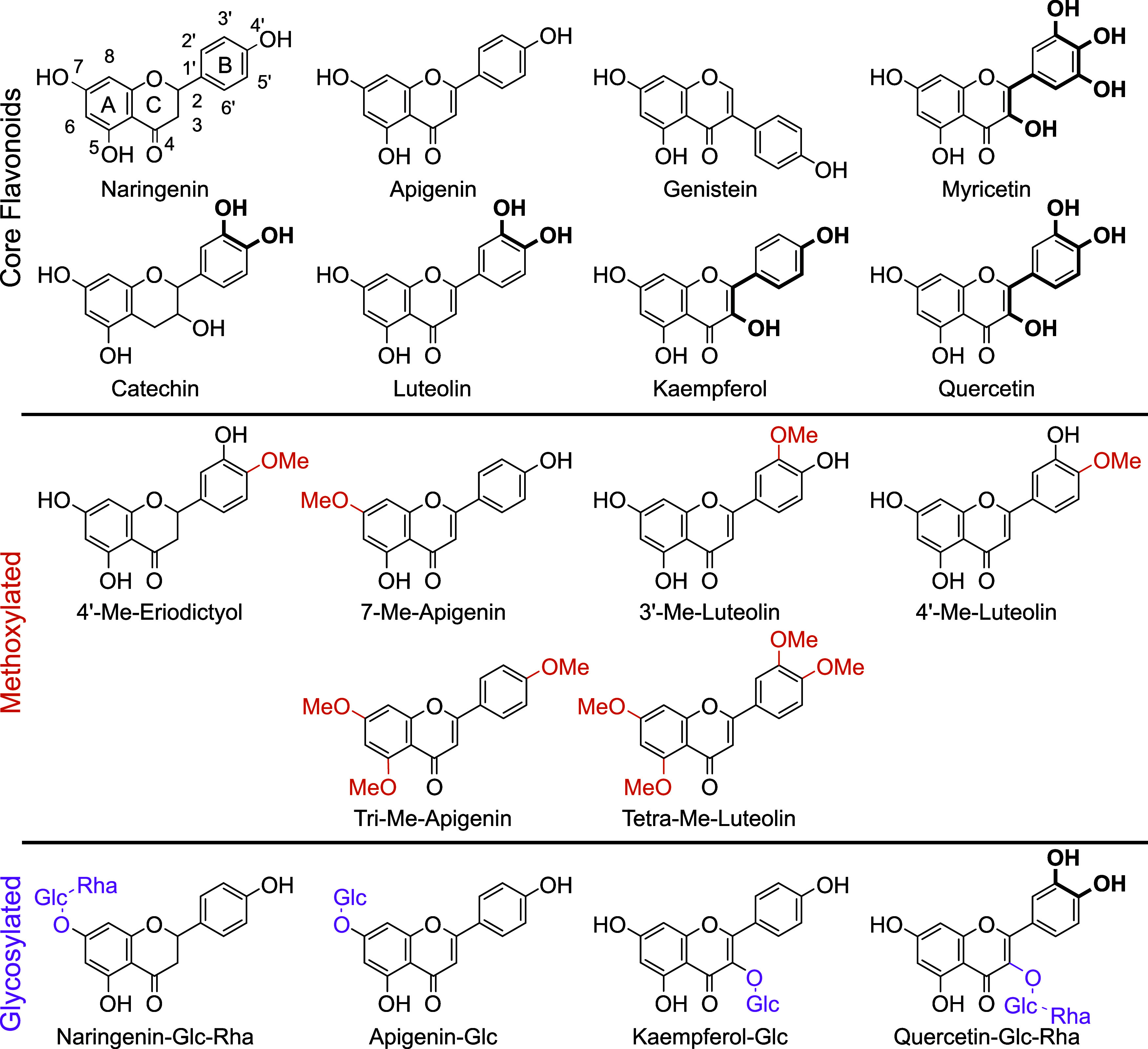
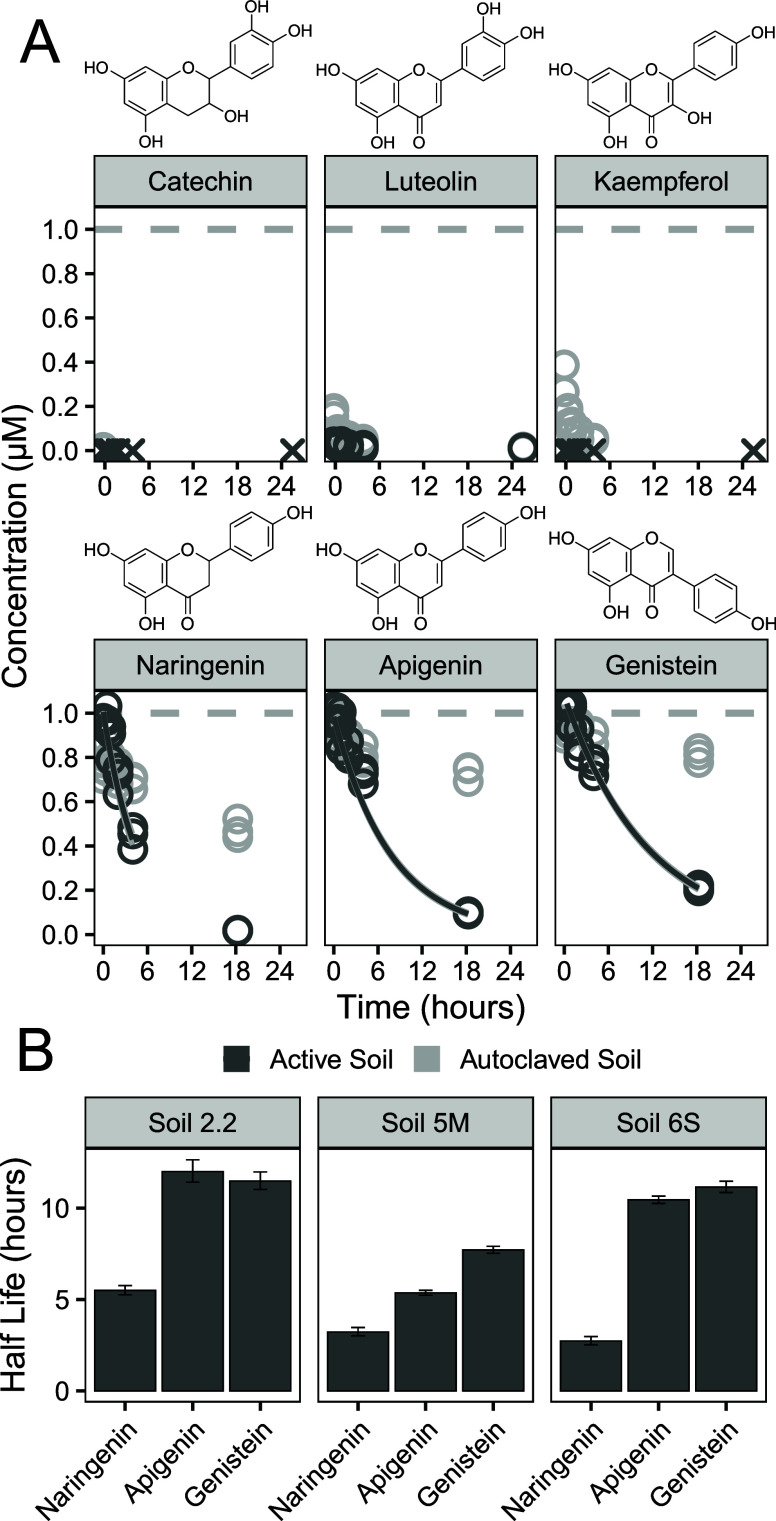
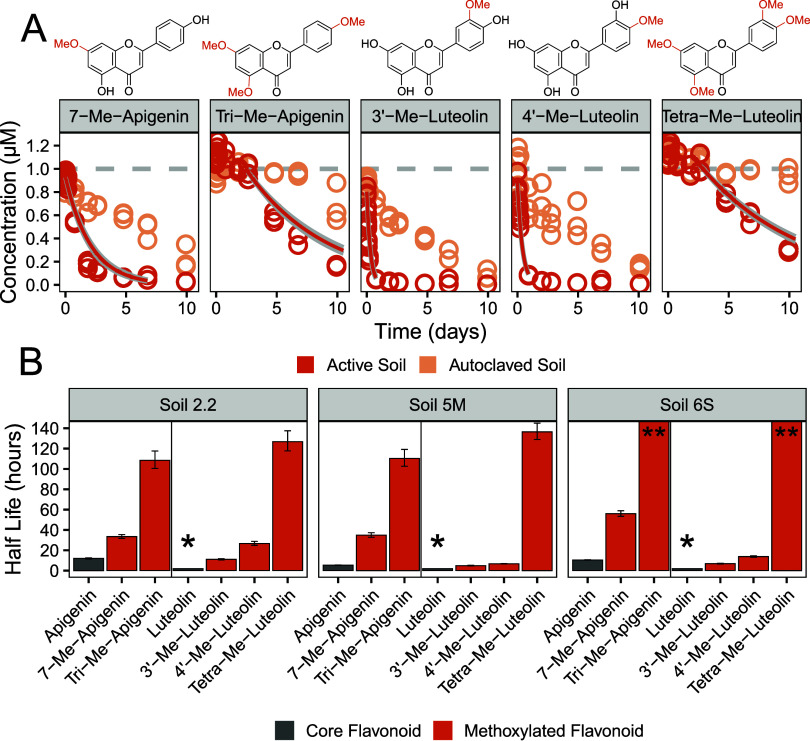
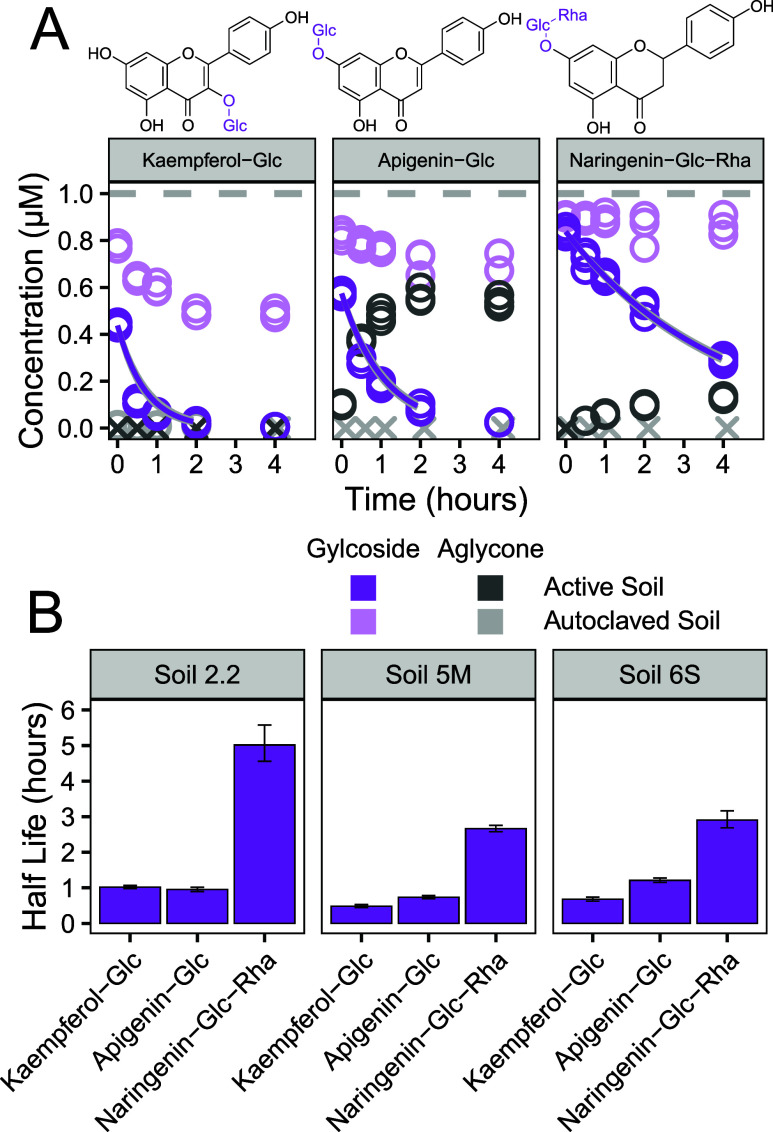
Stricter pesticide regulations are increasing the demand for environmentally acceptable alternatives with flavonoids seen as promising candidates for use as biopesticides. However, the current limited understanding of the environmental fate of flavonoids in soils restricts their assessment as active pesticide ingredients. To address this knowledge gap, we conducted laboratory incubation experiments with LC-MS-based quantification to determine the half-lives of 18 structurally related flavonoids in three agricultural soils. Hydroxylated flavonoids were rapidly transformed (t1/2: 3-12 h), while methoxylated derivatives exhibited substantially longer half-lives, which increased with the number of methoxy groups (t1/2: 5-460 h). Glycosylated flavonoids were primarily transformed into their aglycones (t1/2: 0.5-5 h). Incubation experiments with autoclaved soil indicated that biotic processes primarily catalyzed the observed transformations. All trends were consistent across different soil types and pH values. This study provides a comprehensive overview of flavonoid stability in agricultural soils, enhancing our understanding of their potential as alternative pesticides.
Keywords: biopesticide; soil half-life; structure−stability relationship; sustainable agriculture.
Figures
References
-
- Deguine J.-P., Aubertot J.-N., Flor R. J., Lescourret F., Wyckhuys K. A. G., Ratnadass A.. Integrated Pest Management: Good Intentions, Hard Realities. A Review. Agron. Sustain. Dev. 2021;41(3):38. doi: 10.1007/s13593-021-00689-w. - DOI
-
- European Union . Farm to Fork Strategy 2020.
MeSH terms
Substances
LinkOut - more resources
Full Text Sources
Medical
Miscellaneous
