


Synthesis and characterization of kaolin glass cullet ceramics modified with transition metal oxides for enhanced mechanical and optical properties
- PMID: 40456844
- PMCID: PMC12130333
- DOI: 10.1038/s41598-025-03908-6
Synthesis and characterization of kaolin glass cullet ceramics modified with transition metal oxides for enhanced mechanical and optical properties
Abstract
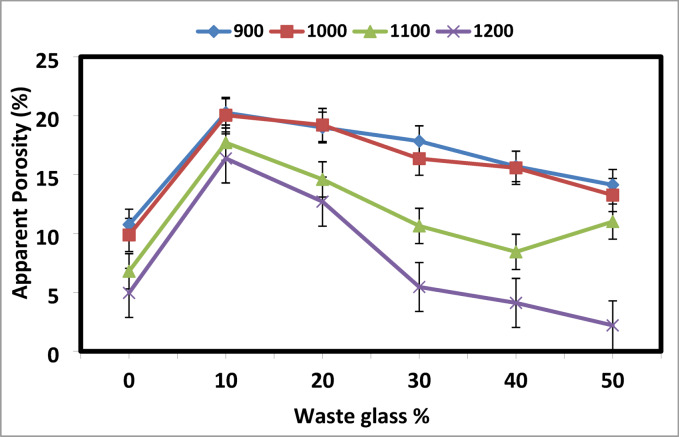
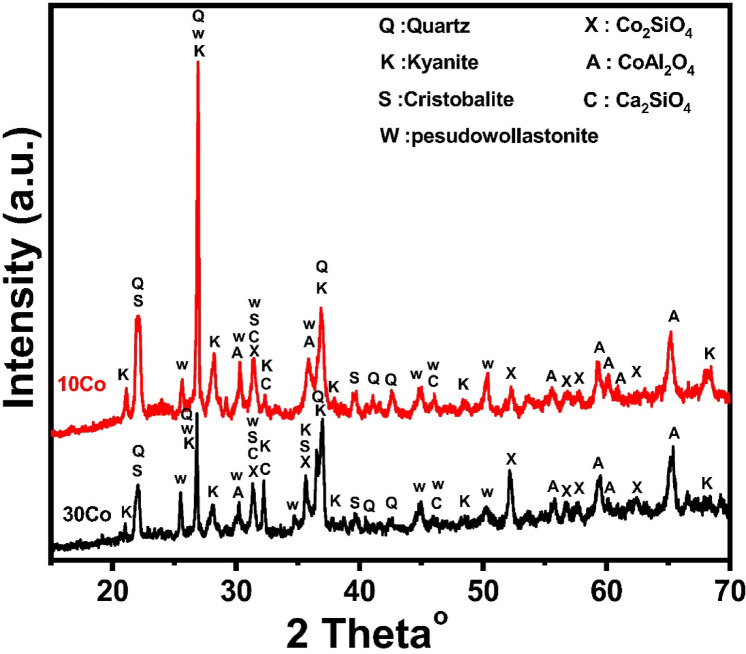
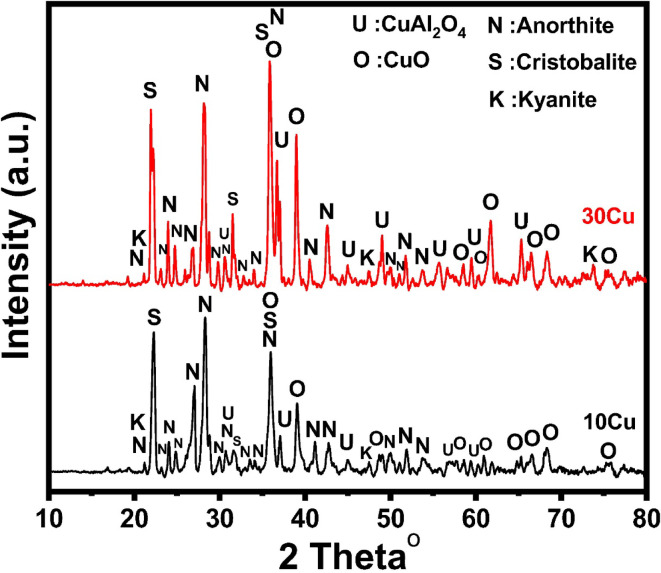
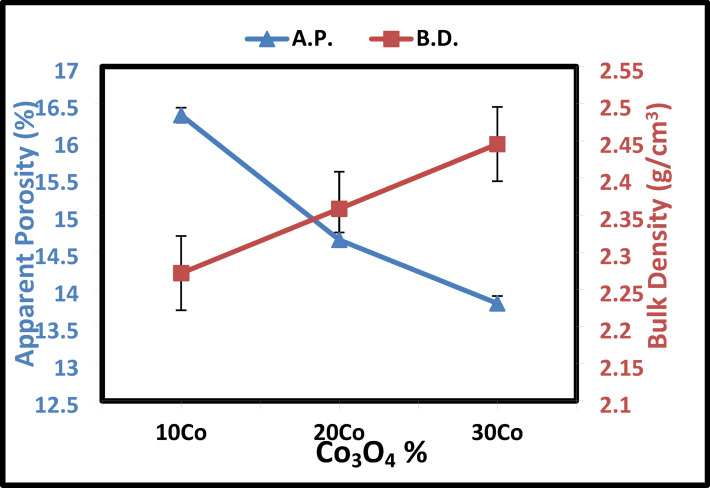
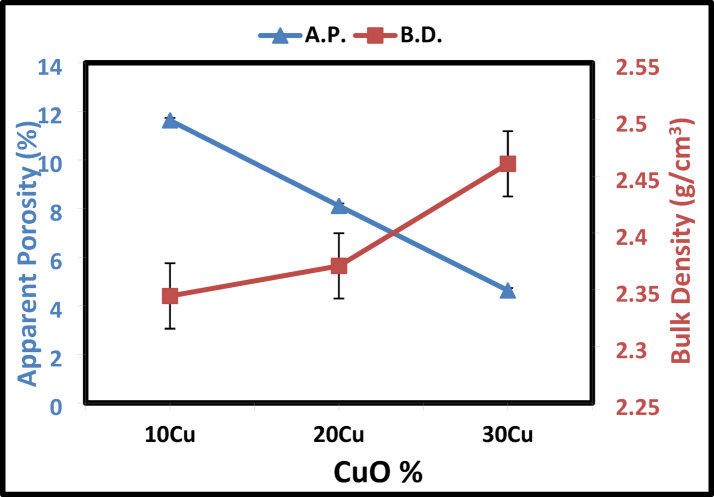
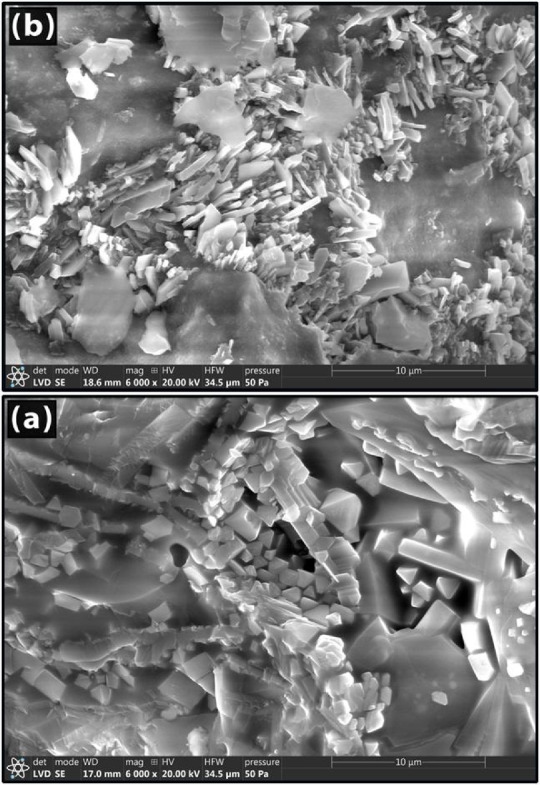
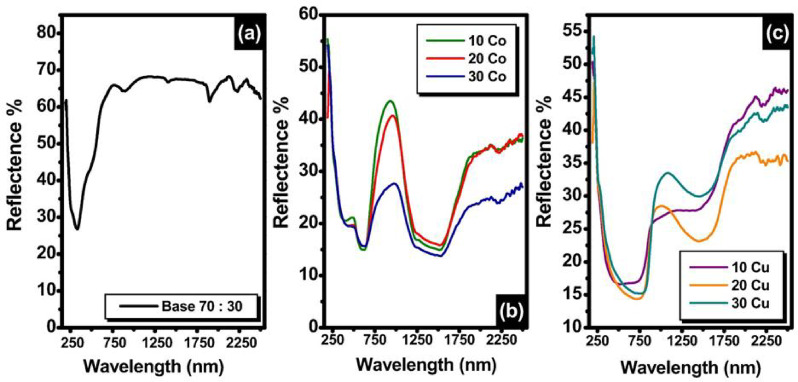
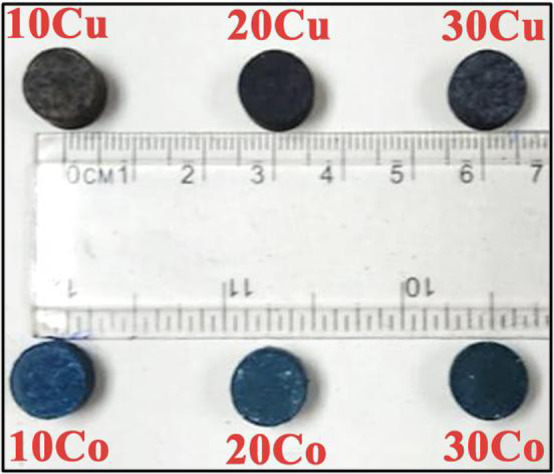
A range of ceramic materials was developed using Egyptian Kaolin combined with varying amounts of glass cullet waste (0-50 wt%) through uniaxial pressing and sintering at temperatures between 900 and 1200 °C. The study further examined the effects of adding transition metal oxides, Co3O4 or CuO, into a mix of 70% kaolin and 30% cullet, sintered at 1000 °C. Phase identification and chemical composition analysis were carried out using X-ray diffraction (XRD) and dispersive X-ray fluorescence (XRF), while physical properties such as bulk density, apparent porosity, hardness, and microstructure were evaluated through scanning electron microscopy (SEM). The results revealed that increasing the cullet content up to 50 wt% resulted in higher apparent porosity. The sintered ceramics exhibited a hardness of 7.9 GPa, with the lowest bulk density (2.75 g/cm3) and highest apparent porosity (13%). Adding Co3O4 or CuO up to 30 wt% increased the density of the material and reduced porosity, with Co3O4 achieving the highest density (2.44 g/cm3) and lowest porosity (13%). CuO slightly increased porosity to around 4%, with a density of 2.46 g/cm3. Co3O4-based ceramics exhibited superior hardness compared to CuO, as the latter encouraged the formation of anorthite. Optical tests showed that Co3O4 caused a color change from light to dark, while CuO samples turned dark brown to black. CuO-containing ceramics had reflectance values below 40%, indicating their potential application in antireflection coatings for solar cells.
Keywords: Ceramics; Cullet; Glass; Kaolin; Mechanical properties; Waste.
© 2025. The Author(s).
Conflict of interest statement
Declarations. Competing interests: The authors declare no competing interests.
Figures




References
-
- Sahar, M. R., Hamzah, K., Rohani, M. S., Samah, K. A. & Razi, M. M. The microstructure and physical properties of incinerated paper-cullet-clay ceramics. Phys. Procedia22, 119–124 (2011). - DOI
-
- Fauziah, S. H., Simon, C. & Agamuthu, P. municipal solid waste management in malaysia—possibility of improvement. Malays. J. Sci.23, 61–70 (2004).
-
- Taveri, G. et al. Proving the role of boron in the structure of fly-ash/borosilicate glass based geopolymers. Mater. Lett.200, 105–108 (2017). - DOI
-
- Hardy, F. The physical significance of the shrinkage coefficient of clays and soils. J. Agric. Sci.13, 243–264 (1923). - DOI
LinkOut - more resources
Full Text Sources
