


Machine learning for classification of pediatric bipolar disorder with and without psychotic symptoms based on thalamic subregional structural volume
- PMID: 40462037
- PMCID: PMC12135587
- DOI: 10.1186/s12888-025-07018-5
Machine learning for classification of pediatric bipolar disorder with and without psychotic symptoms based on thalamic subregional structural volume
Abstract
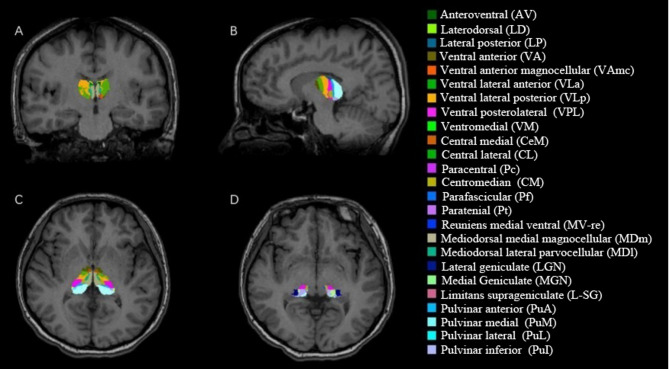
Background: The thalamus plays a crucial role in sensory processing, emotional regulation, and cognitive functions, and its dysregulation may be implicated in psychosis. The aim of the present study was to examine the differences in thalamic subregional volumes between pediatric bipolar disorder patients with (P-PBD) and without psychotic symptoms (NP-PBD).
Methods: Participants including 28 P-PBD, 26 NP-PBD, and 18 healthy controls (HCs) underwent structural magnetic resonance imaging (sMRI) scanning using a 3.0T MRI scanner. All T1-weighted imaging data were processed by FreeSurfer 7.4.0 software. The volumetric differences of thalamic subregions among three groups were compared by using analyses of covariance (ANCOVA) and post-hoc analyses. Additionally, we applied a standard support vector classification (SVC) model for pairwise comparison among the three groups to identify brain regions with significant volumetric differences.
Results: The ANCOVA revealed that significant volumetric differences were observed in the left pulvinar anterior (L_PuA) and left reuniens medial ventral (L_MV-re) thalamus among three groups. Post-hoc analysis revealed that patients with P-PBD exhibited decreased volumes in the L_PuA and L_MV-re when compared to the NP-PBD group and HCs, respectively. Furthermore, the SVC model revealed that the L_MV-re volume exhibited the best capacity to discriminate P-PBD from NP-PBD and HCs.
Conclusion: The present findings demonstrated that reduced thalamic subregional volumes in the L_PuA and L_MV-re might be associated with psychotic symptoms in PBD.
Keywords: Machine learning; Pediatric bipolar disorder; Psychotic symptom; Subregional volume; Thalamus.
© 2025. The Author(s).
Conflict of interest statement
Declarations. Ethics approval and consent to participate: This study was approved by the local medical ethics committee of The Second Xiangya Hospital Central South University (2013-S040). All subjects and at least one parent or legal guardian provided written informed consent prior to participation. All methods were carried out in accordance with relevant guidelines and regulations. Consent for publication: Not applicable. Competing interests: The authors declare no competing interests.
Figures


References
MeSH terms
Grants and funding
LinkOut - more resources
Full Text Sources
Medical
Miscellaneous
