


Novel High-Resolution Lipidomes Could Serve as New Biomarkers for Diabetic Retinopathy: A Bidirectional and Mediated Mendelian Randomization Study
- PMID: 40464192
- PMCID: PMC12134777
- DOI: 10.1111/jcmm.70614
Novel High-Resolution Lipidomes Could Serve as New Biomarkers for Diabetic Retinopathy: A Bidirectional and Mediated Mendelian Randomization Study
Abstract
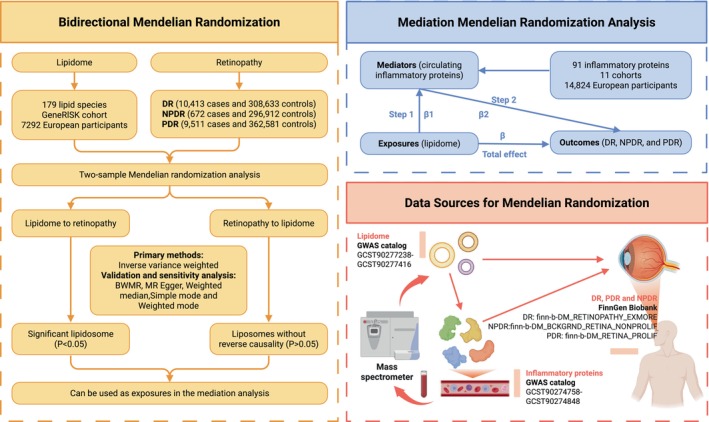
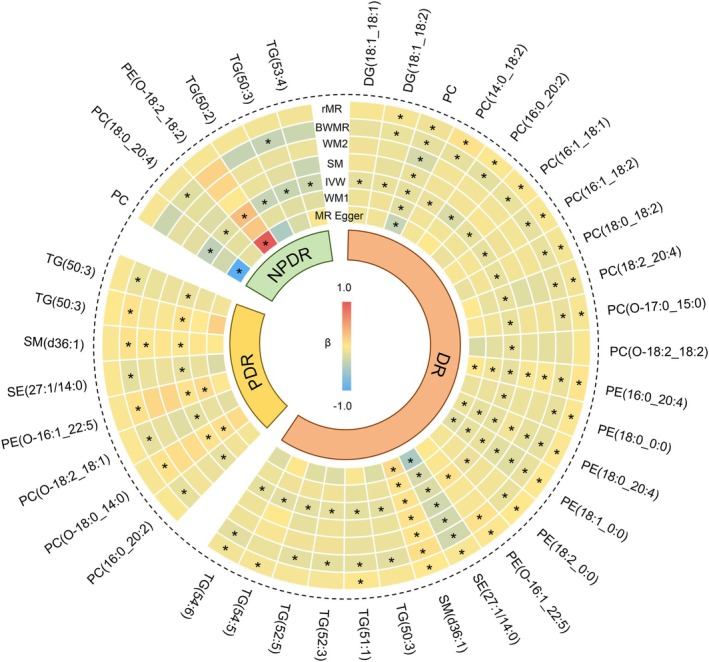
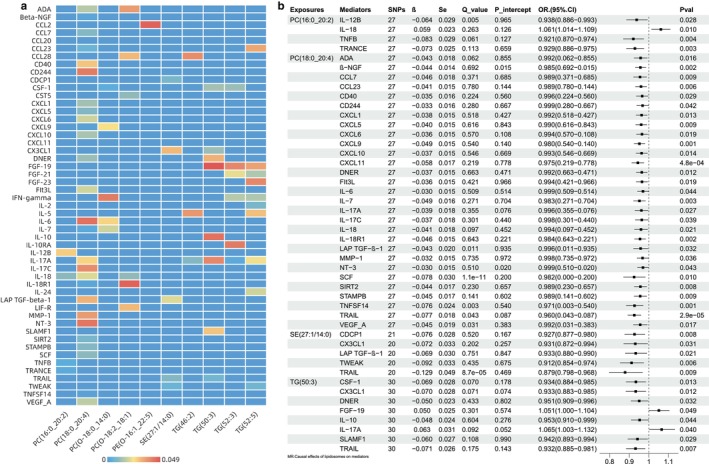
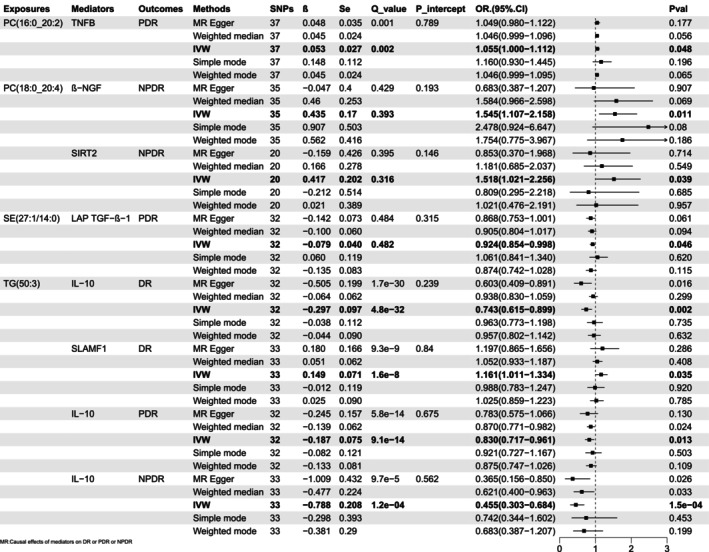
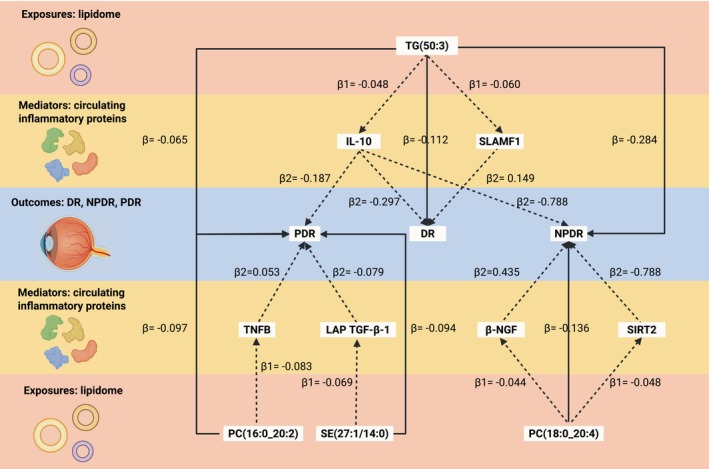
Although lipid metabolism is a critical factor in the pathogenesis of diabetic retinopathy (DR), the connection between lipidome and DR is still a subject of debate. We aimed to demonstrate that lipidome could serve as novel biomarkers for DR and elucidate the mediating role of inflammatory factors. Data for our investigation are available from the GWAS catalogue and FinnGen Biobank. The bidirectional Mendelian randomization (MR) analyses were conducted to assess the "total effect" between lipidome and DR and its subtypes. Subsequently, the mediation analyses were performed to explore the involvement of circulating inflammatory proteins in mediating the connection between them. Mediation proportion was calculated to measure the contribution of inflammatory factors to the overall effect. Ultimately, a battery of sensitivity tests proceeded to examine the dependability of the findings. This study has revealed a causal relationship between lipidome and different stages of DR. Additionally, we have successfully discovered a range of new lipids that protect against DR and have the potential to serve as new markers. This study also highlights the important role of inflammatory factors in elucidating the protective mechanisms of lipids against DR and provides new perspectives on lipidomic-based treatments and cytokine-targeted interventions for DR.
Keywords: Mendelian randomization; circulating inflammatory protein; diabetic retinopathy; interleukin‐10; lipidome; mediation analysis; shotgun lipidomics technique; triacylglycerol.
© 2025 The Author(s). Journal of Cellular and Molecular Medicine published by Foundation for Cellular and Molecular Medicine and John Wiley & Sons Ltd.
Conflict of interest statement
The authors declare no conflicts of interest.
Figures
References
MeSH terms
Substances
Grants and funding
LinkOut - more resources
Full Text Sources
Medical
