Reverse genetics rescue of sylvatic dengue viruses
- PMID: 40464564
- PMCID: PMC12282064
- DOI: 10.1128/jvi.00450-25
Reverse genetics rescue of sylvatic dengue viruses
Abstract
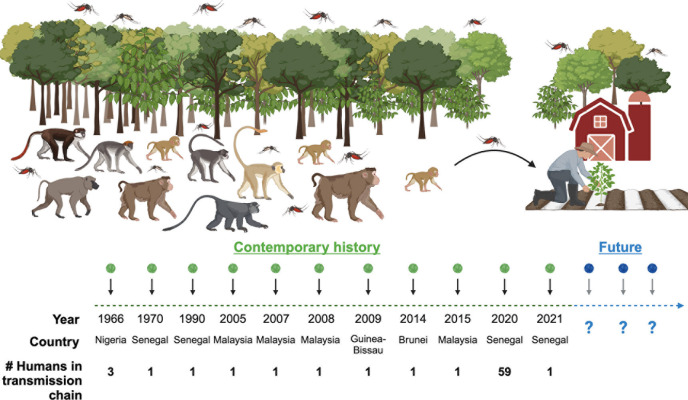
There are an unknown number of sylvatic ("sylvan" = "of the forest") dengue viruses currently being sustained by nonhuman primates and mosquitoes in the forests of Africa and Asia. Humans are regularly infected with these viruses, occasionally resulting in small epidemics. One barrier to understanding sylvatic dengue virus biology is the scarcity of stocks available for study. While the full-length genome sequences of 28 sylvatic viruses exist on GenBank, accessible infectious stocks exist for only a handful of these. One way to overcome this obstacle is to rescue infectious virus stocks using reverse genetics. However, reverse genetic engineering of dengue viruses is notoriously difficult. Here, we optimize a reverse genetics method specifically for the rescue of sylvatic dengue virus stocks from sequence data. The key to our approach was the observation that mosquito cells, rather than mammalian cells, must be used to launch sylvatic dengue virus replication from assembled genomes. We demonstrate the success of this technique by rescuing seven sylvatic dengue viruses. With this unique collection, we then characterized the relative fitness of each virus strain on human, monkey, and mosquito cells. While mosquito cells are universally permissive for the growth of sylvatic dengue viruses, some sylvatic dengue virus strains showed significantly better replication in human and monkey cells than others. These sylvatic dengue virus strains may have a greater potential for human adaptation.
Importance: Given the enormous burden of the four human dengue viruses, which emerged from the sylvatic dengue virus reservoir, it is important that we consider the possibility of a new dengue virus emerging into the human population. Nonhuman primate species in Asia and Africa are suspected to be the natural reservoir hosts for sylvatic dengue viruses. Occasionally, these sylvatic dengue viruses infect humans, although there are few stocks of these viruses available for study in the lab. Here, we optimize a reverse genetics technique for sylvatic dengue viruses, and we rescue stocks of seven strains. With this method, theoretically, any sylvatic dengue virus sequence deposited on GenBank can be transformed into a high-titer infectious virus stock.
Keywords: dengue virus; reverse genetics.
Conflict of interest statement
S.L.S. is a cofounder of Darwin Biosciences, Boulder, CO, and holds financial interests in that company.
Figures


References
-
- Postler TS, Beer M, Blitvich BJ, Bukh J, de Lamballerie X, Drexler JF, Imrie A, Kapoor A, Karganova GG, Lemey P, Lohmann V, Simmonds P, Smith DB, Stapleton JT, Kuhn JH. 2023. Renaming of the genus Flavivirus to Orthoflavivirus and extension of binomial species names within the family Flaviviridae. Arch Virol 168:224. doi: 10.1007/s00705-023-05835-1 - DOI - PubMed
-
- 2024. Areas with risk of dengue | dengue | CDC. Available from: https://www.cdc.gov/dengue/areaswithrisk/index.html. Retrieved 6 May 2024.
-
- 2023. Dengue and severe dengue. Available from: https://www.who.int/news-room/fact-sheets/detail/dengue-and-severe-dengue. Retrieved 27 Jul 2023.
MeSH terms
Grants and funding
LinkOut - more resources
Full Text Sources
Medical
Miscellaneous