


Brown adipose tissue secretes OLFM4 to coordinate sensory and sympathetic innervation via Schwann cells
- PMID: 40467585
- PMCID: PMC12137647
- DOI: 10.1038/s41467-025-60474-1
Brown adipose tissue secretes OLFM4 to coordinate sensory and sympathetic innervation via Schwann cells
Abstract
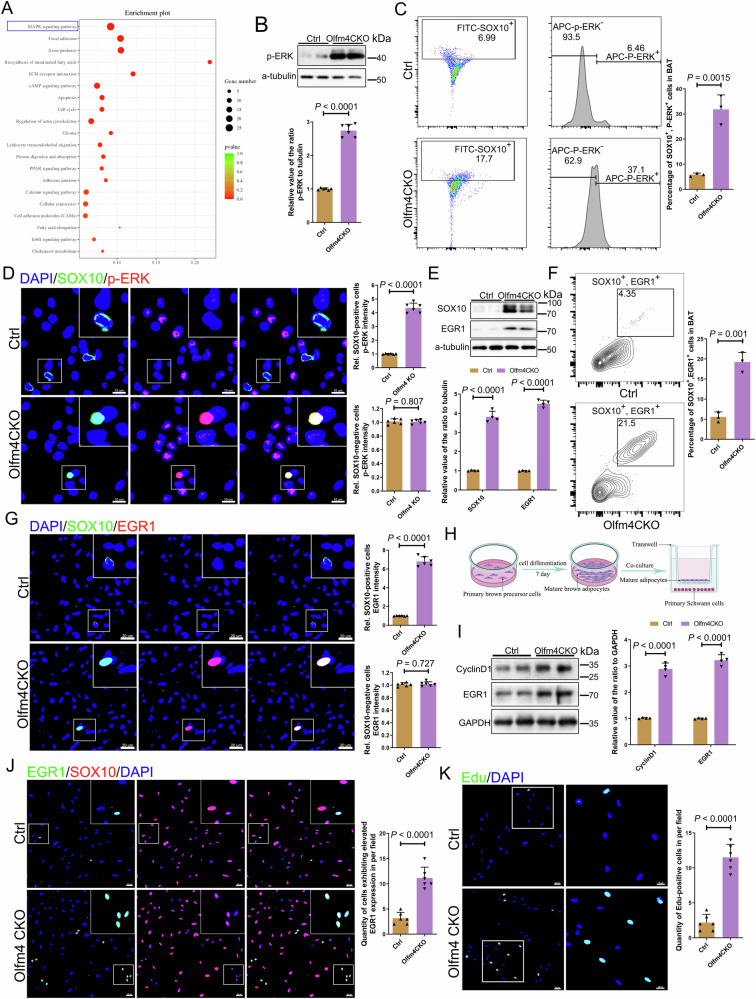
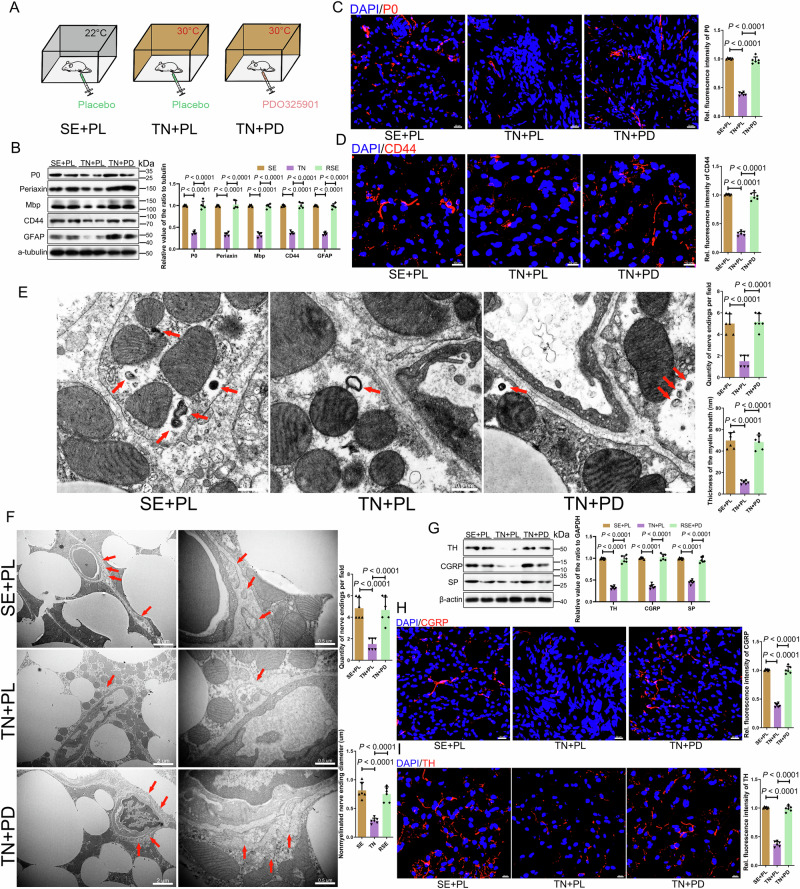
Non-shivering thermogenesis of brown adipose tissue (BAT) is tightly controlled by neural innervation. However, the underlying mechanism remains unclear. Here, we reveal that BAT regulates its own thermoadaptive innervation by crosstalk with Schwann cells (SCs). Loss of Olfm4 (encoding Olfactomedin-4), a risk gene in human obesity, causes BAT dysfunction and reduces whole-body thermogenesis, predisposing to obesity in mice. Mechanistically, BAT-derived OLFM4 traps Noggin, an endogenous inhibitor of BMPs, liberating BMP7-BMPR1B signaling to promote SC differentiation. Conversely, Olfm4 loss reduced BMP7 signaling in mature SCs, leading to MEK/ERK-dependent dedifferentiation and dysfunction, ultimately impairing both sensory and sympathetic innervation. Thermoneutrality exposure reduces Olfm4 expression in BAT, resulting in a similar phenotype. MEK/ERK inhibition, ERK1 depletion, or cold exposure reverses this SC dedifferentiation, enhancing resistance to obesity. These findings suggest that this neurotrophic BAT-SC crosstalk controls thermoadaptive BAT innervation. Reactivating OLFM4 signaling may be a promising therapeutic strategy for obesity and related metabolic diseases.
© 2025. The Author(s).
Conflict of interest statement
Competing interests: The authors declare no competing interests.
Figures




References
MeSH terms
Substances
Grants and funding
LinkOut - more resources
Full Text Sources
Molecular Biology Databases
Miscellaneous
