


Student satisfaction of a dementia education intervention: a cross-sectional study of the time for dementia programme
- PMID: 40468368
- PMCID: PMC12139129
- DOI: 10.1186/s12909-025-07218-3
Student satisfaction of a dementia education intervention: a cross-sectional study of the time for dementia programme
Abstract
Background: Over the last decade there has been a recognition of the need for better dementia education for undergraduate healthcare professionals. Time for Dementia is an innovative educational programme in the UK whereby students learn about the condition directly from a two-year longitudinal contact with a person living with dementia and their families. There is evidence that such programmes have positive outcomes for students in terms of improved attitudes and knowledge, however, students' evaluations of these programmes are scarce.
Objectives: To understand the satisfaction of the students taking part in Time for Dementia and their perceptions of the programme.
Methods: A cross-sectional survey, with Likert responses, was completed to assess overall levels of satisfaction for students enrolled in Time for Dementia. 1,225 students consented and completed the satisfaction survey at five universities in England. Factors that might predict satisfaction were explored using multiple regression analysis. A qualitative framework thematic analysis explored the best aspects of the programme and possible improvements, as recorded by student responses to open text questions.
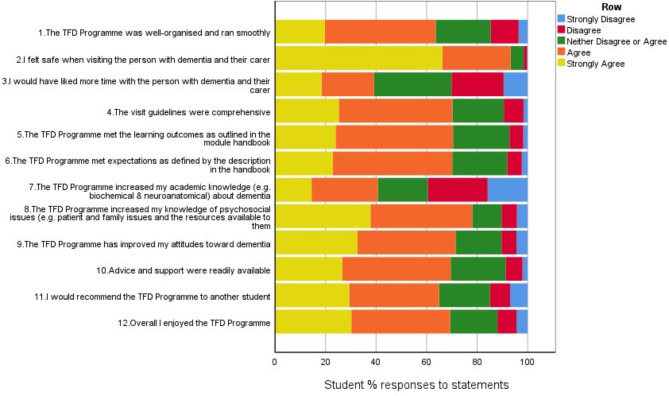
Results: 78% of students agreed or strongly agreed that Time for Dementia had increased their knowledge of psychosocial issues, and 69% enjoyed the programme. The multiple regression analysis found satisfaction was statistically significantly higher for students who completed more visits; took part after the onset of the COVID-19 pandemic; were of Black or Asian ethnicities (compared to White British/European); and were relatively older. The themes related to the best aspects of the programme were that Time for Dementia provides relational learning, understanding the impact of dementia on family and thinking psychosocially. Improvements include preferred programme structure, the need for clarity of expectations and addressing barriers to learning.
Conclusions: This study supports the value of Time for Dementia as assessed by students. Key considerations to ensure satisfaction include the fidelity of programme experience and clear expectations.
Keywords: Dementia education; Experts by experience; Healthcare students; Student satisfaction; Students, health occupations.
© 2025. The Author(s).
Conflict of interest statement
Declarations. Ethics approval and consent to participate: The study was approved by the NHS Health Research Authority London Queen Square Research Ethics Committee (15/LO/0046). Participation was voluntary and informed consent was obtained for all participants. Consent for publication: Not applicable. Competing interests: The authors declare no competing interests. Abbreviations: N/a.
Figures
References
-
- Department of Health. Living well with dementia: A National dementia strategy. London, UK: Department of Health 2009.
-
- Australian Government Department of Health. National framework for action on dementia 2015–2019. Canberra: Australian Government Department of Health. 2015.
-
- Health L. Welfare ministry. New orange plan on dementia care. Tokyo, Japan: Health Labor & Welfare Ministry. 2015.
-
- The Scottish Government. Dementia in Scotland: Everyone’s story. The Scottish Government. 2023.
MeSH terms
LinkOut - more resources
Full Text Sources
Medical
